
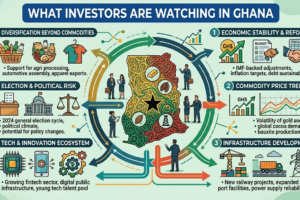

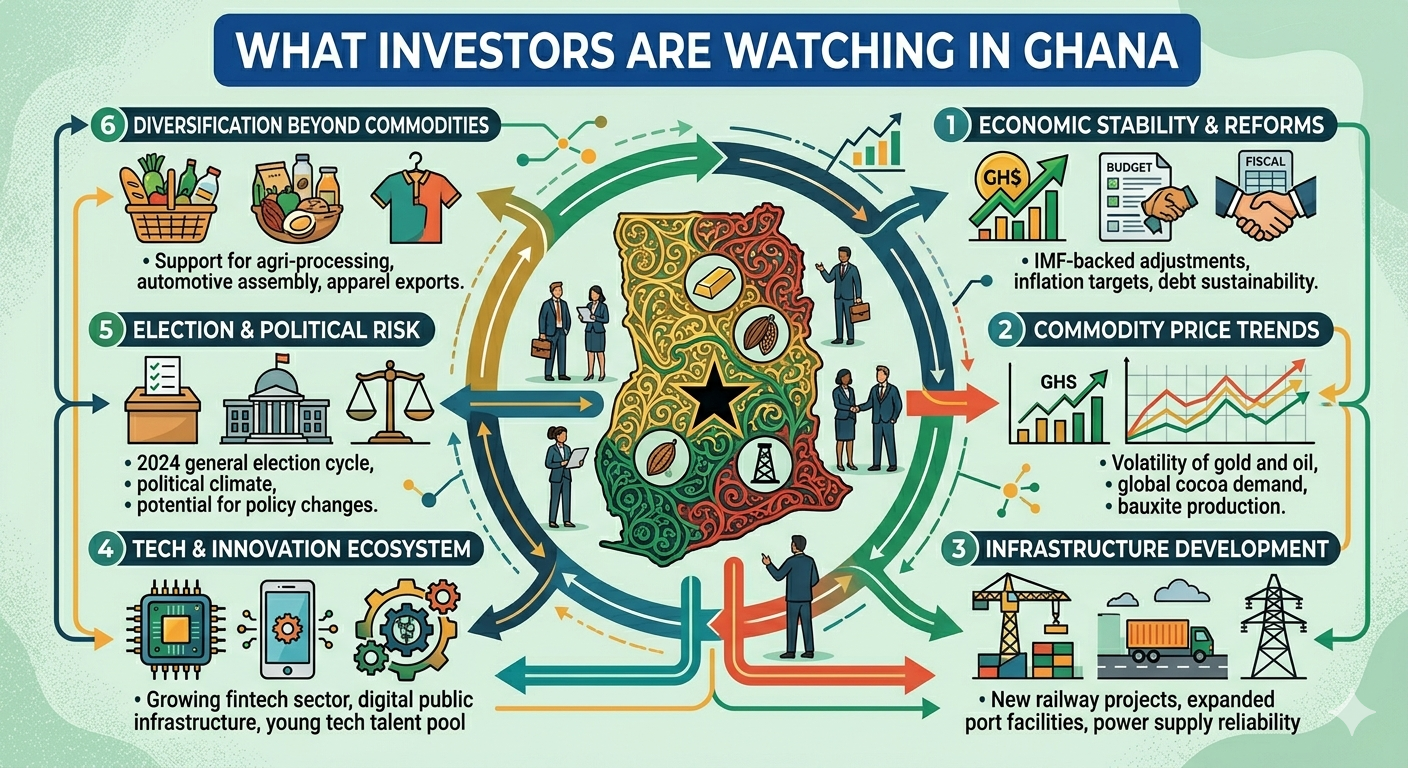
What Investors Are Watching in Ghana – Investors are closely monitoring Ghana’s economic stability, policy direction, and growth sectors. Here’s what matters most when it comes to investment decisions.
What Investors Are Watching in Ghana
Ghana remains one of West Africa’s most closely watched economies, attracting interest from both local and international investors. From macroeconomic stability to sector-specific opportunities, key indicators guide investment decisions. Institutions like the Bank of Ghana and reforms supported by the International Monetary Fund play a central role in shaping investor confidence.
Economic Stability and Inflation
At the top of the list for investors is economic stability. High inflation, currency volatility, and fiscal imbalances can create uncertainty and increase risk.
📢 GET A DETAILED ARTICLES + JOBS
Join SamBoad's WhatsApp Channel and never miss a post or opportunity.
Investors typically look for signs that inflation is under control and that the broader economy is stabilising. In Ghana, recent efforts to reduce inflation have been closely monitored, as stable prices make it easier to plan investments and forecast returns.
ALSO READ: Ghana’s Economic Challenges Simply Explained
Currency Performance (The Cedi)
The strength and stability of the Ghanaian cedi are critical factors for investors, especially foreign ones. A volatile currency can erode profits when earnings are converted into foreign currencies. On the other hand, a stable or strengthening cedi boosts confidence and reduces exchange rate risk.
Policies implemented by the Bank of Ghana are therefore key signals investors watch closely.
Fiscal Discipline and Debt Management
Investors pay close attention to how the government manages its finances. High levels of debt and persistent budget deficits can raise concerns about economic sustainability.
Ghana’s ongoing fiscal reforms, including those under programmes supported by the International Monetary Fund, are seen as important steps toward restoring confidence.
A credible plan to reduce debt and manage spending signals that the economy is on a more sustainable path.
Interest Rates and Access to Credit
Interest rates influence the cost of borrowing and the potential returns on investment.
High interest rates can make borrowing expensive for businesses, potentially slowing growth. However, they may also attract investors seeking higher returns on fixed-income assets such as government bonds.
Balancing interest rates to support growth while controlling inflation remains a key focus for policymakers, and a major area of interest for investors.
Policy Consistency and Reforms
Consistency in government policy is another critical factor. Investors prefer environments where policies are predictable and transparent.
Frequent changes or unclear regulations can create uncertainty and discourage long-term investment. In contrast, clear reform agendas—particularly those aimed at improving the business environment—can attract both domestic and foreign capital.
Key Growth Sectors
Investors are also watching specific sectors with strong growth potential in Ghana.
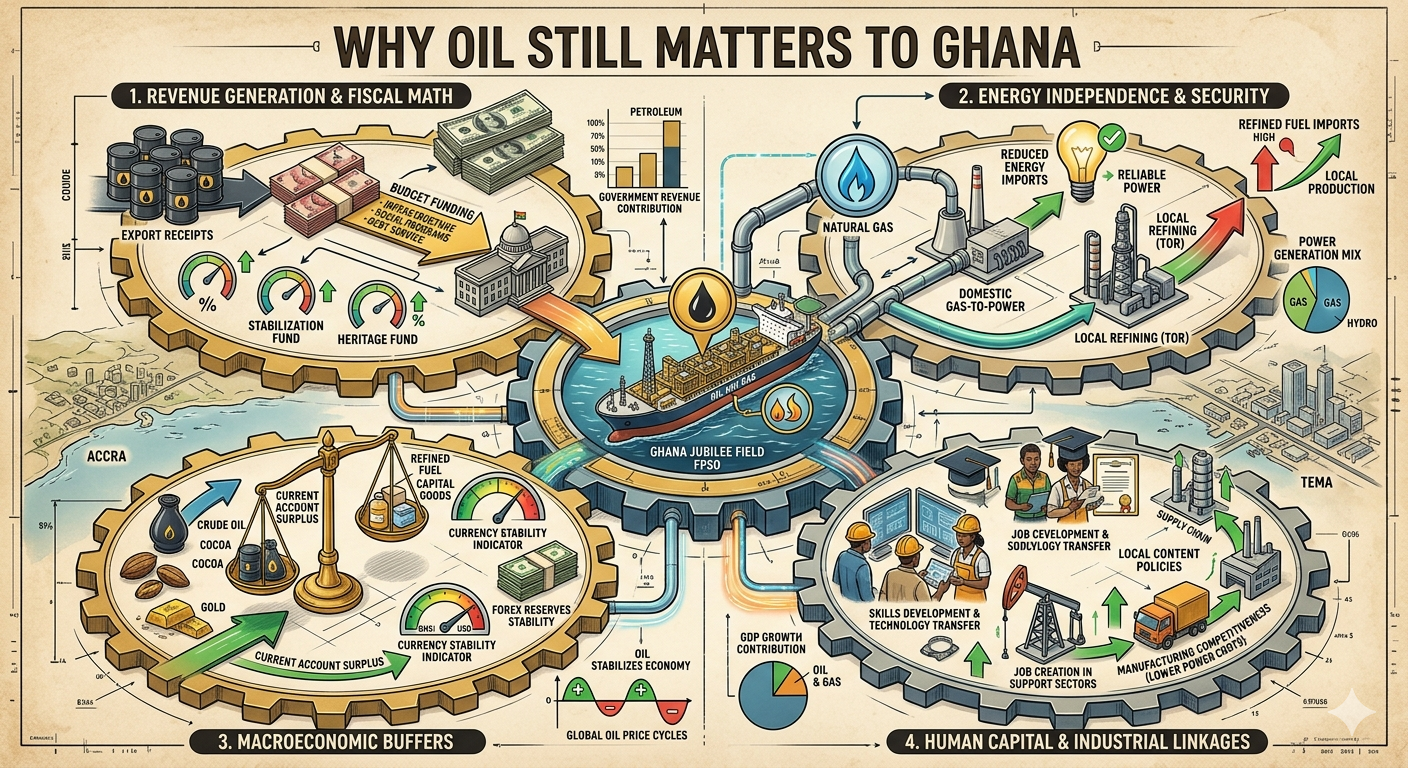
- Energy and Natural Resources: Ghana’s gold, oil, and gas sectors continue to attract significant investment.
- Agriculture: With vast arable land, agribusiness presents opportunities for both local and export markets.
- Technology and Digital Economy: The rise of fintech and digital services is opening new avenues for innovation and investment.
- Infrastructure: Ongoing demand for roads, housing, and energy projects creates opportunities for long-term investment.
These sectors are often highlighted in government strategies and budgets, making them key areas of focus.
Business Environment and Regulation
The ease of doing business in Ghana is another important consideration.
Investors assess factors such as licensing processes, tax administration, legal protections, and contract enforcement. Improvements in these areas can significantly enhance Ghana’s attractiveness as an investment destination.
Efforts to digitise public services and streamline regulations are seen as positive developments.
Global and Regional Dynamics
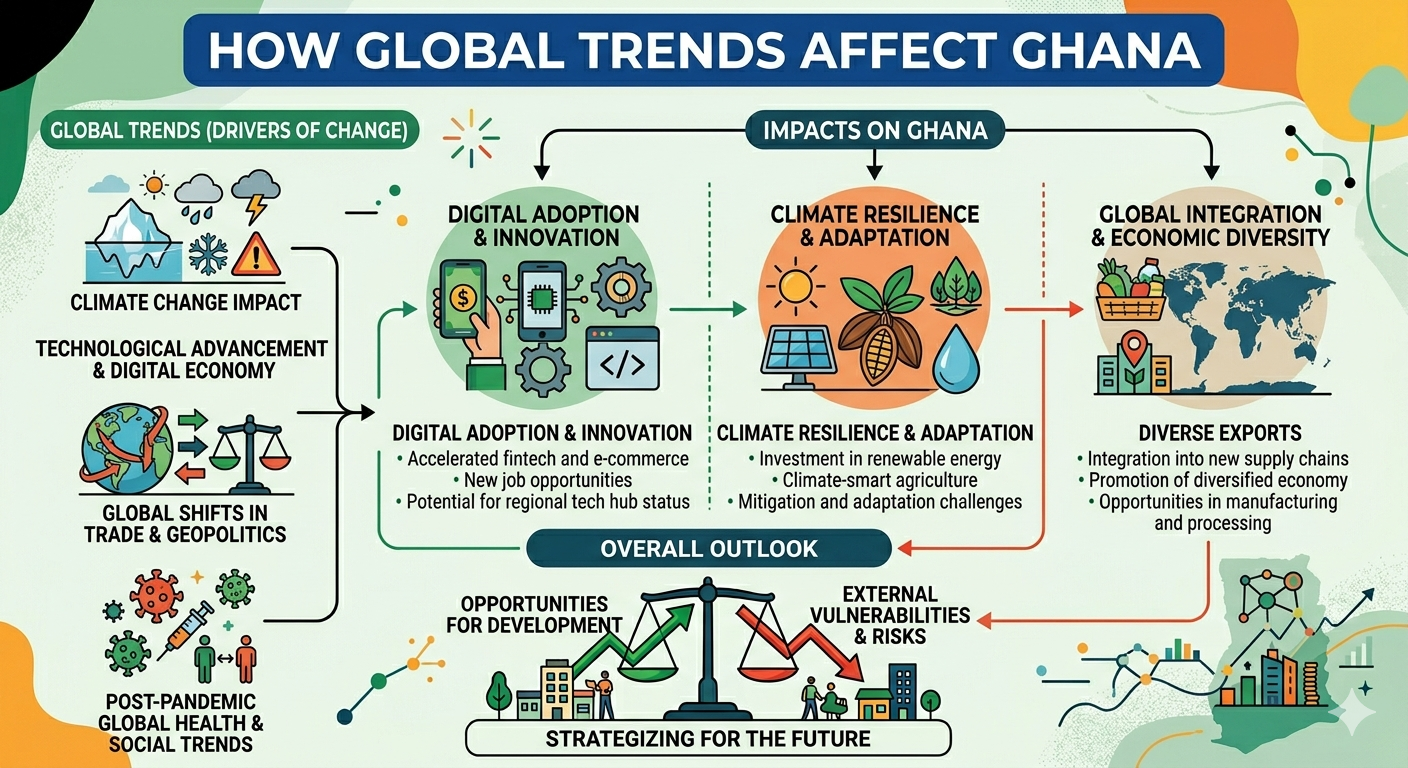
Finally, investors consider Ghana’s position within the broader African and global economy. Participation in initiatives like the African Continental Free Trade Area offers access to a larger regional market, making Ghana an attractive base for expansion.
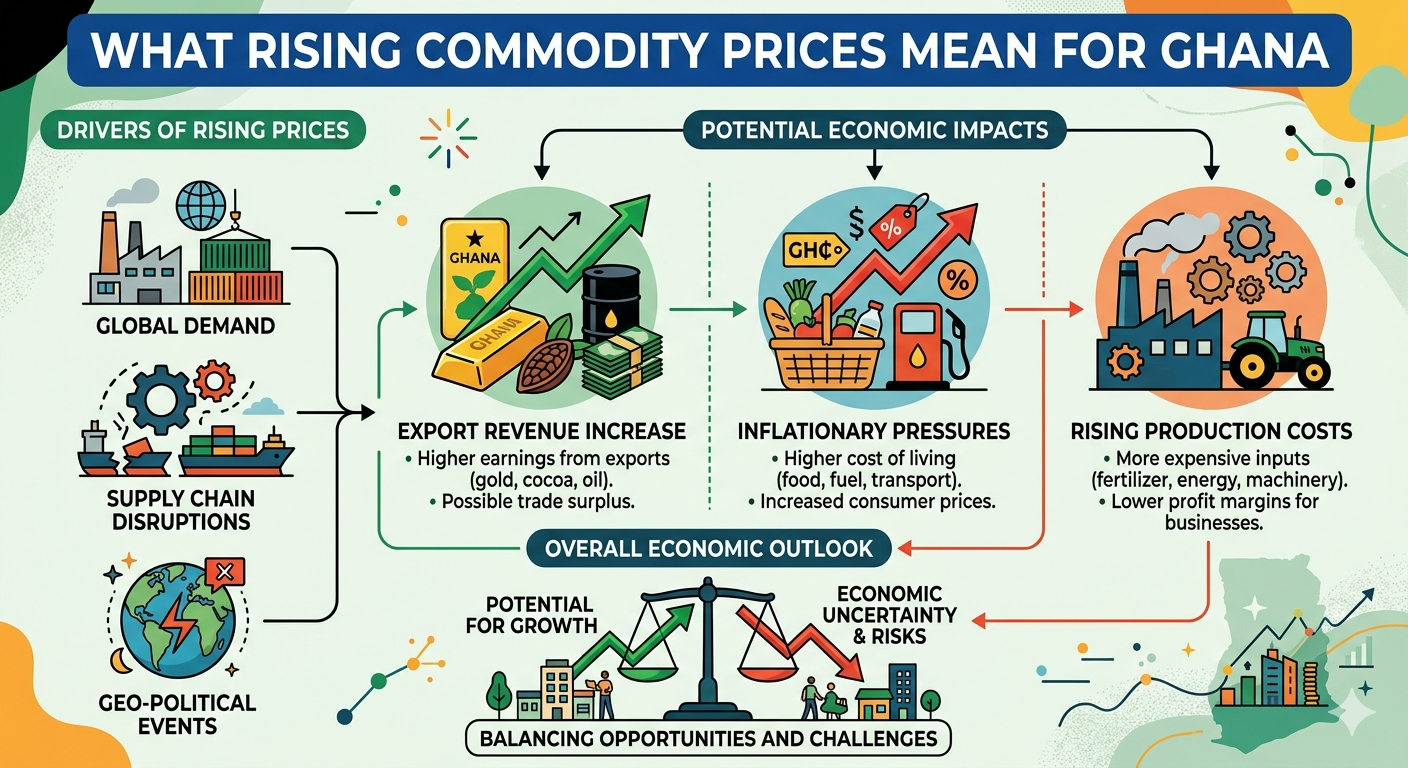
At the same time, global economic trends, such as commodity prices and interest rate movements, continue to influence investment decisions.
Conclusion From THSB
Investors in Ghana are watching a combination of macroeconomic indicators, policy decisions, and sector opportunities.
From inflation and currency stability to fiscal discipline and regulatory reforms, each factor plays a role in shaping confidence. While challenges remain, ongoing reforms and Ghana’s long-term growth potential continue to position the country as a key destination for investment in West Africa.
Source: The High Street Business
Disclaimer: Some content on The High Street Business may be aggregated, summarized, or edited from third-party sources for informational purposes. Images and media are used under fair use or royalty-free licenses. The High Street Business is a subsidiary of SamBoad Publishing under SamBoad Business Group Ltd, registered in Ghana since 2014.
For concerns or inquiries, please visit our Privacy Policy or Contact Page.

Esther Aku-Sika is a content writer and social media strategist who helps brands and startups grow through intentional storytelling and practical marketing strategies. With a keen eye for trends and audience behavior, she shares business insights, content strategies, and real-life lessons to help entrepreneurs build visibility and turn ideas into income. Through her writing, she simplifies complex concepts and equips readers with actionable steps to grow in today’s digital space.