

Ghana’s Economic Challenges Explained Simply – Ghana’s economy faces several challenges, from inflation to debt and currency pressures. Here’s a simple breakdown of the key issues and what they mean for everyday life.
Ghanas Economic Challenges Explained Simply
Ghana’s economy has experienced both strong growth and significant setbacks in recent years. While sectors like gold, oil, and agriculture continue to drive activity, challenges such as inflation, debt, and currency instability remain key concerns. With support from institutions like the International Monetary Fund and policy actions by the Bank of Ghana, the country is working to stabilise and rebuild. But what exactly are these challenges, and why do they matter?
Rising Cost of Living (Inflation)
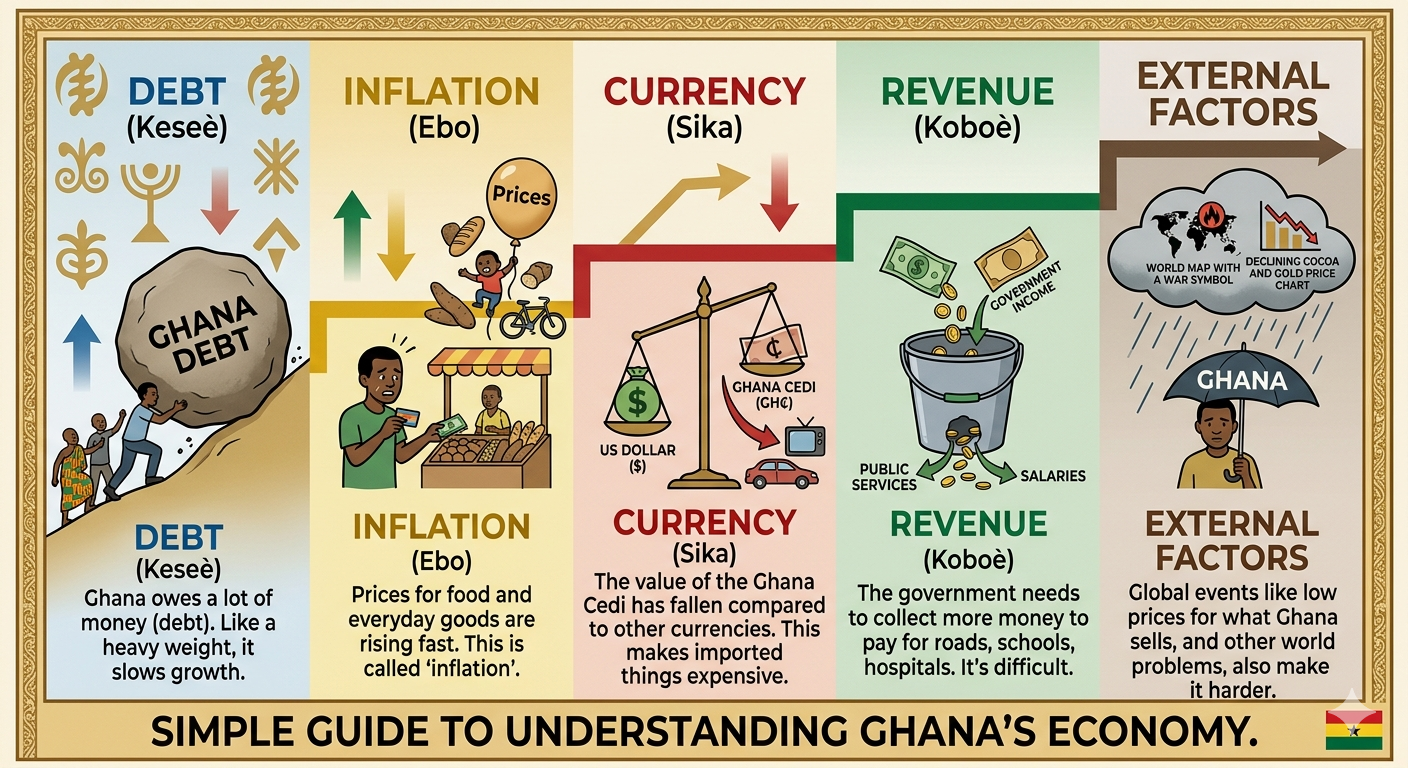
One of the most noticeable challenges for Ghanaians is inflation: the steady increase in prices of goods and services. When inflation is high, everyday essentials like food, fuel, and transport become more expensive. This reduces purchasing power, meaning households can afford less with the same income.
📢 GET A DETAILED ARTICLES + JOBS
Join SamBoad's WhatsApp Channel and never miss a post or opportunity.
For businesses, inflation raises the cost of raw materials and operations, often leading to higher prices for consumers. Although inflation has shown signs of easing recently, it remains a key concern for economic stability.
RECOMMENDED: Why Fiscal Discipline Matters
The Debt Burden
Ghana’s growing public debt has been another major issue. Over the years, the government has borrowed to finance infrastructure, public services, and economic programmes.
However, when debt levels become too high, a significant portion of government revenue goes into servicing loans instead of funding development projects.
This situation led Ghana to seek support from the International Monetary Fund, resulting in policy reforms aimed at restoring fiscal balance and reducing debt pressures.
Currency Instability (The Cedi Problem)
The Ghanaian cedi has faced periods of sharp depreciation against major foreign currencies like the US dollar. When the cedi weakens, imports become more expensive. This affects businesses that rely on foreign goods and increases the cost of living for consumers.
Currency instability also creates uncertainty, making it harder for businesses to plan and invest. Stabilising the cedi remains a top priority for policymakers, particularly through interventions by the Bank of Ghana.
High Interest Rates
To control inflation and stabilise the economy, interest rates in Ghana have often remained high. While this helps reduce price pressures, it also makes borrowing expensive. Businesses may struggle to access affordable loans for expansion, and individuals may find it harder to secure credit.
High interest rates can therefore slow economic growth, even as they help stabilise the broader economy.
Unemployment and Underemployment
Job creation remains a challenge, particularly for young people. While Ghana’s economy continues to grow in some sectors, this growth does not always translate into enough quality jobs.
Many people find themselves underemployed, working in jobs that do not fully utilise their skills or provide stable income.
Addressing unemployment requires sustained investment in industries that can generate large-scale employment, such as manufacturing and agriculture.
Dependence on Imports
Ghana relies heavily on imports for many goods, including fuel, machinery, and some food products. This dependence makes the economy vulnerable to external shocks, such as global price increases or supply disruptions. When global prices rise, the effects are quickly felt locally through higher costs.
Efforts to boost local production and reduce import dependence are seen as critical for long-term economic resilience.
Global Economic Pressures
Ghana’s economy does not operate in isolation. Global events, such as rising oil prices, supply chain disruptions, or financial market changes, can have a direct impact.
For example, increases in global interest rates can make it more expensive for Ghana to borrow internationally, while fluctuations in commodity prices affect export revenues. These external pressures add another layer of complexity to managing the economy.
READ ALSO: Why Inflation Is Falling In Ghana
Signs of Recovery and Reform
Despite these challenges, there are signs of progress. Economic reforms, improved fiscal discipline, and support from international partners are helping to stabilise key indicators.
Inflation is gradually easing, and efforts to restructure debt and strengthen public finances are underway. Initiatives to promote local production and digital transformation also offer long-term opportunities.
Conclusion From THSB
Ghana’s economic challenges, ranging from inflation and debt to currency instability and unemployment, are complex but not insurmountable.
Understanding these issues helps explain why policies such as tax changes, interest rate adjustments, and government reforms are necessary. While the road to full recovery may take time, ongoing efforts by policymakers and institutions provide a foundation for a more stable and resilient economy.
Source: The High Street Business
Disclaimer: Some content on The High Street Business may be aggregated, summarized, or edited from third-party sources for informational purposes. Images and media are used under fair use or royalty-free licenses. The High Street Business is a subsidiary of SamBoad Publishing under SamBoad Business Group Ltd, registered in Ghana since 2014.
For concerns or inquiries, please visit our Privacy Policy or Contact Page.

Esther Aku-Sika is a content writer and social media strategist who helps brands and startups grow through intentional storytelling and practical marketing strategies. With a keen eye for trends and audience behavior, she shares business insights, content strategies, and real-life lessons to help entrepreneurs build visibility and turn ideas into income. Through her writing, she simplifies complex concepts and equips readers with actionable steps to grow in today’s digital space.