



Business confidence has always been an invisible but powerful force in Ghana’s economy. Unlike inflation figures, interest rates, or GDP data, confidence cannot be measured neatly on a spreadsheet. Yet its presence—or absence—shapes investment decisions, hiring plans, expansion strategies, and even consumer behaviour.
In today’s economic climate, business confidence matters more than ever. As Ghana navigates fiscal adjustments, policy reforms, currency pressures, and shifting global conditions, confidence has become the difference between caution and commitment, between survival and stagnation, and between long-term growth and short-term retreat.
At The High Street Business, we see business confidence not as optimism without evidence, but as trust in the economic system, policy direction, and market stability.
📢 GET A DETAILED ARTICLES + JOBS
Join SamBoad's WhatsApp Channel and never miss a post or opportunity.
What Is Business Confidence?
Business confidence refers to the level of certainty business owners and investors have about the economic environment in which they operate. It reflects how secure they feel about future demand, policy consistency, access to capital, cost stability, and the overall direction of the economy.
When confidence is high, businesses invest, hire, innovate, and expand. When confidence is low, even profitable businesses delay decisions, cut costs aggressively, and focus on preservation rather than growth.
In Ghana, business confidence is shaped by a combination of domestic economic management and external global influences.
Why Business Confidence Is Especially Critical Now
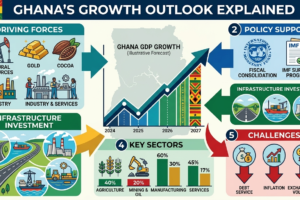
Ghana’s current economic environment makes confidence particularly important. Businesses are operating in a period defined by adjustment rather than expansion. Fiscal consolidation, tax reforms, debt restructuring, and regulatory tightening have changed how the private sector plans for the future.
During such periods, confidence becomes the anchor that holds economic activity together. Without it, uncertainty dominates decision-making, leading to reduced investment and slower recovery.
Confidence does not eliminate economic challenges, but it determines how businesses respond to them.
Confidence and Investment Decisions
Investment is one of the first areas affected by declining confidence. When business owners are unsure about tax stability, exchange rates, or regulatory changes, they postpone capital expenditure.
Ghana’s investment cycles clearly show this pattern. Periods of strong business confidence are often accompanied by increased private sector investment in manufacturing, real estate, services, and technology. When confidence weakens, investment slows—even if opportunities still exist.
For both local entrepreneurs and foreign investors, confidence acts as a signal. It tells them whether the environment rewards risk-taking or punishes it.
Confidence and Job Creation
Employment growth is directly linked to business confidence. Hiring decisions are long-term commitments. Businesses only create jobs when they believe future revenues can sustain those costs.
In Ghana, SMEs employ a significant portion of the workforce. When confidence drops among small businesses, hiring freezes follow quickly. This affects income levels, consumer spending, and overall economic momentum.
Conversely, when confidence improves, job creation resumes, reinforcing positive economic cycles.
Confidence Shapes Consumer Behaviour
Business confidence does not exist in isolation. It influences consumer sentiment, and vice versa.
When businesses are confident, they invest in marketing, improve service delivery, and introduce new products. Consumers respond with increased spending and trust in the market.
When businesses are uncertain, they reduce offerings, raise prices defensively, or cut service quality. Consumers sense this caution and become more conservative with spending.
In Ghana’s economy, where consumption plays a major role, this relationship is especially important.
Policy Consistency and Business Confidence
One of the strongest drivers of business confidence in Ghana is policy consistency. Businesses can adapt to tough policies, but they struggle with unpredictable ones.
Sudden tax changes, unclear regulatory enforcement, or inconsistent policy messaging undermine confidence more than difficult but transparent reforms.
Economic history shows that when government communication is clear and policy direction is stable, businesses plan with greater certainty—even during adjustment periods.
Confidence grows when businesses believe rules will not change unexpectedly.
Confidence and Access to Finance
Financial institutions respond directly to business confidence. Banks are more willing to lend when they believe businesses can repay loans in a stable economic environment.
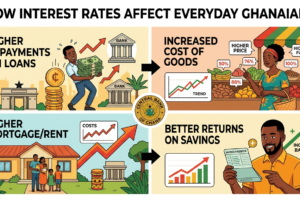
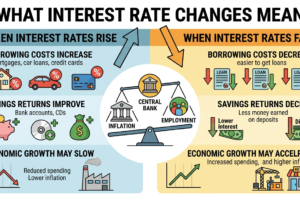
In periods of low confidence, credit tightens, interest rates rise, and lending conditions become restrictive. This disproportionately affects SMEs, which rely heavily on domestic financing.
Strong business confidence improves credit flows, reduces risk perception, and supports private sector growth.
The Cost of Low Business Confidence
The consequences of weak business confidence are often underestimated. It does not merely slow growth; it compounds existing challenges.
Low confidence leads to delayed investments, reduced innovation, job losses, weakened tax revenues, and slower economic recovery. Over time, this creates a cycle where uncertainty feeds stagnation.
For Ghana, where private sector activity is essential for development, prolonged low confidence can undermine long-term competitiveness.
Rebuilding and Sustaining Business Confidence
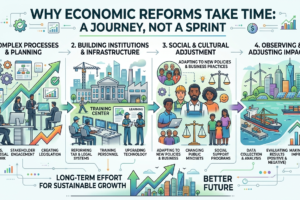
Business confidence is built gradually and lost quickly. Rebuilding it requires more than short-term interventions.
Transparency in economic management, predictable policy frameworks, credible fiscal discipline, and constructive engagement with the private sector are all essential.
Businesses themselves also play a role. Those that communicate clearly with customers, honour contracts, manage risk responsibly, and adapt to changing conditions contribute to a more confident business environment.
Confidence thrives where trust exists—between businesses, government, financial institutions, and consumers.
Why Confidence Is a Strategic Asset
In modern economies, confidence has become a strategic asset. It determines how fast economies recover, how resilient businesses remain, and how attractive markets appear to investors.
For Ghana, strengthening business confidence is not a public relations exercise. It is an economic necessity.
At The High Street Business, we believe confidence is the foundation upon which sustainable growth is built. Without it, even the best policies struggle to gain traction. With it, businesses find ways to adapt, invest, and grow—despite challenges.
FAQs
What is business confidence?
Business confidence reflects how optimistic or certain businesses feel about the economic environment and future conditions.
Why is business confidence important for Ghana’s economy?
It influences investment, job creation, access to finance, and overall economic activity.
How does low business confidence affect SMEs?
It leads to reduced investment, hiring freezes, limited access to credit, and slower growth.
Can business confidence improve during economic adjustment?
Yes. Clear policies, transparency, and stability can strengthen confidence even during difficult periods.
Who is responsible for building business confidence?
Both government and the private sector play key roles through policy consistency, trust, and responsible business practices.
Source: The High Street Business
Disclaimer: Some content on The High Street Business may be aggregated, summarized, or edited from third-party sources for informational purposes. Images and media are used under fair use or royalty-free licenses. The High Street Business is a subsidiary of SamBoad Publishing under SamBoad Business Group Ltd, registered in Ghana since 2014.
For concerns or inquiries, please visit our Privacy Policy or Contact Page.

Samuel Kwame Boadu is a Ghanaian entrepreneur, writer, and digital consultant passionate about creating impactful stories and business solutions. He is the Founder & CEO of SamBoad Business Group Ltd, a dynamic company with subsidiaries in digital marketing, logistics, publishing, and risk management.