

Why Ghana’s Economy Is Stabilising – After a turbulent period marked by high inflation, currency depreciation, and debt distress, Ghana’s economy is beginning to show signs of stability. While challenges remain, recent policy interventions, global support, and improving macroeconomic indicators suggest that the country is gradually regaining its footing.
But what exactly is driving this stabilisation, and is it sustainable?
Why Ghanas Economy Is Stabilising: Declining Inflation Brings Relief
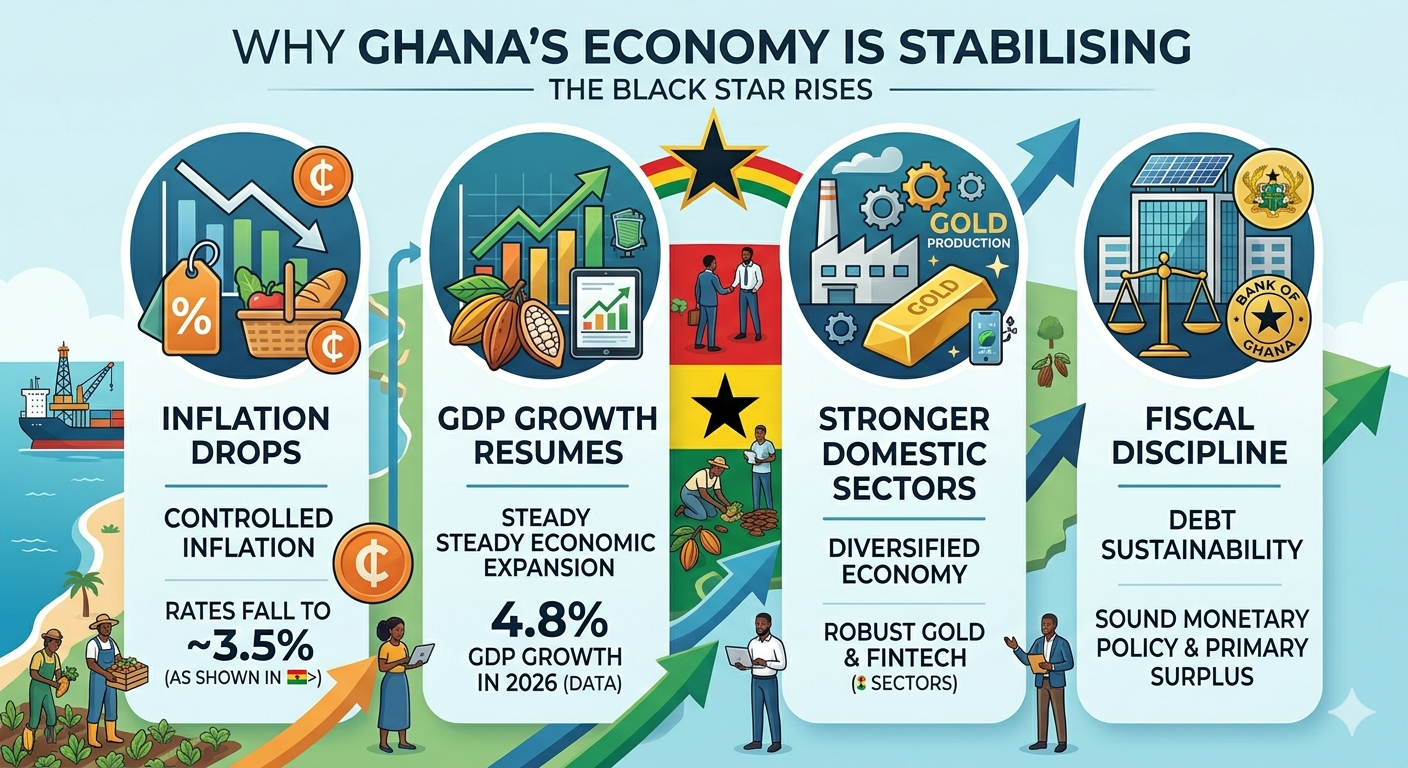
One of the clearest signs of economic stabilisation is the gradual decline in inflation. After reaching uncomfortable highs in recent years, inflation has started to ease due to tighter monetary policies and fiscal discipline.
📢 GET DETAILED ARTICLES + JOBS
Join THSB's WhatsApp Channel and never miss a post or opportunity.
Why This Matters
- Consumers regain some purchasing power
- Businesses can plan pricing more effectively
- Economic uncertainty begins to reduce
Lower inflation also signals that policies by the Bank of Ghana are beginning to take effect.
Relative Stability of the Cedi
The Ghanaian cedi, which experienced sharp depreciation, is showing signs of relative stability against major currencies.
What’s Driving This
- Improved foreign exchange inflows
- Support from international partners
- Reduced speculative pressure
Impact
- Lower cost of imports
- Improved investor confidence
- Better financial planning for businesses
READ MORE: Key Economic Developments Shaping Ghana In 2026
IMF Programme Restoring Confidence
A major pillar of Ghana’s stabilisation efforts is the support programme with the International Monetary Fund (IMF).
Key Contributions
- Financial support to stabilise reserves
- Policy guidance on fiscal discipline
- Reforms aimed at debt sustainability
The IMF programme has reassured investors and signalled that Ghana is committed to restoring macroeconomic stability.
Fiscal Discipline and Debt Restructuring
The government has taken steps to control spending and restructure its debt, which was a major source of economic instability.
Key Measures
- Reduction in budget deficits
- Domestic debt exchange programmes
- Improved revenue collection
Why It Matters
- Reduces pressure on public finances
- Frees up resources for development
- Strengthens long-term economic credibility
Gradual Economic Growth
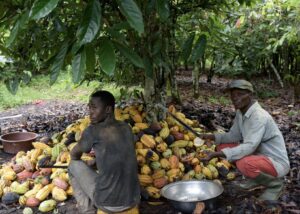
Despite recent difficulties, Ghana’s economy continues to grow, driven by key sectors.
Growth Drivers
- Agriculture: Cocoa and food production
- Mining: Gold exports remain strong
- Oil and Gas: Continued offshore production
- Services: Expansion in fintech and telecommunications
This broad-based growth supports job creation and economic resilience.
Improved Investor Confidence
As macroeconomic conditions improve, investor sentiment is gradually recovering.
Indicators of Confidence
- Renewed interest in government bonds
- Increased foreign direct investment (FDI) inquiries
- Strengthening business outlook
Investors are more likely to commit capital when economic conditions appear stable and predictable.
Structural Reforms and Policy Adjustments
Beyond short-term fixes, Ghana is implementing structural reforms aimed at long-term stability.
Areas of Focus
- Tax reforms and digital revenue collection
- Public sector efficiency
- Strengthening financial institutions
These reforms are essential for preventing future economic crises.
Challenges That Still Remain
While stabilisation is underway, risks persist:
- High cost of living for many households
- Youth unemployment
- External shocks such as global commodity price fluctuations
Sustaining stability will require consistent policy implementation and economic diversification.
What This Means for Businesses and Citizens
For Businesses
- More predictable operating environment
- Better access to financing (over time)
- Opportunities in growing sectors
For Individuals
- Gradual relief from rising prices
- Improved job prospects in the long term
- More stable economic conditions
Conclusion
Ghana’s economic stabilisation is not accidental, it is the result of deliberate policy actions, international support, and resilience within key sectors of the economy.
While the road to full recovery is still long, the current trajectory offers cautious optimism. If reforms continue and stability is maintained, Ghana could transition from recovery to sustained growth.
For now, the signs are encouraging, and for businesses, investors, and citizens alike, that makes all the difference.
Disclaimer: Some content on The High Street Business may be aggregated, summarized, or edited from third-party sources for informational purposes. Images and media are used under fair use or royalty-free licenses. The High Street Business is a subsidiary of SamBoad Publishing under SamBoad Business Group Ltd, registered in Ghana since 2014.
For concerns or inquiries, please visit our Privacy Policy or Contact Page.

Esther Aku-Sika is a content writer and social media strategist who helps brands and startups grow through intentional storytelling and practical marketing strategies. With a keen eye for trends and audience behavior, she shares business insights, content strategies, and real-life lessons to help entrepreneurs build visibility and turn ideas into income. Through her writing, she simplifies complex concepts and equips readers with actionable steps to grow in today’s digital space.