Global Oil Shock Ripples Into Nigeria as Dangote Refinery Adjusts Prices
Dangote Refinery has increased its gantry price, signaling another likely rise in retail petrol prices across Nigeria as global crude markets react to escalating tensions in the Middle East.
A senior refinery official confirmed that the new gantry price has been revised upward to ₦874 per litre from ₦774, citing changes in global crude fundamentals and replacement costs. Industry projections suggest pump prices could range between ₦980 and above ₦1,000 per litre depending on location and logistics.
Some filling stations have already adjusted prices to around ₦930 per litre, reflecting the early impact of the refinery’s review.
📢 GET DETAILED ARTICLES + JOBS
Join THSB's WhatsApp Channel and never miss a post or opportunity.
📲 Join THSB Channel Now
Crude Rally Fuels Domestic Pressure
The price adjustment comes amid a sharp uptick in global crude benchmarks. Brent crude recently climbed toward $82 per barrel before easing to around $78, as traders factored in geopolitical risks tied to intensifying hostilities involving Iran.
Energy markets have added what analysts describe as a “risk premium,” pricing in the possibility of supply disruptions even before physical shipments are affected. Some forecasts warn that sustained escalation could push oil prices to $100 per barrel or higher.
At the center of global concern is the Strait of Hormuz, the narrow maritime corridor through which nearly one-fifth of the world’s oil supply passes daily. Any threat to tanker traffic along this route—whether from military activity, heightened inspections or rising insurance costs—has an immediate impact on crude pricing.
Industrial Ambitions Continue
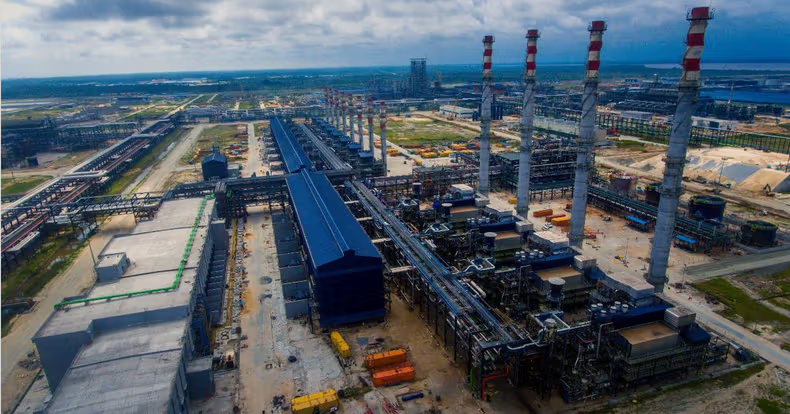
Despite the price pressure, the Dangote Refinery is pressing ahead with broader industrial ambitions. The facility, regarded as the world’s largest single-train refinery, has outlined plans to invest in electricity generation, steel manufacturing and port infrastructure to strengthen Africa’s industrial base and improve domestic energy security.
The refinery’s long-term objective is to reduce Nigeria’s dependence on imported refined products while positioning the country as a net exporter of petroleum derivatives.
Market Balancing Act
For Nigerian consumers, however, the immediate concern is the pump price. Independent marketers say regional variations will persist due to logistics and distribution costs.
The latest adjustment underscores Nigeria’s continued exposure to global oil dynamics, even as domestic refining capacity expands. As long as crude prices remain tethered to geopolitical developments, local fuel markets are likely to mirror the volatility of global energy trends.