



Cocoa remains Ghana’s most important agricultural export and a major source of income for hundreds of thousands of smallholder farmers. Yet, despite its strategic importance, cocoa production in Ghana continues to face persistent challenges—chief among them being plant diseases that significantly reduce yields and farmer incomes.
Cocoa diseases are responsible for substantial production losses each year, threatening livelihoods, national export earnings, and long-term sustainability of the sector. Understanding these disease challenges and the practical solutions available is essential for farmers, extension officers, agribusiness investors, and policymakers.
This editorial by The High Street Business examines Ghana’s major cocoa disease challenges and the most effective solutions available to farmers, focusing on prevention, management, and long-term resilience.
📢 GET A DETAILED ARTICLES + JOBS
Join SamBoad's WhatsApp Channel and never miss a post or opportunity.
Overview of Cocoa Farming in Ghana
Cocoa farming in Ghana is dominated by smallholder farmers cultivating plots typically ranging from 2 to 5 hectares. Production is concentrated mainly in:
-
Western North Region
-
Western Region
-
Central Region
While Ghana is globally recognised for producing high-quality cocoa, disease pressure remains a major constraint to achieving optimal yields.
Why Cocoa Diseases Are a Serious Threat
Cocoa diseases affect farms in several ways:
-
Reduced pod yield
-
Poor bean quality
-
Increased production costs
-
Farm abandonment in severe cases
-
Declining farmer income
Without proper management, disease outbreaks can wipe out large portions of a farm within a single season.
Major Cocoa Diseases in Ghana
1. Black Pod Disease
Black pod disease is the most widespread and destructive cocoa disease in Ghana.
Key Characteristics
-
Leads to premature pod rot
-
Thrives in wet and humid conditions
Impact
-
Can cause losses of up to half of annual production in affected farms
-
Most prevalent during the rainy season
2. Cocoa Swollen Shoot Virus Disease (CSSVD)
Swollen shoot virus is one of the most serious long-term threats to Ghana’s cocoa industry.
Key Characteristics
-
Swelling of shoots and stems
-
Yellowing or reddening of leaves
-
Gradual decline in productivity
Impact
-
No cure once trees are infected
-
Leads to eventual death of cocoa trees
-
Spreads through insect vectors and infected planting material
3. Vascular-Streak Dieback
This disease affects the internal transport system of cocoa trees.
Key Characteristics
-
Leaf yellowing and drop
-
Dieback of branches
-
Reduced pod formation
Impact
-
Gradual yield decline
-
Often worsens when combined with poor farm management
4. Pod and Stem Cankers
Cankers are infections that affect the bark of cocoa trees.
Key Characteristics
-
Sunken lesions on stems and branches
-
Gum-like exudates
-
Tree weakness
Impact
-
Can lead to tree death if untreated
-
Reduces overall farm productivity
Factors Contributing to Cocoa Disease Spread
Several underlying issues increase disease prevalence:
-
Poor farm sanitation
-
High humidity and dense shade
-
Use of infected planting materials
-
Inadequate pest control
-
Ageing cocoa trees
-
Limited farmer access to information
Addressing these factors is key to long-term disease control.
Practical Solutions for Cocoa Disease Management
1. Good Farm Sanitation
Sanitation is the foundation of disease control.
Best practices include:
-
Regular removal of diseased pods
-
Proper disposal of infected plant material
-
Clearing weeds and debris
Clean farms significantly reduce disease pressure.
2. Use of Improved and Disease-Resistant Varieties
Improved cocoa varieties offer:
-
Better tolerance to diseases
-
Higher yields
-
Faster maturity
Farmers are encouraged to replace old and unproductive trees with improved planting materials.
3. Proper Shade Management
While cocoa requires shade, excessive shade increases humidity.
Best practices:
-
Maintain optimal shade levels
-
Prune shade trees regularly
-
Allow adequate air circulation
Balanced shade reduces fungal disease development.
4. Regular Pruning
Pruning improves:
-
Light penetration
-
Airflow
-
Tree health
It also helps farmers detect disease symptoms early.
5. Timely Chemical Control
When necessary, approved fungicides and insecticides can be used responsibly.
Important considerations:
-
Apply at recommended intervals
-
Follow safety guidelines
-
Combine chemical control with cultural practices
Integrated approaches are more effective than chemical use alone.
6. Early Detection and Removal of Infected Trees
For diseases such as swollen shoot:
-
Early identification is critical
-
Infected trees should be removed promptly
-
Replanting should follow recommended guidelines
Delays increase spread and long-term losses.
7. Farmer Training and Extension Support
Knowledge plays a major role in disease control.
Training helps farmers:
-
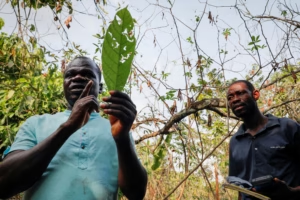
Identify disease symptoms early
-
Apply control measures correctly
Continuous education improves resilience.
Economic Impact of Cocoa Diseases on Farmers
Cocoa diseases directly affect farmer income by:
-
Reducing yield volumes
-
Increasing production costs
-
Lowering bean quality
-
Delaying harvest cycles
Effective disease management improves profitability and income stability.
Role of Research and Technology
Research institutions continue to:
-
Develop disease-tolerant varieties
-
Improve diagnostic methods
-
Promote integrated pest and disease management
Technology adoption will shape the future of cocoa farming.
Challenges in Implementing Disease Control
Despite available solutions, challenges remain:
-
Limited access to inputs
-
Labour shortages
-
Cost of replanting
-
Inadequate extension coverage
-
Farmer resistance to cutting infected trees
Addressing these barriers requires coordinated efforts.
Long-Term Sustainability of Ghana’s Cocoa Sector
Disease control is essential for sustainability.
Key focus areas include:
-
Rejuvenation of old farms
-
Strong farmer support systems
-
Consistent policy implementation
Healthy farms ensure long-term productivity and income.
The Way Forward for Cocoa Farmers
Cocoa diseases are not inevitable disasters. With the right knowledge, tools, and discipline, farmers can significantly reduce their impact. Proactive management, early detection, and continuous learning remain the most powerful weapons against cocoa diseases.
Protecting cocoa farms today safeguards Ghana’s cocoa future.
Frequently Asked Questions (FAQs)
What is the most common cocoa disease in Ghana?
Black pod disease is the most widespread cocoa disease affecting Ghanaian farms.
Can cocoa swollen shoot disease be cured?
No. Infected trees must be removed to prevent spread.
How can farmers reduce cocoa diseases naturally?
Good sanitation, pruning, proper shade management, and use of improved varieties help reduce disease pressure.
Do improved cocoa varieties resist diseases?
Many improved varieties offer better tolerance, though no variety is completely disease-proof.
Why is early disease detection important?
Early detection prevents widespread infection and reduces long-term losses.
Source: The High Street Business
Disclaimer: Some content on The High Street Business may be aggregated, summarized, or edited from third-party sources for informational purposes. Images and media are used under fair use or royalty-free licenses. The High Street Business is a subsidiary of SamBoad Publishing under SamBoad Business Group Ltd, registered in Ghana since 2014.
For concerns or inquiries, please visit our Privacy Policy or Contact Page.