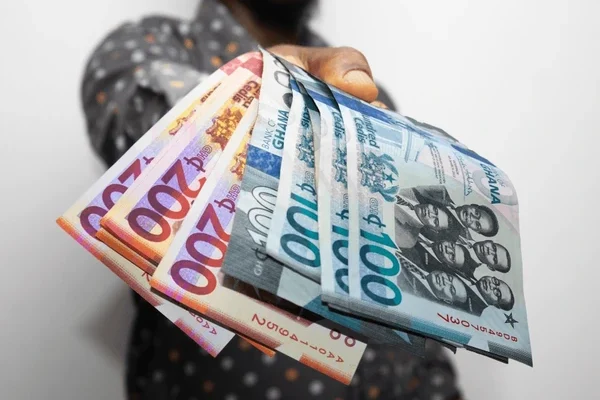








Government Approves 10 percent Increase in Single Spine Salary Structure Base Pay for 2025.
2025 Base Pay Increased by 10%: Government and Labour Reach Agreement After weeks of intense negotiations, the Government of Ghana…
African startups, launched 2025 with remarkable momentum, as funding in the ecosystem surged by 240% year-on-year to reach $289 million in January, representing a significant jump from $85 million recorded in January 2024.
Despite the comparatively lower figures in 2024, that month still ranked as the second-best January for startup funding since 2019, only surpassed by January 2022 during the investment boom, according to Africa: The Big Deal, a leading funding tracker.
The report cited that equity financing dominated the funding landscape, accounting for over 90% of the total capital raised, equating to $262 million. This figure marks the second-highest amount raised through equity financing in any January over the past six years.
Furthermore, the four largest funding deals in January 2025 originated from Nigeria, Kenya, Egypt, and South Africa which collectively secured roughly 60% of the continent’s total capital for the month.
Some notable startups included;
PowerGen, an energy-focused startup, which raised over $50 million to develop a scalable platform for distributed renewable energy solutions across Africa.
LemFi, a fintech company, secured $53 million to fuel its expansion into Asia and Europe.
Naked, an insurtech firm, raised $38 million in a Series B round to enhance automation and broaden its product offerings.
Enko Education attracted $24 million to expand its network of schools throughout Africa.
The recent boost in funding shows more African startups are expanding beyond the continent. To spread the benefits, other African countries need better systems to support and retain successful businesses. The strong start in January 2025 is a good sign, especially after the tough investment climate in 2023 and 2024. Last year, African startups raised just $1.5 billion in equity, making up less than 1% of global funding.
African startups, launched 2025 with remarkable momentum, as funding in the ecosystem surged by 240% year-on-year to reach $289 million in January, representing a significant jump from $85 million recorded in January 2024.
Despite the comparatively lower figures in 2024, that month still ranked as the second-best January for startup funding since 2019, only surpassed by January 2022 during the investment boom, according to Africa: The Big Deal, a leading funding tracker.
The report cited that equity financing dominated the funding landscape, accounting for over 90% of the total capital raised, equating to $262 million. This figure marks the second-highest amount raised through equity financing in any January over the past six years.
Furthermore, the four largest funding deals in January 2025 originated from Nigeria, Kenya, Egypt, and South Africa which collectively secured roughly 60% of the continent’s total capital for the month.
Some notable startups included;
PowerGen, an energy-focused startup, which raised over $50 million to develop a scalable platform for distributed renewable energy solutions across Africa.
LemFi, a fintech company, secured $53 million to fuel its expansion into Asia and Europe.
Naked, an insurtech firm, raised $38 million in a Series B round to enhance automation and broaden its product offerings.
Enko Education attracted $24 million to expand its network of schools throughout Africa.
The recent boost in funding shows more African startups are expanding beyond the continent. To spread the benefits, other African countries need better systems to support and retain successful businesses. The strong start in January 2025 is a good sign, especially after the tough investment climate in 2023 and 2024. Last year, African startups raised just $1.5 billion in equity, making up less than 1% of global funding.
African leaders have taken a major step toward securing the continent’s financial future with the approval of a new financial stability fund designed to prevent debt crises before they spiral out of control.
The African Development Bank (AfDB), which will host the fund, called the African Financial Stability Mechanism (AFSM), announced that it will have its own credit rating, allowing it to raise money from international capital markets. This means African nations struggling with mounting debt repayments may soon have a much-needed financial cushion.
The idea for the fund was first proposed in February 2022, when African leaders called on the AfDB to lay the groundwork for its creation. Following an African Union summit in Ethiopia over the weekend, the AfDB confirmed it is now pushing ahead with finalizing agreements and securing ratifications from member states.
Many African economies are under serious financial pressure, juggling external commercial debt repayments, sluggish revenue growth, rising government spending, and even the growing impacts of climate change. Yet, unlike Europe and Asia, Africa has never had its own regional financial safety net—until now.
“If implemented as designed, the AFSM can save African sovereigns approximately $20 billion in debt servicing costs by 2035,” said Kevin Urama, AfDB vice president and chief economist, in an interview with Reuters.
Membership in the fund will be voluntary, open to any African Union member state that wants to participate. Interestingly, the AfDB has also made provisions for up to 20% of the fund’s membership to come from non-African countries, as long as African nations maintain majority control.
The new fund could be a game-changer for countries like Kenya and Gabon, which have faced investor concerns over their ability to repay international Eurobonds. These concerns led to a sharp depreciation of Kenya’s currency in 2023 and a Fitch rating downgrade for Gabon just last week.
The AFSM will not function as a bailout fund, but rather as a safeguard to help countries avoid debt crises before they escalate.
“The core of AFSM’s mandate is not to support the provision of bailouts to African states but to prevent them,” said AfDB.
Source: Reuters
African leaders have taken a major step toward securing the continent’s financial future with the approval of a new financial stability fund designed to prevent debt crises before they spiral out of control.
The African Development Bank (AfDB), which will host the fund, called the African Financial Stability Mechanism (AFSM), announced that it will have its own credit rating, allowing it to raise money from international capital markets. This means African nations struggling with mounting debt repayments may soon have a much-needed financial cushion.
The idea for the fund was first proposed in February 2022, when African leaders called on the AfDB to lay the groundwork for its creation. Following an African Union summit in Ethiopia over the weekend, the AfDB confirmed it is now pushing ahead with finalizing agreements and securing ratifications from member states.
Many African economies are under serious financial pressure, juggling external commercial debt repayments, sluggish revenue growth, rising government spending, and even the growing impacts of climate change. Yet, unlike Europe and Asia, Africa has never had its own regional financial safety net—until now.
“If implemented as designed, the AFSM can save African sovereigns approximately $20 billion in debt servicing costs by 2035,” said Kevin Urama, AfDB vice president and chief economist, in an interview with Reuters.
Membership in the fund will be voluntary, open to any African Union member state that wants to participate. Interestingly, the AfDB has also made provisions for up to 20% of the fund’s membership to come from non-African countries, as long as African nations maintain majority control.
The new fund could be a game-changer for countries like Kenya and Gabon, which have faced investor concerns over their ability to repay international Eurobonds. These concerns led to a sharp depreciation of Kenya’s currency in 2023 and a Fitch rating downgrade for Gabon just last week.
The AFSM will not function as a bailout fund, but rather as a safeguard to help countries avoid debt crises before they escalate.
“The core of AFSM’s mandate is not to support the provision of bailouts to African states but to prevent them,” said AfDB.
Source: Reuters
By Nhyiraba Yaw Sompa Okyere
Doing business in Ghana presents immense opportunities, but it also comes with significant risks that businesses both local and foreign, must navigate.
As a Risk Management Practitioner for well over a decade and a half, the challenge has always been helping clients appreciate the biggest uncertainties they face and how they can navigate them.
If you have any form of business in Ghana, the biggest challenge you are likely to face now is economic stability. Let me explain:
Yes, all these challenges and risks—and so what? Should businesses fold? Absolutely NOT!
For you to succeed in Ghana, however, you need to think and actively have economic resilience strategies, risk assessments, adaptive pricing models, and local market engagement, these are essential to increase the odds of success.
Here are some risk mitigation strategies to consider:
This article was written by Nhyiraba Yaw Sompa Okyere, a lawyer, enterprise risk professional, and author with extensive experience in finance, sustainability, and governance law in Ghana. He has over 15 years of expertise in enterprise risk management and regulatory compliance.
Ghana’s former Minister for Education and Energy, Dr. Matthew Opoku Prempeh, has been announced as the keynote speaker for the…
Ghana Rugby Football Union Director, Ms. Rafatu Inusah, and renowned sports personality, has been appointed to the Women’s Rugby Advisory Committee…