


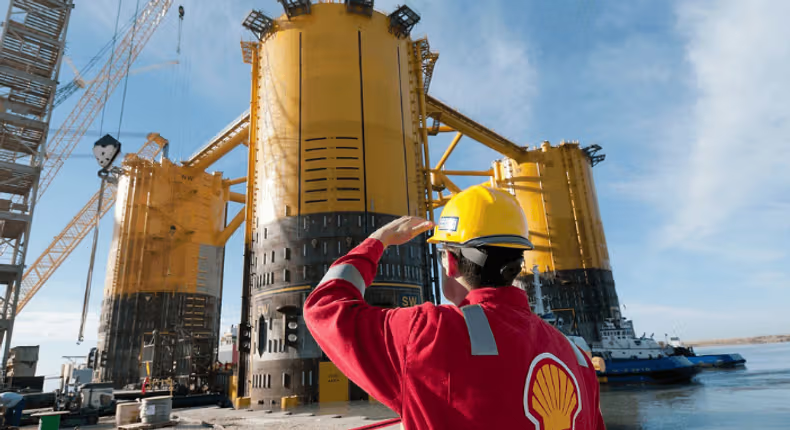
Energy major Shell plc is pressing ahead with plans to divest its downstream operations in South Africa, a strategic move that could mark the end of more than a century of direct participation in the country’s fuel retail sector.
The proposed sale, which includes a network of nearly 600 petrol stations, represents one of the most significant potential exits by a global energy company from South Africa’s downstream market in recent years. If completed, it would bring to a close a presence that dates back to 1902, when Shell first entered the market supplying petroleum for lighting and heating.
A Strategic Pivot Away From Retail
The divestment is part of a broader transformation within Shell, as the company recalibrates its global portfolio to prioritize higher-margin upstream operations such as oil and gas exploration and production.
📢 GET A DETAILED ARTICLES + JOBS
Join SamBoad's WhatsApp Channel and never miss a post or opportunity.
The assets are held under Shell Downstream South Africa (SDSA), one of the country’s largest fuel distribution and retail businesses. The decision to sell follows a comprehensive internal review first disclosed in 2024, in which the company signaled its intention to streamline operations and reduce exposure to refining and retail activities.
While the company has not disclosed a timeline for completion, it has reaffirmed that the process remains active. As is typical in transactions of this scale, Shell has maintained confidentiality around bidder negotiations and deal structure.
Strong International Interest
The scale and strategic importance of the assets have attracted interest from several global and regional players. Among those previously linked to the bidding process are Abu Dhabi National Oil Company and commodities trading firm Gunvor Group.
Earlier in the process, companies such as Puma Energy, Sasol, and PetroSA were also considered potential contenders, although reports suggest they are no longer in active negotiations.
At the outset of the divestment, the downstream portfolio was estimated to be worth approximately $1 billion, reflecting both the scale of the retail network and the maturity of South Africa’s fuel market.
A Highly Competitive Market
Shell’s planned exit comes against the backdrop of one of Africa’s most competitive fuel retail environments. The South African market is characterized by a mix of multinational and domestic operators with extensive infrastructure and established customer bases.
Key players include BP, TotalEnergies, Engen Petroleum, and Astron Energy, alongside Sasol. These companies collectively maintain nationwide service station networks and robust fuel distribution systems.
The competitive intensity of the market has historically compressed margins in downstream operations, reinforcing the strategic rationale for global players like Shell to reassess their exposure.
A Century-Long Legacy Nears Its End
Shell’s roots in South Africa run deep. For more than 120 years, the company has played a central role in the country’s energy landscape, evolving from a supplier of basic petroleum products into a major operator of retail and distribution infrastructure.
The potential exit underscores a broader shift within the global energy industry, where legacy oil majors are increasingly focusing on capital efficiency, portfolio optimization, and energy transition strategies.
In 2022, Shell simplified its corporate structure and rebranded from Royal Dutch Shell to Shell plc, consolidating its headquarters in the United Kingdom. The restructuring formed part of a wider effort to streamline operations and align the company with evolving market conditions.
Continued Presence Upstream
Despite its planned withdrawal from fuel retail, Shell is not exiting South Africa entirely. The company continues to pursue offshore oil and gas exploration projects along the country’s coastline.
These upstream ventures, however, have not been without controversy. Environmental groups have mounted legal challenges against certain exploration activities, citing concerns over ecological impact and sustainability.
Nonetheless, Shell appears committed to maintaining a presence in segments of the energy value chain that align with its long-term strategic priorities.
A Broader Industry Trend
Shell’s move mirrors a wider pattern among international energy companies, many of which have been divesting downstream and refining assets across Africa and other regions.
In recent years, Shell has exited or reduced its footprint in downstream markets including Australia, Botswana, Burkina Faso, Côte d’Ivoire, Guinea, Kenya, and Namibia. These transactions reflect a deliberate effort to reallocate capital toward upstream projects and emerging energy technologies.
For South Africa, the eventual sale of Shell’s retail network would signal not only the end of a historic chapter but also a reshaping of the competitive landscape. New ownership could introduce fresh investment, operational strategies, and market dynamics.
What Comes Next
The timing and outcome of the sale remain uncertain, with negotiations still ongoing. However, the direction of travel is clear: Shell is steadily repositioning itself away from traditional fuel retail in favor of a more focused, globally integrated energy strategy.
Should the deal be finalized, it would mark one of the most symbolic exits in Africa’s energy sector—closing a chapter that began at the dawn of the 20th century and redefining the role of multinational oil companies in the region’s evolving energy economy.
Disclaimer: Some content on The High Street Business may be aggregated, summarized, or edited from third-party sources for informational purposes. Images and media are used under fair use or royalty-free licenses. The High Street Business is a subsidiary of SamBoad Publishing under SamBoad Business Group Ltd, registered in Ghana since 2014.
For concerns or inquiries, please visit our Privacy Policy or Contact Page.

Samuel Kwame Boadu is a Ghanaian entrepreneur, writer, and digital consultant passionate about creating impactful stories and business solutions. He is the Founder & CEO of SamBoad Business Group Ltd, a dynamic company with subsidiaries in digital marketing, logistics, publishing, and risk management.