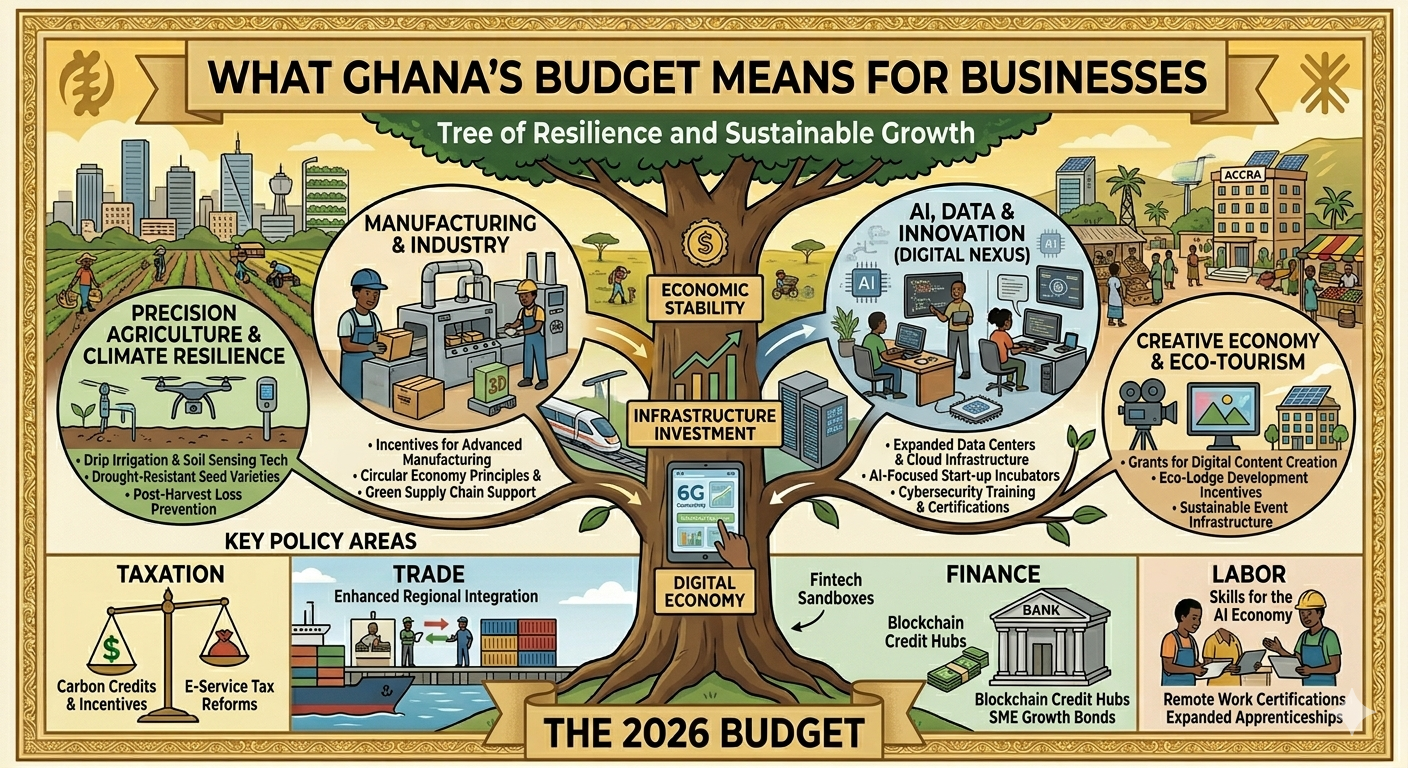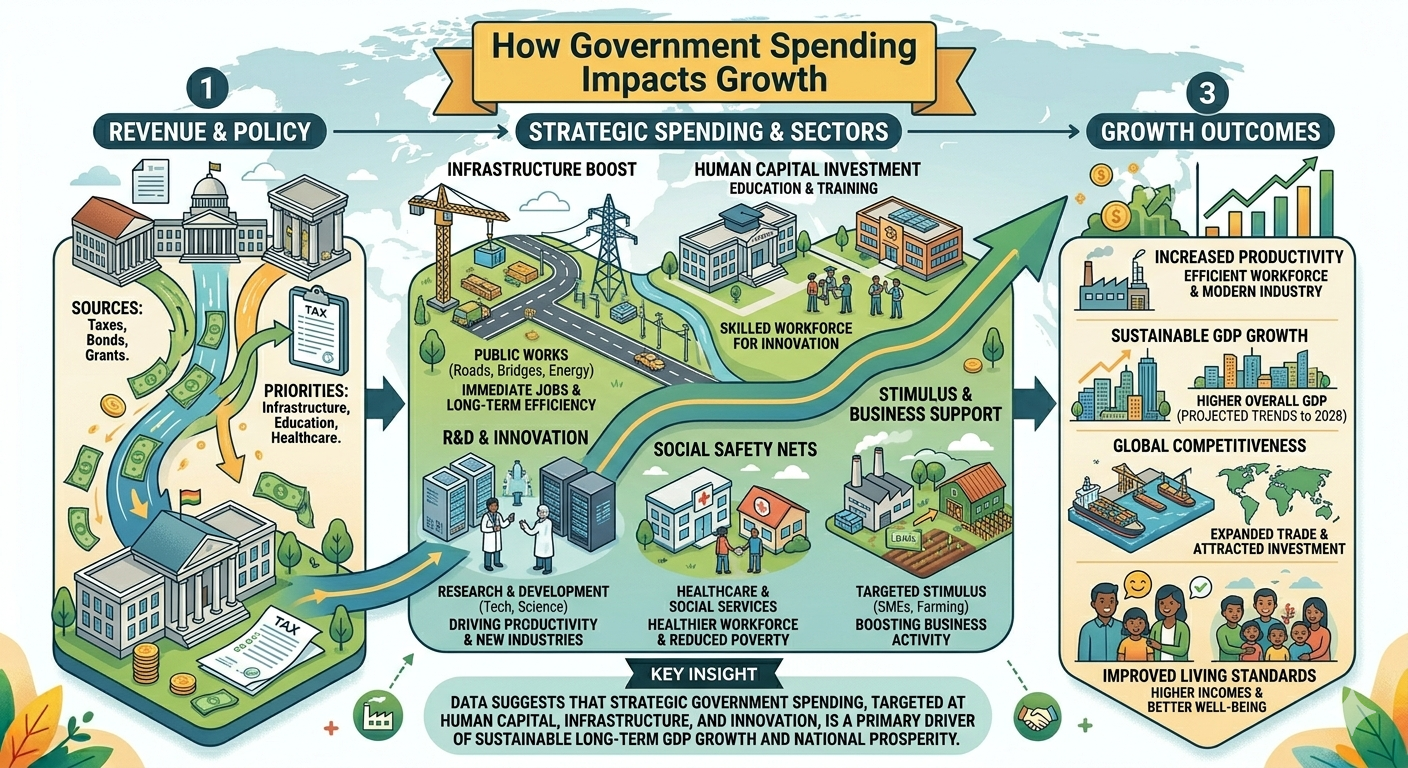











Tax policy is one of the most direct ways governments interacts with the private sector. In Ghana, taxes influence how businesses price goods and services, manage cash flow, invest, hire, and expand. While taxation is essential for funding public services and infrastructure, its structure, consistency, and implementation have significant implications for private sector performance.
In 2026, Ghana’s private sector operates within a tax environment shaped by revenue mobilization needs, fiscal consolidation, and economic stabilization efforts as researched by The High Street Business. Understanding the impact of tax policy on businesses is essential for entrepreneurs, investors, and corporate leaders navigating an increasingly cost-sensitive environment.
Why Tax Policy Matters to the Private Sector
Tax policy affects businesses more immediately than many other economic policies. Unlike long-term structural reforms, taxes influence daily operations and short-term decision-making.
📢 GET DETAILED ARTICLES + JOBS
Join THSB's WhatsApp Channel and never miss a post or opportunity.
Taxes affect profitability, pricing, working capital, and competitiveness. They also shape business confidence and investment appetite. When tax policies are predictable and well-administered, businesses can plan effectively. When they are complex or frequently changing, uncertainty increases.

For Ghana’s private sector, tax policy is both an operational reality and a strategic consideration.
The Structure of Ghana’s Tax System and Business Costs
The tax burden on businesses includes corporate income tax, value-added tax (VAT), import duties, levies, and sector-specific charges. Each component affects cost structures differently.
Corporate income tax influences retained earnings and reinvestment capacity. VAT affects pricing and consumer demand, particularly in price-sensitive markets. Import duties raise the cost of raw materials, machinery, and inputs for import-dependent businesses.
Multiple levies and fees add to compliance costs, especially for small and medium-sized enterprises. While individually modest, their cumulative impact can be significant.
Tax structure matters as much as tax rates. A complex system increases administrative burdens and raises the effective cost of doing business.
Tax Policy and Pricing Decisions
Businesses operate within competitive markets where pricing flexibility is limited. When tax burdens increase, firms face difficult choices: absorb costs, pass them on to consumers, or reduce margins.
In Ghana, where consumer purchasing power is constrained, passing taxes on to customers is often difficult. Businesses that absorb costs see margins shrink, reducing funds available for reinvestment and growth.
Tax policy therefore directly affects pricing strategies and market competitiveness.
Cash Flow Implications for Businesses
Tax obligations affect cash flow timing and liquidity. Advance tax payments, withholding taxes, and delayed VAT refunds can strain working capital.
For small businesses with limited buffers, cash flow disruptions can be more damaging than profit reductions. Delays in refunds or rigid payment schedules reduce financial flexibility.

Efficient tax administration and predictable timelines are critical for private sector liquidity and stability.
Tax Policy and Investment Decisions
Investment decisions are sensitive to after-tax returns. High or uncertain tax burdens discourage long-term investments, particularly in capital-intensive sectors.
Tax incentives, allowances, and exemptions influence sectoral investment patterns. When incentives are transparent and stable, they encourage capital formation and job creation.
However, inconsistency or abrupt changes to incentive regimes undermine investor confidence and distort planning.
For Ghana’s private sector, tax predictability is a key driver of investment.
The Impact on Small and Medium-Sized Enterprises
SMEs dominate Ghana’s private sector and are particularly affected by tax policy. Compliance costs, documentation requirements, and enforcement practices often weigh more heavily on smaller firms.
Many SMEs operate at thin margins and lack specialized tax expertise. Complex tax regimes increase the risk of non-compliance and penalties.
At the same time, tax policy influences formalization decisions. When compliance costs outweigh perceived benefits, businesses remain informal, limiting growth and access to finance.
Balanced tax policies that consider SME capacity support formalization and private sector expansion.
Tax Policy, Informality, and Business Behavior
Informality remains a defining feature of Ghana’s private sector. Tax policy plays a central role in this dynamic.
High compliance costs and perceived unfairness discourage formal participation. Informal businesses avoid taxes but also forgo access to finance, contracts, and legal protection.
Effective tax policy encourages voluntary compliance by being fair, transparent, and administratively efficient.
Reducing informality strengthens the tax base while supporting business growth.
Competitiveness and Regional Considerations
Tax policy affects Ghana’s competitiveness within the region. Businesses compare tax burdens, incentives, and compliance environments across markets.
High effective tax rates reduce competitiveness, particularly for exporters and manufacturers facing regional competition.
Aligning tax policy with regional realities supports trade, investment, and industrial development.
Competitiveness depends not only on rates but also on administration and predictability.
Tax Administration and Business Confidence
How taxes are administered matters as much as the tax laws themselves. Enforcement practices, audits, and dispute resolution affect business confidence.
Transparent processes and consistent enforcement build trust between businesses and tax authorities. Arbitrary or aggressive enforcement undermines confidence and compliance.
Digitalization of tax administration improves efficiency, reduces errors, and lowers compliance costs.
Business confidence improves when tax systems are fair and predictable.
Sectoral Effects of Tax Policy
Different sectors experience tax policy impacts differently. Manufacturing and agribusiness face import duties on inputs. Retail and services are affected by VAT compliance and consumer demand.
Export-oriented businesses are sensitive to tax rebates and incentives. Capital-intensive sectors depend on depreciation allowances and investment incentives.
Understanding sector-specific impacts helps businesses plan strategically.
How Businesses Adapt to Tax Policy
Businesses adapt to tax policy through pricing, cost control, and operational restructuring. Some invest in efficiency to offset tax costs. Others diversify products or markets.
Strong accounting systems and professional advice improve compliance and planning. Financial discipline reduces tax-related risk.
Adaptation strategies determine how well businesses absorb policy changes.
The Broader Economic Impact on the Private Sector
Tax policy shapes private sector growth, employment, and innovation. When tax systems support productivity and investment, the private sector expands.
When tax burdens suppress margins and confidence, growth slows. The private sector’s ability to drive economic development depends on balanced tax policies.
Tax policy is therefore both a revenue tool and a development instrument.
Why This Matters in 2026
In 2026, Ghana’s fiscal environment remains sensitive. Tax policy continues to play a central role in economic stabilization and growth.
Private sector resilience depends on understanding tax impacts and planning accordingly. Businesses that align strategies with tax realities are better positioned to survive and grow.
Tax policy is not just a government concern—it is a core business issue.
FAQs
How does tax policy affect Ghana’s private sector most directly?
Through business costs, cash flow, pricing, and investment decisions.
Are SMEs more affected by tax policy than large firms?
Yes. SMEs face higher relative compliance and cash flow pressures.
Does tax policy influence business formalization?
Yes. Fair and efficient tax systems encourage formal participation.
Can tax incentives improve private sector growth?
Yes, when they are transparent, stable, and well-targeted.
How can businesses manage tax-related risks?
By improving accounting systems, planning cash flow, and staying informed on policy changes.
Source: The High Street Business
Disclaimer: Some content on The High Street Business may be aggregated, summarized, or edited from third-party sources for informational purposes. Images and media are used under fair use or royalty-free licenses. The High Street Business is a subsidiary of SamBoad Publishing under SamBoad Business Group Ltd, registered in Ghana since 2014.
For concerns or inquiries, please visit our Privacy Policy or Contact Page.

Samuel Kwame Boadu is a Ghanaian entrepreneur, writer, and digital consultant passionate about creating impactful stories and business solutions. He is the Founder & CEO of SamBoad Business Group Ltd, a dynamic company with subsidiaries in digital marketing, logistics, publishing, and risk management.