









Accra, Ghana — Ghana’s microfinance subsector has been called to undertake sweeping reforms, tighten governance, and embrace digital transformation to stay relevant in a rapidly changing financial landscape.
The call came at the 14th Annual General Meeting (AGM) of the Ghana Association of Microfinance Companies (GAMC), held on October 30, 2025, under the theme “Scaling for Impact: Empowering Microfinance Companies to Drive Industry Growth.”
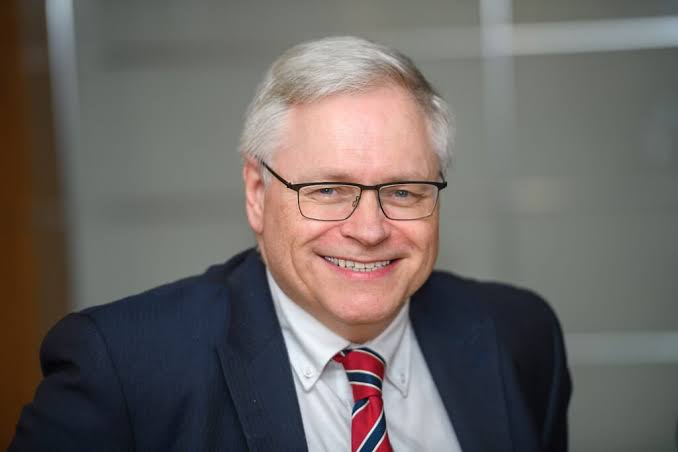
Mr. David Cracknell
📢 GET DETAILED ARTICLES + JOBS
Join THSB's WhatsApp Channel and never miss a post or opportunity.
Delivering the keynote address, David Cracknell, Managing Director of First Principles Consulting, Kenya, warned that the survival of microfinance companies (MFCs) hinges on collective innovation and strategic adaptation to digital finance trends.
“Microfinance companies must redefine their vision and evolve their operating models to meet the demands of a digital economy,” he cautioned.
Cracknell identified weak governance, insider lending, poor credit controls, and undercapitalisation as major causes of institutional failure, recalling the 2019 collapse of several Savings and Loan Companies in Ghana. He acknowledged that although the Bank of Ghana (BoG) introduced governance and risk management guidelines in response, compliance and operational efficiency remain weak across many firms.
“A bad portfolio is our fault,” Cracknell noted pointedly, urging microfinance managers to enhance governance, improve capital structures beyond founder equity, and focus on loan recovery discipline.

Mr. Louis Amo
He outlined a five-pillar strategy to revitalise the sector:
-
Strengthen governance, capitalisation, and risk management.
-
Modernise business models to stay competitive.
-
Invest in staff development, automation, and digital capacity.
-
Promote collective action through shared platforms.
-
Deepen advocacy to influence regulation and policy.
Cracknell also distinguished between Digital Credit—mobile money-based lending with automated decision-making—and Digitising Credit—technology-driven improvements in traditional lending processes such as credit referencing and loan monitoring.
“Institutions that fail to digitise will be left behind,” he warned.
He proposed that MFCs adopt shared digital infrastructure to reduce costs and improve efficiency. Suggested platforms include:
-
Banking as a Service (BaaS): Shared core banking systems.
-
Payments as a Service (PaaS): Access to national payment systems.
-
Software as a Service (SaaS): Digitised loan and agent systems.
-
Infrastructure as a Service (IaaS): Shared data centres and cloud solutions.
The keynote also underscored the importance of rebuilding public trust and projecting institutional credibility through transparency, customer service, and sound governance. Cracknell further encouraged MFCs to become “investment-ready” by attracting equity partners and affordable debt to scale sustainably.
Representing the Ministry of Finance, Louis Amo, Director of the Financial Sector Division, lauded the microfinance industry’s resilience through past economic challenges.
“You have weathered the storms and continue to play a vital role in Ghana’s financial ecosystem,” Amo said, adding that governance, compliance, and customer service remain the “foundations of real impact.”
Rebecca Addo, Board Chairperson of GAMC, highlighted new regulatory expectations ahead, including mandatory client verification, data protection certification, and cybersecurity compliance. While acknowledging the challenges, she expressed confidence in the sector’s capacity to adapt.
“Together, we can strengthen the financial ecosystem, enhance credibility, and drive the sustainable growth our industry and nation deserve,” she affirmed.
The meeting closed on a note of cautious optimism, with stakeholders agreeing that the path forward must balance innovation, discipline, and collective reform — the essential ingredients for rebuilding trust and ensuring the microfinance industry’s future relevance.
Source: Accra Business News
Disclaimer: Some content on The High Street Business may be aggregated, summarized, or edited from third-party sources for informational purposes. Images and media are used under fair use or royalty-free licenses. The High Street Business is a subsidiary of SamBoad Publishing under SamBoad Business Group Ltd, registered in Ghana since 2014.
For concerns or inquiries, please visit our Privacy Policy or Contact Page.

Samuel Kwame Boadu is a Ghanaian entrepreneur, writer, and digital consultant passionate about creating impactful stories and business solutions. He is the Founder & CEO of SamBoad Business Group Ltd, a dynamic company with subsidiaries in digital marketing, logistics, publishing, and risk management.