




Around 2,000 rubber farmers staged a protest in Sekondi-Takoradi in response to proposals to ban the export of raw rubber

How Pension Funds Are Influencing the Ghana Stock Exchange

Around 2,000 rubber farmers and aggregators from the Western Region held a peaceful protest in the Sekondi-Takoradi Metropolis to oppose calls for a total ban on raw rubber exports, calling the arguments against the trade misleading and self-serving.

Protesters from rubber-growing communities across the Western Region marched through key streets of Sekondi-Takoradi before handing a petition to the Western Regional Minister, Joseph Nelson, at the Regional Coordinating Council.

Most of the protesters wore red and black, holding signs with messages like “Farmers Say No to Monopoly,” “Rubber Is for All Ghanaians,” “No Instant Payment, No Ban,” “Processors Are Greedy,” and “Everyone Must Eat.”

📢 GET A DETAILED ARTICLES + JOBS

Join SamBoad's WhatsApp Channel and never miss a post or opportunity.

📲 Join the Channel Now

Exports are Regulated, not Unchecked Farmers

In the petition issued by the Rubber Farmers of Ghana (RUFAG) and allied actors in the natural rubber industry, the group rejected claims that raw rubber exports are unchecked and undermining Ghana’s industrialisation drive.

According to the farmers, exports of raw rubber operate under an existing government-approved regulatory framework supervised by the Tree Crops Development Authority (TCDA).
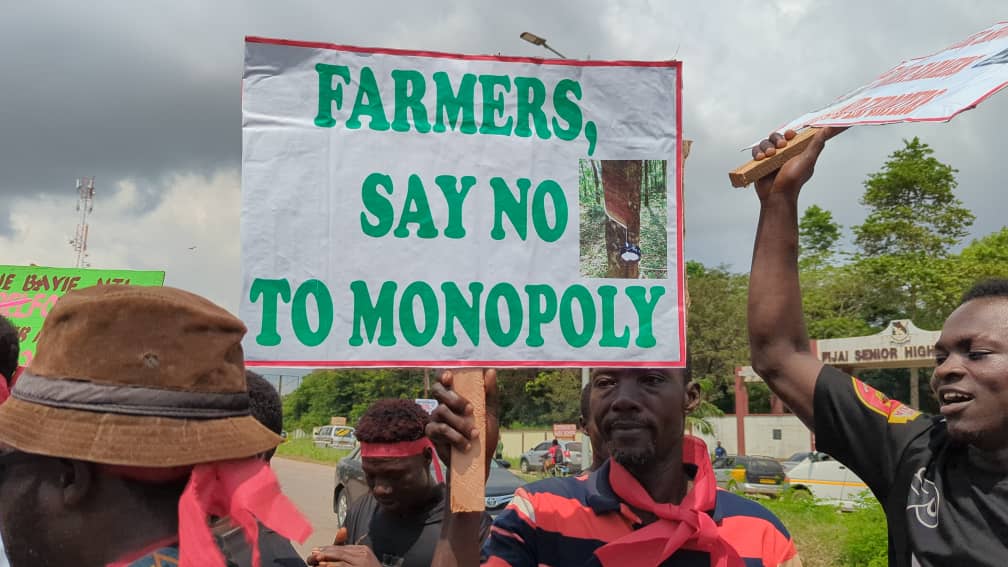
About 2,000 rubber farmers protest in Sekondi-Tarkoradi over calls to ban raw rubber exports

They cited a TCDA directive issued on May 2, 2025, which requires all exporters of unprocessed rubber, cashew and shea to be registered, licensed and issued permits before export.

“This directive is strictly enforced in collaboration with the Customs Division of the Ghana Revenue Authority, the Ghana Ports and Harbours Authority and other security agencies,” the petition stated, adding that TCDA maintains a permanent presence at the ports to ensure compliance.

OTHERS READING:  How Ghanaian Entrepreneurs Achieve Work–Life Balance in a Demanding Business Environment

The farmers argue that claims of “unchecked exports” ignore the regulatory framework established under Act 1010 and L.I. 2471.

Processors Accused of Pushing Monopoly Agenda

RUFAG accused some processing companies and their allies of pushing for an export ban not to promote industrialisation, but to eliminate competition and force farmers to sell rubber cup lumps at low prices.

They warned that restricting competition would hurt, rather than protect, jobs in the sector. While processing factories reportedly employ fewer than 1,000 workers nationwide, the farmers noted that rubber farming and trading sustain the livelihoods of hundreds of thousands of people, including tappers, carriers, loaders, farm maintenance workers and transport operators.
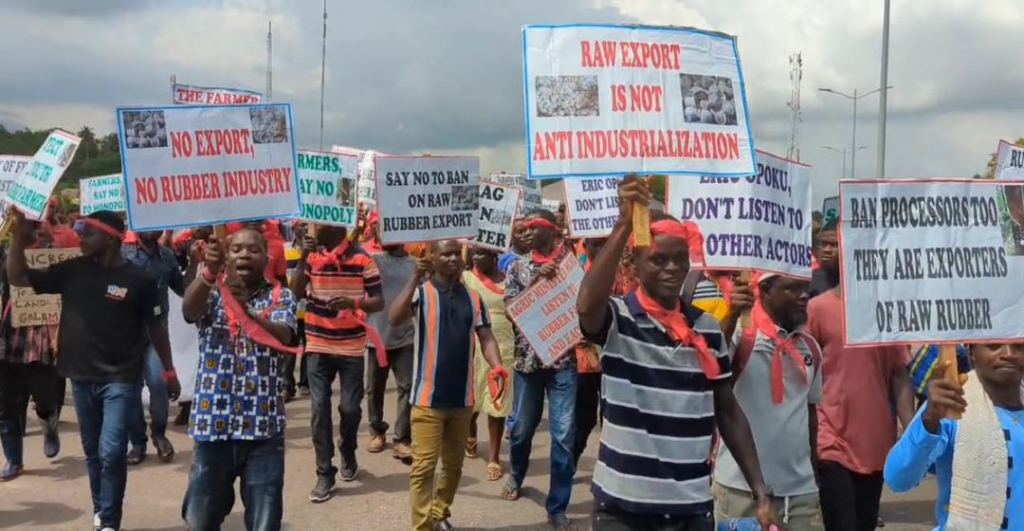
About 2,000 rubber farmers protest in Sekondi-Tarkoradi over calls to ban raw rubber exports

The petition noted that more than two million people depend on income from rubber farming and warned that falling farm-gate prices could worsen rural poverty and drive more young people toward illegal mining.

Disputing Revenue Loss Claims

The farmers also questioned claims that Ghana loses up to US$100 million annually due to raw rubber exports.

They insist exporters comply with statutory levies payable to TCDA, while alleging that some processing companies themselves are not fully complying with levy payments, contrary to claims of supporting government revenue mobilisation.

Limited Value Addition in Ghana

RUFAG pointed out that Ghana doesn’t yet have advanced rubber processing plants, explaining that most local processors simply turn rubber cup lumps into Technically Specified Rubber (TSR), which is still mainly exported as a raw commodity.

After decades of operation, the farmers say Ghana is yet to see significant production of finished rubber products such as tyres, gloves or medical supplies, questioning the industrialisation argument being advanced.

OTHERS READING:  Around 2,000 rubber farmers staged a protest in Sekondi-Takoradi in response to proposals to ban the export of raw rubber

COVID-19 Lessons

Farmers remembered that during the COVID-19 pandemic, many processors stopped buying their goods, leaving them in a tough spot, while exporters stepped in to offer alternative markets that kept them going. The petition pointed out that having multiple markets gives farmers security and helps avoid unnecessary hardship.

No Illegality in Exports Farmers Insist

The group rejected claims that raw rubber exports breach Act 1010 or L.I. 2471, stressing that the laws don’t ban exports but instead authorize the TCDA to oversee them through a permit system.

They warned that allegations of illegality without credible evidence could undermine investor confidence and weaken trust in regulatory institutions.

Disassociation from ANRAG

In their petition, the farmers officially distanced themselves from the Association of Natural Rubber Actors of Ghana (ANRAG), calling it a processor-led group that fails to represent the broader interests of the rubber value chain.

They urged government and policymakers to engage broadly with all legitimate stakeholders before taking decisions that affect the industry.

Regional Minister Responds

After receiving petition, Western Regional Minister Joseph Nelson praised the demonstrators for their peaceful behavior and assured them that their concerns would be passed on to the relevant authorities, including the President of Ghana.

Source: Accra Business News

Disclaimer: Some content on The High Street Business may be aggregated, summarized, or edited from third-party sources for informational purposes. Images and media are used under fair use or royalty-free licenses. The High Street Business is a subsidiary of SamBoad Publishing under SamBoad Business Group Ltd, registered in Ghana since 2014.

OTHERS READING:  Ghanaians Spent GH¢60 Million on Outbound Travel in 2023 — GSS Report Reveals Cross-Border Trade and Family Ties

For concerns or inquiries, please visit our Privacy Policy or Contact Page.

Leave a Reply

Your email address will not be published. Required fields are marked *

Around 2,000 rubber farmers staged a protest in Sekondi-Takoradi in response to proposals to ban the export of raw rubber

Why Employee Retention Saves More Money

Around 2,000 rubber farmers and aggregators from the Western Region held a peaceful protest in the Sekondi-Takoradi Metropolis to oppose calls for a total ban on raw rubber exports, calling the arguments against the trade misleading and self-serving.

Protesters from rubber-growing communities across the Western Region marched through key streets of Sekondi-Takoradi before handing a petition to the Western Regional Minister, Joseph Nelson, at the Regional Coordinating Council.

Most of the protesters wore red and black, holding signs with messages like “Farmers Say No to Monopoly,” “Rubber Is for All Ghanaians,” “No Instant Payment, No Ban,” “Processors Are Greedy,” and “Everyone Must Eat.”

📢 GET A DETAILED ARTICLES + JOBS

Join SamBoad's WhatsApp Channel and never miss a post or opportunity.

📲 Join the Channel Now

Exports are Regulated, not Unchecked Farmers

In the petition issued by the Rubber Farmers of Ghana (RUFAG) and allied actors in the natural rubber industry, the group rejected claims that raw rubber exports are unchecked and undermining Ghana’s industrialisation drive.

According to the farmers, exports of raw rubber operate under an existing government-approved regulatory framework supervised by the Tree Crops Development Authority (TCDA).

About 2,000 rubber farmers protest in Sekondi-Tarkoradi over calls to ban raw rubber exports

They cited a TCDA directive issued on May 2, 2025, which requires all exporters of unprocessed rubber, cashew and shea to be registered, licensed and issued permits before export.

“This directive is strictly enforced in collaboration with the Customs Division of the Ghana Revenue Authority, the Ghana Ports and Harbours Authority and other security agencies,” the petition stated, adding that TCDA maintains a permanent presence at the ports to ensure compliance.

OTHERS READING:  MTN Ghana Bets on Blockchain to Rebuild Trust in Digital Finance

The farmers argue that claims of “unchecked exports” ignore the regulatory framework established under Act 1010 and L.I. 2471.

Processors Accused of Pushing Monopoly Agenda

RUFAG accused some processing companies and their allies of pushing for an export ban not to promote industrialisation, but to eliminate competition and force farmers to sell rubber cup lumps at low prices.

They warned that restricting competition would hurt, rather than protect, jobs in the sector. While processing factories reportedly employ fewer than 1,000 workers nationwide, the farmers noted that rubber farming and trading sustain the livelihoods of hundreds of thousands of people, including tappers, carriers, loaders, farm maintenance workers and transport operators.

About 2,000 rubber farmers protest in Sekondi-Tarkoradi over calls to ban raw rubber exports

The petition noted that more than two million people depend on income from rubber farming and warned that falling farm-gate prices could worsen rural poverty and drive more young people toward illegal mining.

Disputing Revenue Loss Claims

The farmers also questioned claims that Ghana loses up to US$100 million annually due to raw rubber exports.

They insist exporters comply with statutory levies payable to TCDA, while alleging that some processing companies themselves are not fully complying with levy payments, contrary to claims of supporting government revenue mobilisation.

Limited Value Addition in Ghana

RUFAG pointed out that Ghana doesn’t yet have advanced rubber processing plants, explaining that most local processors simply turn rubber cup lumps into Technically Specified Rubber (TSR), which is still mainly exported as a raw commodity.

After decades of operation, the farmers say Ghana is yet to see significant production of finished rubber products such as tyres, gloves or medical supplies, questioning the industrialisation argument being advanced.

OTHERS READING:  How Interest Rates Affect Everyday Ghanaians

COVID-19 Lessons

Farmers remembered that during the COVID-19 pandemic, many processors stopped buying their goods, leaving them in a tough spot, while exporters stepped in to offer alternative markets that kept them going. The petition pointed out that having multiple markets gives farmers security and helps avoid unnecessary hardship.

No Illegality in Exports Farmers Insist

The group rejected claims that raw rubber exports breach Act 1010 or L.I. 2471, stressing that the laws don’t ban exports but instead authorize the TCDA to oversee them through a permit system.

They warned that allegations of illegality without credible evidence could undermine investor confidence and weaken trust in regulatory institutions.

Disassociation from ANRAG

In their petition, the farmers officially distanced themselves from the Association of Natural Rubber Actors of Ghana (ANRAG), calling it a processor-led group that fails to represent the broader interests of the rubber value chain.

They urged government and policymakers to engage broadly with all legitimate stakeholders before taking decisions that affect the industry.

Regional Minister Responds

After receiving petition, Western Regional Minister Joseph Nelson praised the demonstrators for their peaceful behavior and assured them that their concerns would be passed on to the relevant authorities, including the President of Ghana.

Source: Accra Business News

Disclaimer: Some content on The High Street Business may be aggregated, summarized, or edited from third-party sources for informational purposes. Images and media are used under fair use or royalty-free licenses. The High Street Business is a subsidiary of SamBoad Publishing under SamBoad Business Group Ltd, registered in Ghana since 2014.

OTHERS READING:  Global Finance Still Failing Nature: $30 Spent on Destruction for Every $1 on Protection

For concerns or inquiries, please visit our Privacy Policy or Contact Page.

Leave a Reply

Your email address will not be published. Required fields are marked *

error: Content is protected. Kindly credit The High Street Business when referencing.