




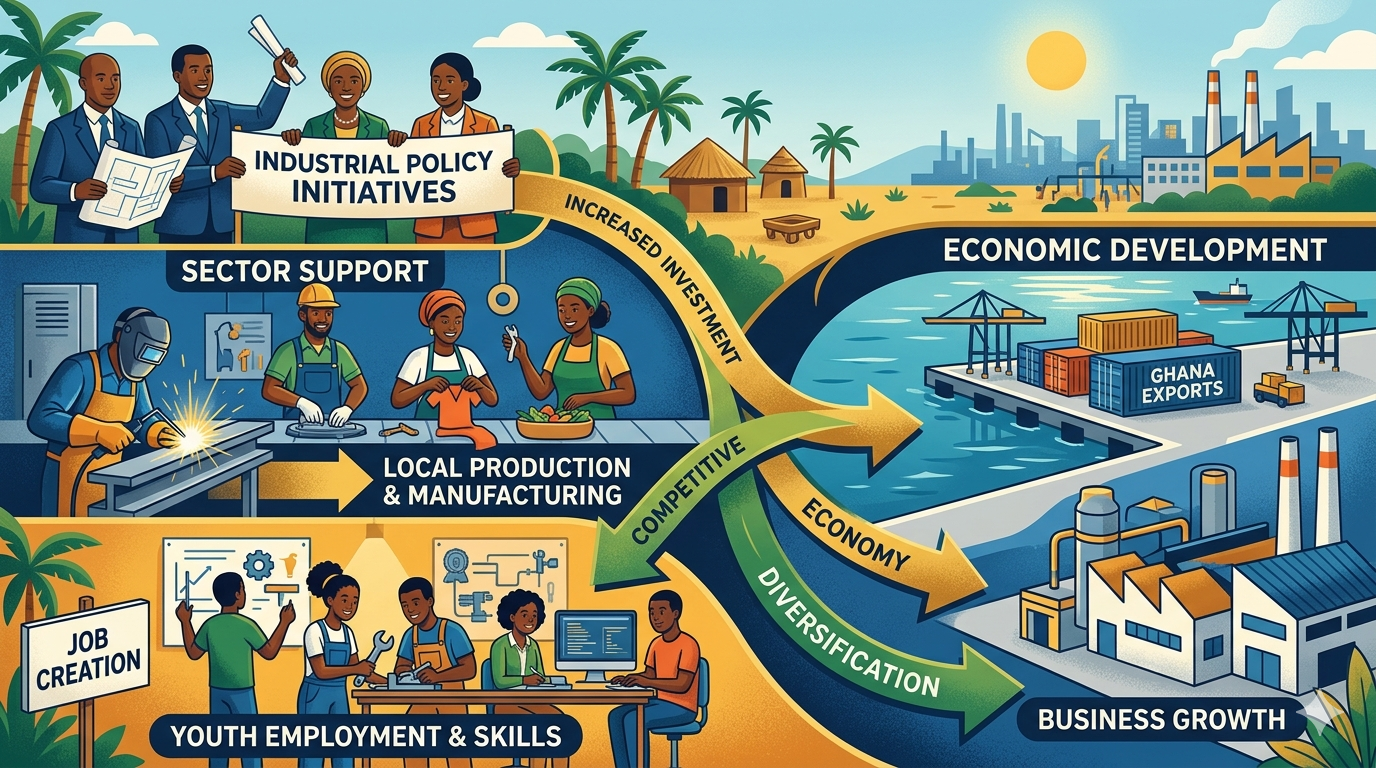
How Industrial Policy Affects Jobs – Industrial policy influences job creation, business growth, and economic development. Here’s how industrial policies affect employment and opportunities in Ghana.
How Industrial Policy Affects Jobs
Industrial policy plays a major role in shaping how economies grow and how jobs are created. Governments use industrial policies to support key sectors, encourage local production, attract investment, and strengthen industries that can drive long-term development.
In Ghana, industrial policy is closely linked to conversations about manufacturing, youth employment, economic diversification, and business expansion. The success of these policies can influence how many jobs are created, which industries grow, and how competitive the economy becomes over time.
📢 GET A DETAILED ARTICLES + JOBS
Join SamBoad's WhatsApp Channel and never miss a post or opportunity.
What Is Industrial Policy?
Industrial policy refers to government strategies designed to support and develop specific sectors of the economy.
These policies may include: Tax incentives for industries, support for local manufacturing, infrastructure development, export promotion programmes, skills training initiatives, and Investment incentives. The goal is usually to strengthen productive sectors that can create jobs and support economic growth.
Why Industrial Policy Matters for Employment
Industrial policy directly affects employment because growing industries often require more workers. When governments support sectors such as: Manufacturing, agribusiness, construction, technology, and energy, businesses may expand operations and increase hiring.
Job creation is often one of the main reasons governments invest heavily in industrial development programmes.
Manufacturing and Job Creation
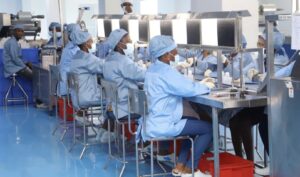
Manufacturing is one of the sectors most commonly targeted by industrial policies because it can employ large numbers of people. Factories and industrial businesses create opportunities for: Skilled technicians, engineers, machine operators, administrative staff, transport and logistics workers.
Manufacturing growth also creates indirect jobs through supply chains, retail networks, and service industries. In Ghana, industrial expansion is frequently discussed as a way to address youth unemployment and improve economic opportunities.
Supporting Small and Medium-Sized Businesses
Industrial policy does not only benefit large corporations. Small and medium-sized enterprises can also gain from supportive economic policies. Governments may provide: Access to financing, training programmes, tax reliefs, and business development support.
These measures can help smaller businesses expand, employ more workers, and improve productivity. Because SMEs contribute significantly to employment in Ghana, policies that strengthen them can have broad economic effects.
Infrastructure and Employment Growth
Infrastructure investment is often part of industrial policy because industries depend on reliable systems to operate efficiently. Better: Roads and transport systems, electricity supply, water access, and Internet connectivity can lower business costs and encourage industrial expansion. As industries grow, demand for labour usually increases as well.
Skills Development and Workforce Training
Industrial policies often focus on education and technical training to prepare workers for modern industries.
This may include:
- Vocational training
- Technical education
- Apprenticeship programmes
- Digital and engineering skills development
A skilled workforce helps industries become more productive and competitive while improving employment opportunities for young people.
The Link Between Investment and Jobs
Industrial policy can also attract local and foreign investment. Investors are more likely to establish factories and businesses in countries with:
- Stable economic policies
- Reliable infrastructure
- Skilled labour
- Supportive business environments
Increased investment can lead to new industries, business expansion, and job creation across multiple sectors.
Challenges That Affect Job Growth
Although industrial policies can create employment opportunities, challenges sometimes limit their effectiveness.
These may include:
- High production costs
- Inconsistent policies
- Limited financing
- Energy supply problems
- Competition from imported goods
If industries struggle with these issues, job creation may slow despite policy support.
Why Long-Term Planning Is Important
Industrial development often takes time. Factories, infrastructure projects, and workforce development programmes require long-term planning and sustained investment before their full impact on employment becomes visible.
Consistent industrial policies are therefore important for maintaining investor confidence and supporting stable job growth over time.
Industrial Policy and Economic Transformation
Countries that successfully industrialise often experience:
- Higher productivity
- Stronger exports
- Better employment opportunities
- Increased incomes
- Greater economic resilience
Industrial policy can help shift economies from dependence on raw commodity exports toward more diversified and value-driven production systems.
For Ghana, this transformation is often viewed as an important step toward sustainable development and long-term prosperity.
THSB’s Conclusion
Industrial policy affects jobs because it shapes the growth of industries, businesses, and investment opportunities. Through support for manufacturing, infrastructure, skills development, and local enterprises, governments can create conditions that encourage employment growth and economic expansion.
In Ghana, industrial policy remains an important part of efforts to strengthen the economy, reduce unemployment, and build a more diversified and resilient future.
Source: The High Street Business
Disclaimer: Some content on The High Street Business may be aggregated, summarized, or edited from third-party sources for informational purposes. Images and media are used under fair use or royalty-free licenses. The High Street Business is a subsidiary of SamBoad Publishing under SamBoad Business Group Ltd, registered in Ghana since 2014.
For concerns or inquiries, please visit our Privacy Policy or Contact Page.

Esther Aku-Sika is a content writer and social media strategist who helps brands and startups grow through intentional storytelling and practical marketing strategies. With a keen eye for trends and audience behavior, she shares business insights, content strategies, and real-life lessons to help entrepreneurs build visibility and turn ideas into income. Through her writing, she simplifies complex concepts and equips readers with actionable steps to grow in today’s digital space.




