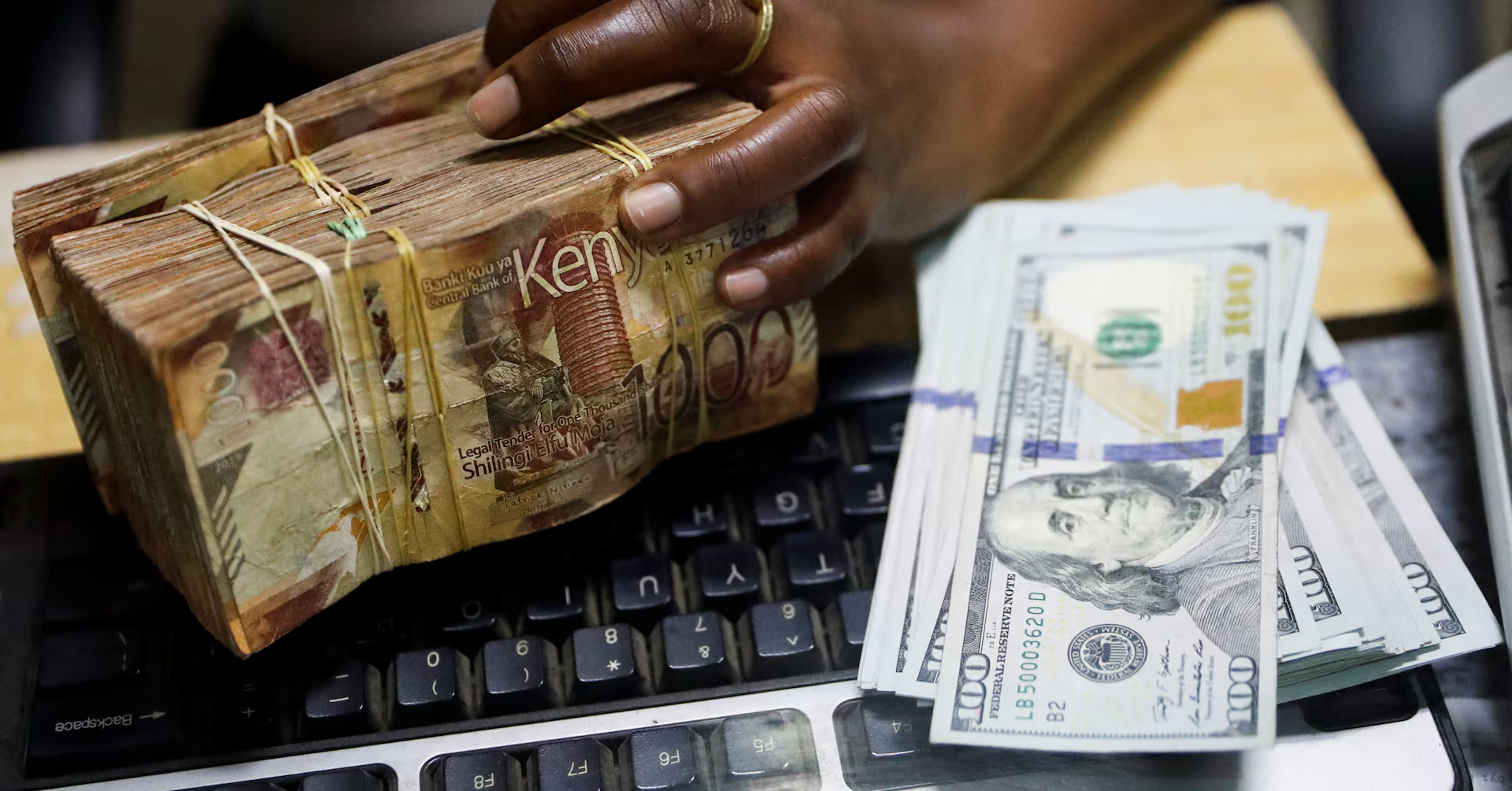




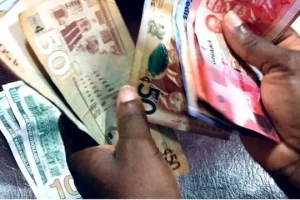



Accra, Ghana — Ghana’s cedi has opened 2026 on a weaker footing, losing 4.0% of its value against the US dollar in January, according to the Bank of Ghana’s January 2026 Summary of Economic and Financial Data, marking a reversal from the currency’s strong performance in 2025.
The central bank’s data show the cedi trading at GH¢10.88 to the US dollar in the interbank market in January 2026, compared with GH¢10.45 in December 2025. In the retail market, the local currency sold at around GH¢12.00 to the dollar, reflecting wider spreads and renewed demand pressures.
The January depreciation contrasts sharply with developments last year. The cedi began 2025 on a weak note, shedding 3.9% in January, with losses extending into February and March before stabilising in April. A dramatic turnaround followed in May 2025, when the currency recorded a 43% gain against the dollar from the start of the year, driven by improved external balances, policy tightening and stronger confidence.
📢 GET DETAILED ARTICLES + JOBS
Join THSB's WhatsApp Channel and never miss a post or opportunity.
That momentum was sustained through the rest of 2025, with the cedi closing the year with a year-to-date appreciation of 40.7%, one of its strongest performances in recent history.
By contrast, January 2026 has seen renewed pressure across major currencies. The cedi depreciated by 4.9% against the British pound and 4.1% against the euro during the month, trading at GH¢14.77 to the pound and GH¢12.80 to the euro in the interbank market.
Short-term movements over the past two weeks point to mixed dynamics between official and retail markets. In the interbank market, the dollar strengthened modestly, with the US dollar/cedi midrate rising to GH¢10.88 from GH¢10.70. Over the same period, however, the pound and euro weakened, easing by 2.70% and 2.57% respectively to close at GH¢14.78 and GH¢12.80.
Retail market trends told a different story. The dollar firmed only slightly, closing at a midrate of GH¢11.90, down from GH¢12.15, suggesting some easing in demand. The pound and euro, however, strengthened in retail trading, gaining 1.58% and 2.18% to close at GH¢15.80 and GH¢13.75, respectively.
The divergent movements highlight the growing role of market expectations, liquidity conditions, and sentiment in shaping currency outcomes—an issue the Bank of Ghana has recently flagged as critical to sustaining stability in 2026.
Analysts say the early-year depreciation reflects seasonal demand pressures and portfolio adjustments rather than a fundamental shift, but caution that maintaining confidence will be key as Ghana navigates tighter global financial conditions and closer scrutiny under its IMF-supported programme.
Source: Accra Business News
Disclaimer: Some content on The High Street Business may be aggregated, summarized, or edited from third-party sources for informational purposes. Images and media are used under fair use or royalty-free licenses. The High Street Business is a subsidiary of SamBoad Publishing under SamBoad Business Group Ltd, registered in Ghana since 2014.
For concerns or inquiries, please visit our Privacy Policy or Contact Page.

Samuel Kwame Boadu is a Ghanaian entrepreneur, writer, and digital consultant passionate about creating impactful stories and business solutions. He is the Founder & CEO of SamBoad Business Group Ltd, a dynamic company with subsidiaries in digital marketing, logistics, publishing, and risk management.