






For the past six months, Ama Serwaa (real name withheld) has started her day differently. Instead of heading straight to the Madina Market to buy ingredients for her waakye business, she now sits on a small wooden stool in her kitchen with a notebook and a pen. She writes down what she paid for rice yesterday, what she paid for oil last week, and what the tomato seller quoted her this morning. “If you don’t write it down, you will wake up one day and realize you are selling at a loss,” she says to our writer, flipping through pages filled with crossed-out numbers and rising totals.
Ama is not an economist. She does not track the cedi-dollar exchange rate on Bloomberg, nor does she attend the Bank of Ghana’s quarterly press briefings. But she lives the data. Her experience—one of constant recalibration—reflects a broader reality across Accra and the rest of the country. Prices of goods in Ghana’s markets are no longer static. They shift not weekly, but sometimes daily, driven by forces that range from fuel pump adjustments to rainfall patterns in the Volta Region.
For publication like The High Street Business, understanding this volatility is no longer optional. Whether you are a corporate executive buying imported supplies, a retailer in Osu setting prices for luxury goods, or a household shopper at Kaneshie Market, the rules of pricing have changed. This is not a temporary shock; it is a structural shift in how markets operate.
📢 GET A DETAILED ARTICLES + JOBS
Join SamBoad's WhatsApp Channel and never miss a post or opportunity.
The Anatomy of a Price: What Goes Into the Final Cost
To understand why the price of a single tuber of yam or a bag of cement fluctuates so rapidly, one must first understand the layers of cost that accumulate before a good reaches the consumer. In Ghana, particularly in Accra as the commercial hub, the price tag is rarely just about the item itself.
1. The Import Factor
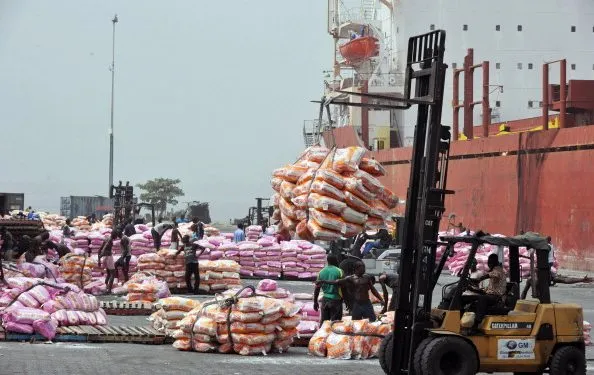
Ghana is heavily reliant on imports for everything from staple foods (rice, wheat, tomatoes paste) to industrial raw materials. When the cedi depreciates against the dollar, the cost of clearing these goods at the Tema Port spikes within hours. Importers, who operate on thin margins, pass these costs down immediately. A wholesaler at the Agbogbloshie market does not wait for the end of the month to raise prices; they adjust based on the rate they paid to clear their container.
2. Transportation and Fuel
Accra is a city defined by movement. Goods from the hinterlands—maize from Techiman, pepper from Bawku, plantain from the Eastern Region—must travel hundreds of kilometers to reach the capital. With the frequent adjustments in fuel prices at the pump, transport unions like GPRTU respond with almost immediate fare hikes. For every truckload of tomatoes that arrives at the Agbogbloshie market, the driver calculates fuel costs first. If diesel has gone up by 15%, the price per crate goes up before the goods even touch the ground.
3. The “Oburutia” Factor (Market Toll)
In Accra’s major markets—Makola, Kaneshie, Madina, Tema Station—there are layers of informal taxation. Market queens and assembly members levy tolls, loading fees, and “spot fees” (fees for the physical space to display goods). When the cost of living rises, these gatekeepers often increase their percentages to maintain their own income levels, adding another layer of cost to the final consumer.
Real-Time Examples: Accra’s Markets in Flux
The changing price landscape is best observed not in government spreadsheets but in the lived reality of Accra’s commercial zones. Let’s look at three distinct examples.
Case Study 1: The Tomato Rollercoaster at Agbogbloshie
Tomatoes are perhaps the most volatile commodity in Ghanaian cuisine. In Accra, a crate of tomatoes can sell for GH₵150 during a bumper harvest in the Volta Region. Three weeks later, if the rains are late or a truck breaks down on the Accra-Tema motorway, that same crate can jump to GH₵450. For restaurant owners in Osu and East Legon, this volatility is crippling. A popular chop bar operator shared that he used to adjust his menu prices every quarter. Now, he considers doing it monthly. “If shito (pepper sauce) becomes expensive, people complain,” he says. But if I reduce the portion size, they notice that too.” This dynamic has forced many food businesses to pivot toward menu engineering—promoting dishes that rely on more stable, often imported, shelf-stable goods rather than fresh, locally grown produce that suffers from post-harvest losses and transport inefficiencies.
Case Study 2: The Second-Hand Clothing Market (Abossey Okai and Kantamanto)
Kantamanto Market, one of the largest second-hand clothing markets in West Africa, tells a unique story about purchasing power. When inflation spikes and the cedi weakens, the price of imported “obroni wawu” (second-hand clothes) rises because the bales are purchased with dollars. However, consumer behavior shifts dramatically. As prices for new textiles from Vlisco or GTP become prohibitive for the average middle-class Ghanaian, demand for second-hand alternatives actually increases. This creates a paradox: prices rise, but demand remains steady or even grows. Traders at Kantamanto report that customers are now buying fewer “luxury” second-hand items (like formal jackets) and focusing strictly on essentials (dresses, trousers for children). They are haggling harder, and sellers are allowing smaller margins to keep inventory moving.
Case Study 3: Building Materials at Odorkor and Circle
For anyone trying to build or renovate a home in Accra, the price of cement, iron rods, and tiles has become a moving target. A developer in Teshie recounted how a project budgeted at GH₵300,000 for materials in January required an additional GH₵50,000 by June just to complete the same structure. The reason lies in the forex dependency of the construction industry. Cement, though produced locally, relies on imported clinker. Iron rods are almost entirely imported. When the cedi slides, hardware stores at Odorkor and the Kwame Nkrumah Circle no longer display prices. Instead, they use the “at the time of purchase” model—you are quoted a price that is valid only for that hour. This has led to a slowdown in the real estate sector, with many middle-income Ghanaians putting homeownership dreams on hold, opting instead to rent longer than planned.
Key Insights and Trends: The New Market Behavior
As prices evolve, so too does the behavior of both traders and consumers. A new economic culture is emerging in Accra.
The Rise of the “Daily Budget” Household
Gone are the days of the weekly shopping trip to the mall or market for many households. The unpredictability of prices has led to a “hand-to-mouth” approach even among salaried workers. Consumers are now buying in smaller quantities to mitigate risk. Instead of buying a full bag of rice for the month, they buy in bowls (olonka) daily. This allows them to adjust their consumption based on the price of the day, but it also reduces their bargaining power, as buying in bulk usually attracts lower unit prices.
The Informal Sector’s Pricing Power
The informal sector, which dominates Ghana’s economy, is showing remarkable agility. Market women (the “market queens”) have become sophisticated financiers. Many are now offering “susu” (informal savings) systems specifically to help customers lock in current prices. For instance, a customer might pay GH₵200 into a susu account with a tomato seller, ensuring that when the price spikes next week, they can still collect goods at the old rate. This informal hedging mechanism is keeping the markets fluid.
Digital Price Discovery
WhatsApp has become the new price board. Wholesalers in Tema communicate price changes to retailers in Kasoa or Nungua via broadcast lists. Consumers are joining community groups where members post the prices of goods at different markets. If tomatoes are cheaper at Mallam Atta Market than at Makola on a given Tuesday, the information spreads within hours. This transparency is forcing markets to remain competitive, even as underlying costs rise.
The Structural Bottlenecks
While global factors like the war in Ukraine (affecting wheat and fertilizer prices) and US interest rates (affecting the cedi) play a role, local structural issues are exacerbating price changes.
-
Post-Harvest Losses: Ghana loses up to 30% of its fresh produce due to a lack of cold storage facilities. In Accra, this scarcity means that any slight delay in the supply chain results in scarcity, which immediately triggers price spikes.
-
The Fuel Dependency Loop: Ghana’s energy sector challenges mean that businesses frequently resort to private generators. For a salon in Osu or a printing shop in Adabraka, the cost of running a generator is added to the price of their service. When fuel prices go up, everything from a haircut to a funeral flyer becomes more expensive.
-
Road Infrastructure: The road networks connecting Accra to the agricultural north are often in poor repair. During the rainy season, the journey for a truck from Kumasi to Accra can take twice as long, increasing transport costs and spoilage rates.
What This Means Going Forward
For The High Street Business reader—whether you are an entrepreneur, a policy enthusiast, or a consumer—the era of stable, predictable pricing in Ghana is on hiatus. We are entering a phase where agility is more valuable than long-term planning.
For businesses, the takeaway is to build flexibility into your pricing models. This does not necessarily mean constantly changing prices for customers, which can erode trust. It means diversifying suppliers. A restaurant owner might source rice from both local farmers (when available) and importers, balancing the cost to keep menu prices stable. It means investing in storage. Small-scale cold storage units, even at the community level, can allow a business to buy tomatoes when they are cheap (GH₵150) and use them when they are expensive (GH₵450), smoothing out costs.
For consumers, the new reality demands a recalibration of expectations. The price you paid for a commodity three months ago is not a reliable benchmark for today. Financial advisors in Accra are now recommending that households treat grocery budgets like variable expenses, not fixed ones. Building a buffer for “market inflation”—an extra 10-15% set aside for food and essentials—is becoming a necessary part of financial planning.
As Ama Serwaa, the waakye seller, packs her final plate of the day, she looks at her notebook. She has figured out that by buying her firewood directly from a supplier at the outskirts of Madina, rather than from a middleman in the market, she saves 20% on fuel costs. We are learning to be smart,” she says. “The prices will keep moving. We must move with them.”
In the bustling markets of Accra, from the narrow alleys of Makola to the sprawling containers of Tema Station, that is the new normal. The price tag is no longer a static number; it is a live reflection of the economy—sometimes frightening, but always revealing.
Frequently Asked Questions (FAQs)
1. Why do prices of goods in Accra’s markets change so frequently compared to other cities?
Prices in Accra change frequently due to its position as the primary consumption hub and entry point for imports. The city’s high population density and dependency on imported goods make it extremely sensitive to fluctuations in the cedi-dollar exchange rate and fuel prices. Additionally, the concentration of major markets like Makola and Agbogbloshie means that price changes in these hubs ripple out quickly across the city.
2. How does the cedi-dollar exchange rate affect the price of local food like plantain or yam?
While local food is not directly imported, it is indirectly affected by the exchange rate. When the cedi weakens, the cost of farming inputs like fertilizers, pesticides, and machinery (which are often imported) increases. Farmers pass these costs to traders. Furthermore, higher fuel prices (influenced by the dollar) increase the cost of transporting these local goods from farming communities to Accra, leading to higher prices at the market.
3. What is the best day of the week to buy goods to get the lowest prices in Accra?
Traditionally, Tuesdays and Wednesdays are considered the best days to buy in markets like Makola and Kaneshie. Prices tend to be higher on Fridays and Saturdays as traders anticipate weekend demand. However, in the current volatile environment, this pattern is shifting. Many savvy shoppers now recommend buying in the early morning (around 6:00 am to 8:00 am) when traders are eager to make their first sales of the day and before the “spot fees” and midday demand push prices up.
4. How are businesses in Accra adapting to the rising cost of goods?
Businesses are adopting several strategies: menu engineering (changing dishes to use cheaper, more stable ingredients), bulk purchasing cooperatives (grouping with other small businesses to buy in large volumes to get wholesale prices), and direct sourcing (bypassing middlemen to buy directly from farmers or manufacturers in Tema or the hinterlands). There is also a growing reliance on digital inventory management to reduce waste and spoilage, which eats into profit margins.
5. Are there any government interventions to stabilize market prices in Ghana?
The government, through the Ministry of Food and Agriculture, sometimes implements interventions such as the Planting for Food and Jobs (PFJ) program to boost local production. The National Buffer Stock Company (NAFCO) also steps in occasionally to release stored commodities (like maize or rice) to the market to curb scarcity. However, the effectiveness of these interventions is often limited by logistical challenges and the sheer size of the informal market, where most pricing is determined by supply and demand dynamics rather than policy.
Source: The High Street Business
Disclaimer: Some content on The High Street Business may be aggregated, summarized, or edited from third-party sources for informational purposes. Images and media are used under fair use or royalty-free licenses. The High Street Business is a subsidiary of SamBoad Publishing under SamBoad Business Group Ltd, registered in Ghana since 2014.
For concerns or inquiries, please visit our Privacy Policy or Contact Page.