
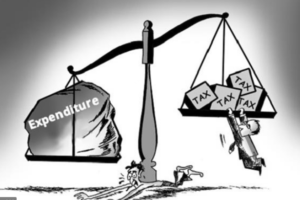










Fiscal deficits are often mentioned in budget speeches, economic reports, and policy debates — but many people do not fully understand why they matter.
A fiscal deficit occurs when government spending exceeds government revenue within a given period, usually a fiscal year. When this gap persists, it must be financed through borrowing. Over time, repeated deficits shape public debt levels, inflation trends, and economic stability.
Understanding fiscal deficits is essential for investors, entrepreneurs, and policymakers alike. As frequently examined in economic discussions on The High Street Business, fiscal discipline plays a central role in long-term national growth.
📢 GET A DETAILED ARTICLES + JOBS
Join SamBoad's WhatsApp Channel and never miss a post or opportunity.
Here is why fiscal deficits truly matter.
What Creates a Fiscal Deficit?
Fiscal deficits typically arise when:
-
Government expenditure increases significantly
-
Tax revenues decline
-
Economic growth slows
-
Emergency spending rises (such as during crises)
Governments spend on infrastructure, salaries, social services, subsidies, and debt servicing. When revenues — mainly from taxes, levies, and state enterprises — are insufficient, borrowing fills the gap.
Short-term deficits can be strategic. Persistent deficits become structural problems.
1. Fiscal Deficits Increase Public Debt
The most direct consequence of a deficit is borrowing.
To finance the gap, governments issue treasury bills and bonds or borrow from external lenders such as the International Monetary Fund or the World Bank.
When deficits continue year after year:
-
Debt accumulates
-
Interest payments rise
-
Budget flexibility reduces
Eventually, a larger portion of government revenue goes toward servicing debt instead of funding development.
Debt sustainability begins with deficit control.
2. Deficits Influence Inflation
Large fiscal deficits can contribute to inflation in several ways:
-
Increased government borrowing can inject excess liquidity into the economy.
-
If financed indirectly through monetary expansion, inflationary pressure may intensify.
-
Currency depreciation may occur if investor confidence weakens.
When inflation rises, purchasing power declines. Households feel the impact immediately through higher food, transport, and housing costs.
Fiscal discipline helps stabilise prices.
3. Interest Rates Rise When Government Borrows Heavily
When the government borrows heavily from the domestic market, it competes with the private sector for funds.
This can:
-
Push interest rates higher
-
Reduce credit availability for businesses
-
Increase borrowing costs for entrepreneurs
Small and medium-sized enterprises (SMEs) are often the most affected.
In this way, fiscal deficits can indirectly slow private sector growth.
4. Investor Confidence Is Affected
Investors closely monitor fiscal balances.
Large, persistent deficits may signal:
-
Weak revenue mobilisation
-
Inefficient public spending
-
Long-term repayment risk
This can affect:
-
Sovereign credit ratings
-
Exchange rate stability
-
Foreign direct investment flows
Confidence in fiscal management influences how attractive a country appears to global and domestic investors.
Perception matters as much as numbers.
5. Deficits Limit Future Policy Flexibility
When debt levels increase due to recurring deficits, governments have fewer options during economic shocks.
For example:
-
In times of crisis, borrowing capacity may already be stretched.
-
Interest payments may consume significant revenue.
-
Fiscal space for stimulus becomes limited.
Sound fiscal management during stable periods creates room for action during downturns.
Are All Fiscal Deficits Bad?
Not necessarily.
A moderate deficit during:
-
Economic recessions
-
Infrastructure expansion
-
National emergencies
can be justified.
If borrowed funds are invested in productive projects that stimulate growth, future revenues may offset current borrowing.
The danger lies in chronic, unmanaged deficits without growth-enhancing returns.
The quality of spending matters.
The Role of Fiscal Discipline
Managing fiscal deficits requires:
-
Efficient tax collection
-
Reducing wasteful expenditure
-
Prioritising high-impact projects
-
Transparent budget reporting
-
Long-term planning beyond political cycles
Deficit reduction is not about austerity alone. It is about balance.
Governments must align spending ambitions with realistic revenue capacity.
Why Businesses Should Care
Fiscal deficits are not just government concerns.
They influence:
-
Inflation trends
-
Tax policy adjustments
-
Interest rate levels
-
Consumer purchasing power
When fiscal management improves, business planning becomes easier. Stability encourages investment.
When deficits widen unpredictably, uncertainty increases.
Economic predictability supports private sector growth.
The Long-Term Perspective
Countries that maintain manageable fiscal deficits tend to:
-
Preserve investor confidence
-
Maintain currency stability
-
Reduce debt servicing burdens
Fiscal discipline builds economic credibility.
And credibility strengthens national resilience.
Conclusion From THSB
Fiscal deficits matter because they shape the broader economic environment in which businesses operate and citizens live.
Short-term deficits can support development. Persistent, unmanaged deficits create long-term instability.
The real issue is not whether deficits exist — but whether they are controlled, strategic, and aligned with growth.
Sustainable economic progress depends on disciplined fiscal policy, responsible borrowing, and efficient public spending.
Understanding fiscal deficits helps businesses, investors, and citizens interpret economic trends more clearly — and plan with greater confidence.
Source: The High Street Business
Disclaimer: Some content on The High Street Business may be aggregated, summarized, or edited from third-party sources for informational purposes. Images and media are used under fair use or royalty-free licenses. The High Street Business is a subsidiary of SamBoad Publishing under SamBoad Business Group Ltd, registered in Ghana since 2014.
For concerns or inquiries, please visit our Privacy Policy or Contact Page.