
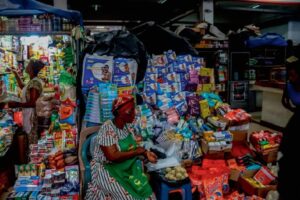









Price differences across markets are one of the most visible features of Ghana’s economy. The same product can sell for different prices in neighbouring towns, across regions, or even within the same city. For consumers, this often raises questions. For businesses, it represents both a challenge and an opportunity.
At The High Street Business, we view pricing not as randomness, but as the outcome of identifiable economic forces. This editorial explains why prices differ across markets, how these differences emerge, and what they reveal about Ghana’s broader economic structure.
1. Transportation and Logistics Costs
One of the most significant reasons prices differ across markets is transportation. Goods rarely move directly from producer to consumer without cost. Fuel prices, road conditions, vehicle maintenance, and distance all influence the final selling price.
📢 GET A DETAILED ARTICLES + JOBS
Join SamBoad's WhatsApp Channel and never miss a post or opportunity.
Markets closer to production centres or ports often enjoy lower prices because transport costs are minimal. Conversely, remote or poorly connected areas face higher prices due to increased logistics expenses.
In Ghana, variations in road quality and fuel availability amplify these differences, making location a major determinant of pricing.
2. Market Location and Accessibility
Accessibility plays a crucial role in pricing. Markets located in urban centres, business districts, or high-traffic areas often have higher operating costs. Rent, permits, utilities, and security expenses are typically higher in these locations.
These costs are passed on to consumers through higher prices. In contrast, markets in less central or rural locations often have lower overheads, allowing sellers to charge less.
Price differences therefore reflect not just product cost, but the cost of doing business in a specific location.
3. Supply Conditions and Availability
Prices rise when supply is limited and fall when supply is abundant. Markets that experience frequent shortages tend to charge higher prices, while those with steady supply maintain lower and more stable pricing.
Supply disruptions can be caused by:
-
Seasonal production cycles
-
Weather conditions
-
Import delays
-
Distribution inefficiencies
In Ghana, agricultural products often show significant price variation due to seasonality and storage limitations. Where supply is inconsistent, prices fluctuate accordingly.
4. Demand Differences Across Markets
Demand is not uniform across markets. Consumer preferences, income levels, population density, and purchasing habits differ from place to place.
Markets serving higher-income consumers often support higher prices because buyers are willing and able to pay more. In lower-income markets, sellers must price competitively to attract customers.
Demand patterns shape pricing strategies, influencing how much sellers charge for the same product in different areas.
5. Competition and Market Density
The level of competition within a market directly affects pricing. Markets with many sellers offering similar goods tend to have lower prices due to competitive pressure.
Where competition is limited—either because of location, capital requirements, or barriers to entry—prices tend to be higher. Sellers with fewer rivals have greater pricing power.
In Ghana’s informal markets, competition is often intense, leading to narrow profit margins and price sensitivity. In more exclusive or specialised markets, pricing flexibility increases.
6. Wholesale and Distribution Chains
Not all sellers source their goods from the same suppliers. Differences in wholesale pricing, purchasing volume, and supplier relationships create variations in retail prices.
Businesses that buy in bulk or maintain direct relationships with producers often secure lower unit costs. Smaller retailers purchasing through multiple intermediaries incur higher costs, which reflect in final prices.
Distribution efficiency is therefore a hidden but powerful driver of price differences.
7. Currency Exposure and Import Dependence
For imported goods, exchange rate movements significantly affect prices. Sellers who restock at different times may experience different currency costs, leading to price variation across markets.
Markets heavily reliant on imported goods are more sensitive to exchange rate fluctuations. Sellers often adjust prices based on replacement cost rather than original purchase cost.
This explains why identical imported products can have different prices depending on when and where they were sourced.
8. Storage, Preservation, and Risk Costs
Storage costs influence pricing, particularly for perishable goods. Sellers factor in spoilage risk, storage fees, and inventory loss when setting prices.
Markets with limited storage infrastructure or high spoilage risk often charge higher prices to compensate for potential losses. Markets with better preservation facilities can maintain more stable pricing.
Risk is therefore embedded in pricing decisions.
9. Information Asymmetry and Price Awareness
Price differences persist where information is uneven. Consumers may not be aware of lower prices elsewhere, allowing sellers to charge more in certain markets.
Markets with greater price transparency—through competition, digital platforms, or informed consumers—tend to have narrower price gaps. Where information is limited, price dispersion widens.
In Ghana, word-of-mouth and local familiarity play a key role in shaping price awareness.
10. Bargaining Culture and Pricing Flexibility
In many Ghanaian markets, prices are not fixed. Bargaining allows for price variation even within the same market. The final price depends on negotiation skills, relationships, and perceived willingness to pay.
This cultural feature means prices are often ranges rather than fixed points. Two consumers may pay different prices for the same product, reinforcing the perception of inconsistency.
Bargaining reflects flexibility rather than inefficiency.
11. Formal Versus Informal Market Structures
Formal retail outlets often operate with fixed pricing systems, standardised costs, and regulated environments. Informal markets operate with greater flexibility, lower overheads, and adaptive pricing.
Price differences between formal and informal markets reflect differences in compliance costs, scale, and business models. Neither system is inherently cheaper; each responds differently to cost pressures.
Understanding market structure helps explain price variation.
12. Profit Expectations and Business Strategy
Pricing decisions also reflect profit expectations. Some sellers prioritise volume and turnover, accepting lower margins. Others target premium positioning, convenience, or exclusivity, charging higher prices.
Business strategy influences how prices are set and maintained. Price differences often signal different approaches to value creation rather than inefficiency.
What Price Differences Tell Us About the Economy
Price variation across markets is a reflection of Ghana’s diverse economic landscape. It highlights differences in infrastructure, income distribution, market access, and business capacity.
Rather than viewing price differences as arbitrary, they should be understood as economic signals—revealing where costs are high, where supply is constrained, and where competition thrives.
At The High Street Business, we emphasise that prices are not just numbers; they are outcomes of economic systems at work.
FAQs
Why does the same product cost more in one market than another?
Because of differences in transport costs, demand, competition, and operating expenses.
Do higher prices always mean higher profits?
No. Higher prices often reflect higher costs rather than higher margins.
Why are prices higher in urban areas?
Urban markets face higher rent, utilities, and operating costs.
How does competition affect prices?
More competition generally leads to lower prices and smaller margins.
Is price variation a sign of market failure?
Not necessarily. It often reflects normal market dynamics.
Source: THSB
Disclaimer: Some content on The High Street Business may be aggregated, summarized, or edited from third-party sources for informational purposes. Images and media are used under fair use or royalty-free licenses. The High Street Business is a subsidiary of SamBoad Publishing under SamBoad Business Group Ltd, registered in Ghana since 2014.
For concerns or inquiries, please visit our Privacy Policy or Contact Page.