








Consumer markets sit at the heart of Ghana’s economy. Every purchase—whether of food, transport, clothing, data, or financial services—reflects deeper forces shaping production, pricing, employment, and investment. To understand Ghana’s economy, one must first understand how its consumer markets work.
At The High Street Business, we look beyond surface-level transactions to explain the structures, behaviours, and forces that define market activity. This editorial breaks down how consumer markets function in Ghana, why they behave the way they do, and what this means for businesses operating within them.
1. The Structure of Ghana’s Consumer Market
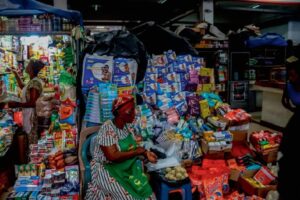
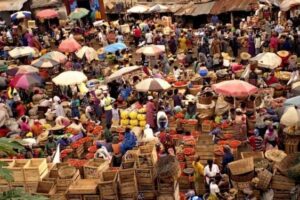
Ghana’s consumer market is largely informal but increasingly hybrid. Traditional open markets, kiosks, and roadside traders coexist with supermarkets, malls, digital platforms, and mobile commerce.
📢 GET A DETAILED ARTICLES + JOBS
Join SamBoad's WhatsApp Channel and never miss a post or opportunity.
This structure reflects income diversity, urban–rural differences, and access to infrastructure. While formal retail is expanding, informal trade remains dominant, especially for essential goods such as food, transport services, and household items.
Consumer markets in Ghana are therefore:
-
Decentralised
-
Price-sensitive
-
Relationship-driven
-
Highly competitive
Understanding this structure helps explain pricing behaviour, brand loyalty, and distribution patterns.
2. Income Levels and Purchasing Power
Income levels are one of the most important drivers of consumer behaviour in Ghana. A large portion of consumers operate within tight budgets, making purchasing decisions highly sensitive to price changes.
Most households prioritise:
-
Food and basic necessities
-
Transport and utilities
-
Education and healthcare
Discretionary spending—such as electronics, lifestyle products, or premium services—expands during periods of economic stability and contracts sharply during uncertainty.
This income reality explains why:
-
Smaller package sizes sell faster
-
Flexible pricing attracts demand
-
Value perception matters more than brand prestige
Consumer markets respond quickly to changes in income conditions.
3. Demand Patterns and Consumption Behaviour
Demand in Ghana is largely needs-driven rather than wants-driven. Essential goods experience relatively stable demand, while non-essential products fluctuate with economic conditions.
Key demand characteristics include:
-
High demand for affordability
-
Preference for durability and utility
-
Strong word-of-mouth influence
Seasonality also plays a role. Demand patterns shift during festive periods, school reopening seasons, and agricultural cycles.
Businesses that understand these consumption rhythms are better positioned to manage inventory and pricing.
4. Pricing Mechanisms and Market Competition
Pricing in Ghana’s consumer markets is flexible and competitive. Unlike fixed-price systems common in highly formalised economies, prices often adjust daily based on supply, transport costs, and currency movements.
Price determination is influenced by:
-
Cost of inputs
-
Transportation and logistics
-
Exchange rate movements
-
Competitive pressure
In informal markets, bargaining remains common, especially for non-essential goods. In formal retail settings, pricing is more fixed but still responsive to market pressures.
This dynamic pricing environment rewards efficiency and cost control.
5. Distribution Channels and Market Access
How goods reach consumers is a defining feature of Ghana’s market system. Distribution channels are layered, often involving multiple intermediaries between producers and end users.
Common channels include:
-
Open markets and stalls
-
Wholesalers and distributors
-
Supermarkets and shops
Transport infrastructure, fuel costs, and storage availability significantly affect distribution efficiency. Businesses operating closer to consumers often gain pricing and speed advantages.
Market access is therefore as important as product quality.
6. The Role of Informality
Informality is not a weakness of Ghana’s consumer markets—it is a defining feature. Informal traders provide accessibility, flexibility, and price responsiveness.
They operate with:
-
Low overhead costs
-
Flexible hours
-
Direct customer relationships
While informality limits access to formal finance and data, it allows markets to adapt quickly to changing conditions.
Many successful businesses in Ghana operate across both informal and formal spaces, leveraging the strengths of each.
7. Consumer Trust and Relationships
Trust plays a significant role in purchasing decisions. Consumers often buy from familiar vendors, even when alternatives exist.
Trust is built through:
-
Consistent pricing
-
Product reliability
-
Personal relationships
This explains why small traders maintain loyal customer bases despite competition from larger retailers. In Ghana, trust often outweighs branding.
Businesses that invest in customer relationships gain long-term market resilience.
8. Impact of Inflation and Cost Pressures
Inflation directly shapes consumer markets. When prices rise, consumers adjust behaviour immediately by:
-
Reducing quantities purchased
-
Switching to cheaper alternatives
-
Delaying non-essential spending
Businesses respond by resizing products, adjusting prices incrementally, or offering substitutes.
Consumer markets in Ghana are highly adaptive, but prolonged cost pressures reduce overall demand and business margins.
9. Digital Influence on Consumer Markets
Technology is reshaping how consumers discover, compare, and purchase goods. Mobile money, social media marketing, and digital storefronts are expanding market reach.
-
Reduce transaction friction
-
Improve payment convenience
-
Expand access beyond physical locations
However, trust and affordability remain central. Digital adoption complements, rather than replaces, traditional market systems.
Consumer markets are becoming increasingly blended—physical and digital.
10. What Consumer Markets Signal About the Economy
Consumer behaviour acts as a real-time economic indicator. Rising consumption signals confidence, while reduced spending reflects uncertainty.
Observing:
-
Market activity levels
-
Price sensitivity
-
Product substitution
provides insight into household confidence and economic health.
For policymakers and business leaders, consumer markets offer early signals before official data is released.
Why Understanding Consumer Markets Matters
For businesses, consumer markets determine revenue, growth, and survival. Products succeed not because they are available, but because they align with purchasing realities.
Understanding how Ghana’s consumer markets work enables:
-
Better pricing strategies
-
Smarter product design
-
More efficient distribution
-
Stronger customer relationships
At The High Street Business, we emphasise that markets are human systems—shaped by income, trust, and everyday decisions.
FAQs
What defines Ghana’s consumer market?
A mix of informal and formal trade, high price sensitivity, and strong relationship-driven purchasing.
Why is price so important to Ghanaian consumers?
Because incomes are limited and spending prioritises essential needs.
How does informality affect consumer markets?
It increases flexibility, accessibility, and responsiveness to change.
Do digital platforms dominate consumer markets?
No. They complement traditional systems rather than replace them.
How do consumer markets reflect economic conditions?
Changes in spending patterns signal confidence or financial stress.
Source: THSB
Disclaimer: Some content on The High Street Business may be aggregated, summarized, or edited from third-party sources for informational purposes. Images and media are used under fair use or royalty-free licenses. The High Street Business is a subsidiary of SamBoad Publishing under SamBoad Business Group Ltd, registered in Ghana since 2014.
For concerns or inquiries, please visit our Privacy Policy or Contact Page.