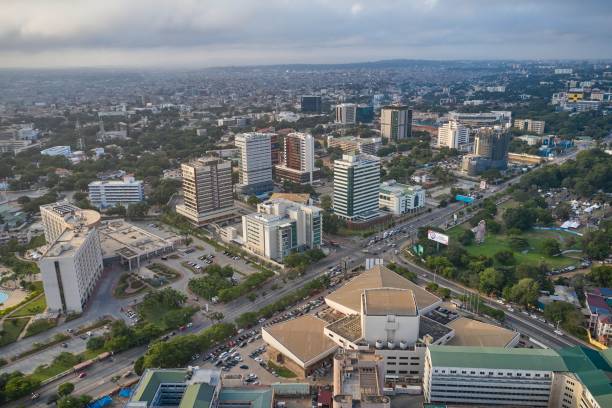








Ghana is repositioning its industrial strategy around a stark economic imbalance: the country spends more than US$1.5 billion annually importing food and basic industrial inputs that can be produced locally. Rice, sugar, starch, animal feed, medicines and textiles dominate the import bill—items that policymakers now see as both an economic vulnerability and a missed opportunity.
Under the government’s 24-Hour Economy (24H+) agenda, newly established agro-industrial corridors and manufacturing hubs are being advanced as the primary tools to close these gaps. Coordinated by the 24-Hour Economy Secretariat, the strategy is designed to link farms, factories and markets into integrated value chains capable of replacing imports, supporting exports and attracting long-term private capital.
The guiding principle, according to officials at the Secretariat, is straightforward: convert policy interventions into bankable, investable projects. Rather than dispersing incentives across fragmented activities, the focus is on scale, infrastructure readiness and guaranteed demand.
📢 GET A DETAILED ARTICLES + JOBS
Join SamBoad's WhatsApp Channel and never miss a post or opportunity.
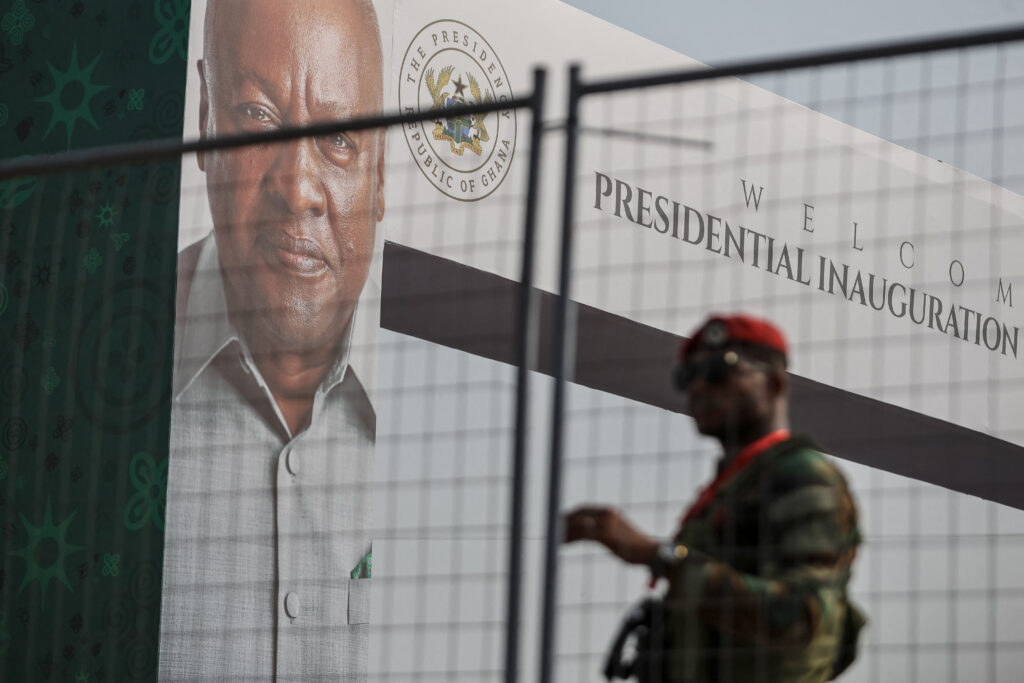
President John Dramani Mahama has framed the initiative as structural rather than cyclical. “The 24-Hour Economy is more than just a policy; it’s a catalyst for industrialisation, export promotion, and job creation,” he has said. “It’s about building an economy that works for everyone, every hour of the day.”
From Fragmented Production to Integrated Value Chains
At the core of the strategy is a deliberate shift away from raw output expansion toward market-led industrial ecosystems. Each corridor is designed to integrate production, processing, logistics, energy and export access from the outset.
This approach reflects lessons from past agricultural interventions that boosted output but failed to reduce imports due to weak processing capacity and poor logistics. The new model prioritises industrial-scale processing, supported by irrigation, transport links and energy infrastructure, with anchor investors expected to drive demand.
The ambition is to reposition Ghana not only as a self-sufficient producer but also as a competitive exporter under the African Continental Free Trade Area (AfCFTA).
Rice: The Anchor of Import Substitution
Rice sits at the centre of Ghana’s import challenge—and its response. Despite favourable agro-ecological conditions, Ghana still imports 60–70% of its rice consumption, driving an annual import bill that exceeds US$1.2 billion.
The Integrated Rice Corridor is designed to reverse this imbalance by unlocking irrigated, year-round production at scale. Key zones include:
-
The Tono Irrigation Scheme in the Upper East
-
The Pwalugu Dam area in the North-East
-
The Kpong enclave across the Eastern and Volta regions
These production zones are being linked directly to logistics infrastructure, including the Tamale Air Cargo Hub and Tema Port, allowing faster movement of finished rice to domestic and regional markets.
The objective extends beyond import replacement. With West Africa’s rice demand continuing to rise, policymakers see an opportunity to position Ghanaian rice competitively across the sub-region, particularly under AfCFTA’s tariff-reduction framework.
Cassava: Turning Abundance Into Industry
Cassava represents a different challenge: abundance without industrialisation. Ghana is Africa’s third-largest cassava producer, with output estimated at 26.5 million metric tonnes in 2023, yet most of it is consumed in raw or minimally processed form.
The Cassava Industrial Corridor, stretching through Buipe, Krachi and Dambai, is designed to convert this volume into industrial feedstock. Anchor investments include ethanol plants, starch factories and industrial flour mills targeting both domestic shortages and export markets.
One immediate target is the replacement of imported acyclic alcohols, which cost Ghana US$10.72 million in 2023. Beyond that, processed cassava products benefit from duty-free, quota-free access to the European Union under the West Africa–EU Economic Partnership Agreement.
Officials argue that cassava offers one of Ghana’s clearest industrial advantages: high yields, adaptable processing technologies and strong external demand—if logistics and scale constraints are addressed.
Sugar: Rebuilding a Lost Industry
Sugar illustrates the cost of industrial decline. Ghana currently imports more than US$200 million worth of sugar annually, supplying roughly 80% of domestic consumption from abroad.
The Sugar Cane Industrial Corridor aims to rebuild local capacity through large-scale estates and modern processing plants. Crucially, the business model goes beyond refined sugar to include:
-
Ethanol production
-
Bio-fertiliser manufacturing
-
Cogeneration power plants
Bagasse—the fibrous residue from sugar processing—can be used to generate up to 20 megawatts of electricity per factory, lowering energy costs and improving project economics.
By integrating energy generation into sugar processing, planners hope to avoid the cost pressures that undermined earlier attempts at reviving the sector.
Oil Seeds: Securing Feed for Poultry and Aquaculture
Oil seeds complete the agro-industrial framework by addressing one of Ghana’s fastest-growing demand pressures: animal feed.
Across ECOWAS, the poultry industry consumes about 12 million metric tonnes of maize and soy feed annually, yet Ghana produces less than 60% of its own feed requirements. The shortfall has constrained poultry expansion and increased import dependence.
The Integrated Oil Seeds Corridor links irrigated northern farming zones to soy oil mills and feed plants, reducing reliance on imported soymeal and supporting domestic poultry and aquaculture growth.
With West Africa’s poultry market projected to reach multi-billion-dollar levels by the end of the decade, securing feed supply has become a strategic priority rather than a purely agricultural concern.
Beyond Agriculture: Pharmaceuticals and Textiles
Alongside agro-processing, Ghana is targeting high-value manufacturing sectors where global disruptions have exposed import dependence.
Pharmaceuticals
The Legon Pharmaceuticals Innovation Park (LEPIP) is being developed to address Africa’s heavy reliance on imported medicines and active pharmaceutical ingredients (APIs). According to the Secretariat:
-
Africa imports over 95% of APIs
-
About 70% of finished medicines are sourced externally
Anchored around the University of Ghana, LEPIP integrates research, contract manufacturing, vaccines, nutraceuticals and essential medicines, including antimalarials.
This push is particularly significant for Ghana, which recorded over 6.5 million malaria cases in 2023. Ghana’s Food and Drugs Authority achieving WHO Maturity Level 3 strengthens the country’s credibility as a pharmaceutical exporter under AfCFTA and beyond.
Textiles and Garments
Despite a long industrial history, Ghana imports over 150,000 tonnes of used clothing annually, underscoring unmet domestic demand.
The Akosombo–Juapong Textile Cluster, supported by regional garment parks, aims to revive spinning, weaving and garment manufacturing while reconnecting factories to cotton outgrower schemes.
The export ambition is explicit: scale textile and garment exports from US$40 million to US$500 million over time. A government-backed special purpose vehicle (SPV) model is being used to deliver pre-serviced industrial parks, reducing upfront capital costs for investors by an estimated 25–40%.
Investor Lens: Bankable Projects, Not Policy Promises
For investors, the corridors are structured to address long-standing risks: land access, utilities, logistics and regulatory certainty. By delivering plug-and-play infrastructure and anchor demand, the government hopes to crowd in private capital rather than substitute for it.
Officials argue that the approach aligns with AfCFTA’s long-term logic: countries that industrialise fastest will shape regional value chains.
A Structural Bet on Industrial Ghana
Ghana’s push to close its US$1.5 billion import gap is not framed as austerity or protectionism, but as industrial re-engineering. By linking farms, factories and markets through dedicated corridors, the 24-Hour Economy agenda seeks to convert domestic demand into a platform for exports, jobs and investment.
The challenge now lies in execution—mobilising capital, coordinating agencies and maintaining policy consistency. If successful, the model could mark a turning point in Ghana’s long-standing effort to transform consumption into production and trade.
Source: The High Street Business
Disclaimer: Some content on The High Street Business may be aggregated, summarized, or edited from third-party sources for informational purposes. Images and media are used under fair use or royalty-free licenses. The High Street Business is a subsidiary of SamBoad Publishing under SamBoad Business Group Ltd, registered in Ghana since 2014.
For concerns or inquiries, please visit our Privacy Policy or Contact Page.