Ghana Standards Authority (GSA) Calls for Cement Price Reduction Amid Cedi Gains
The Ghana Standards Authority (GSA) is advocating for a review of cement prices in response to the recent strengthening of…








The Ghana Standards Authority (GSA) is advocating for a review of cement prices in response to the recent strengthening of…
In a scathing critique, the Chamber of Petroleum Consumers (COPEC) has dismissed the government’s reliance on new taxes to bail…
The Bank of Ghana Governor’s latest address has sparked intense debate across the financial sector, as his uncompromising stance on…
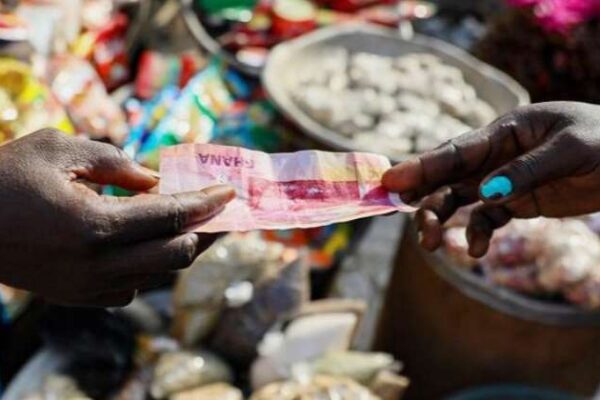
The Bank of Ghana Governor’s latest address has sparked intense debate across the financial sector, as his uncompromising stance on…

Dr. Elikplim Kwabla Apetorgbor, the CEO of Independent Power Generators Ghana, has expressed strong opposition to the privatization of the Electricity Company of Ghana‘s (ECG) debt collection and billing services, describing the move as wasteful and counterproductive. He argues instead for the nationwide rollout of prepaid meters to improve ECG’s revenue mobilization.
President John Dramani Mahama in his first State of the Nation Address on February 27, 2025, revealed that ECG has accumulated a debt of GH¢68 billion, raising concerns about the company’s financial stability and its capacity to deliver reliable electricity services.
However, in an interview, Dr. Apetorgbor stressed that ECG should prioritize technological investments to tackle its recurring challenges. He also urged the company to adopt real-time monitoring technologies for voltage fluctuations to enhance service reliability.
“What we’re saying is that the tariffs should be cost-effective and should enable ECG to recover its most competitive or efficiency cost. We even proposed that stringent cost measures should be implemented in ECG’s administrative or operational activities. We looked at the issue of technology, we’re way behind technology in the power sector.
“There’s no where in the world or people going after customers to come and pay bills, implement pre-paid meters, automatically everybody pays for the services. Why waste resources to bring in companies to be going after customers for debt collection?. It’s a waste of resources,” he said.

Dr. Elikplim Kwabla Apetorgbor, the CEO of Independent Power Generators Ghana, has expressed strong opposition to the privatization of the Electricity Company of Ghana‘s (ECG) debt collection and billing services, describing the move as wasteful and counterproductive. He argues instead for the nationwide rollout of prepaid meters to improve ECG’s revenue mobilization.
President John Dramani Mahama in his first State of the Nation Address on February 27, 2025, revealed that ECG has accumulated a debt of GH¢68 billion, raising concerns about the company’s financial stability and its capacity to deliver reliable electricity services.
However, in an interview, Dr. Apetorgbor stressed that ECG should prioritize technological investments to tackle its recurring challenges. He also urged the company to adopt real-time monitoring technologies for voltage fluctuations to enhance service reliability.
“What we’re saying is that the tariffs should be cost-effective and should enable ECG to recover its most competitive or efficiency cost. We even proposed that stringent cost measures should be implemented in ECG’s administrative or operational activities. We looked at the issue of technology, we’re way behind technology in the power sector.
“There’s no where in the world or people going after customers to come and pay bills, implement pre-paid meters, automatically everybody pays for the services. Why waste resources to bring in companies to be going after customers for debt collection?. It’s a waste of resources,” he said.
The government has secured a special Independence Day data bundle deal with Ghana‘s three major telecom providers, MTN Ghana, Telecel Ghana, and AT Ghana—offering 6GB of data for just GHS10. This marks a significant upgrade from the usual 1GB or 3GB holiday bundles available at the same price.
Announcing the offer on his Facebook page, the Minister for Communications, Digital Technology and Innovations, Sam George, stated, “Under the instructions of H.E. John Dramani Mahama, we have reached a special Independence Day bundle package on all three networks in the country.”
He further highlighted the government’s vision for an interconnected nation, saying, “This highlights our commitment as a government to build the enablers for a truly digitalized Ghana that offers the vast opportunity of the interconnected world to Ghanaians right in the comfort of their homes.”
Many internet users have welcomed the initiative, describing it as a timely intervention in reducing the cost of data. This move aligns with broader efforts to bridge the digital divide and enhance digital inclusion in the country.
Beyond the Independence Day package, the minister assured Ghanaians of more efforts to lower data costs in the long term. “Tomorrow, the Ministry of Communication, Digital Technology and Innovations will outline short, medium and long-term plans towards a sustained reduction in data prices,” he revealed.
The government has secured a special Independence Day data bundle deal with Ghana‘s three major telecom providers, MTN Ghana, Telecel Ghana, and AT Ghana—offering 6GB of data for just GHS10. This marks a significant upgrade from the usual 1GB or 3GB holiday bundles available at the same price.
Announcing the offer on his Facebook page, the Minister for Communications, Digital Technology and Innovations, Sam George, stated, “Under the instructions of H.E. John Dramani Mahama, we have reached a special Independence Day bundle package on all three networks in the country.”
He further highlighted the government’s vision for an interconnected nation, saying, “This highlights our commitment as a government to build the enablers for a truly digitalized Ghana that offers the vast opportunity of the interconnected world to Ghanaians right in the comfort of their homes.”
Many internet users have welcomed the initiative, describing it as a timely intervention in reducing the cost of data. This move aligns with broader efforts to bridge the digital divide and enhance digital inclusion in the country.
Beyond the Independence Day package, the minister assured Ghanaians of more efforts to lower data costs in the long term. “Tomorrow, the Ministry of Communication, Digital Technology and Innovations will outline short, medium and long-term plans towards a sustained reduction in data prices,” he revealed.

Ghana’s economy is losing approximately 2% of its Gross Domestic Product (GDP) each year due to inefficiencies in the electricity sector, according to Dr. Cassiel Ato Forson, Minister of Finance.
Speaking at the National Economic Dialogue on Monday, Dr. Forson highlighted the Electricity Company of Ghana’s (ECG) failure to collect payments from all electricity consumers, leading to an annual revenue loss of about 25%. This translates to approximately $418.2 million in losses caused by power theft and non-payment.
He further disclosed that only 62% of the total energy purchased by ECG is actually paid for by consumers, and of that amount, only 65% is used to pay suppliers through the Cash Water Mechanism. He also criticized the existing electricity tariffs, stating that about 50% of the cost of providing electricity remains uncovered, adding that tariffs should not serve as compensation for ECG’s inefficiencies.
“These financial shortfalls have hindered the company’s ability to invest in infrastructure improvements and maintain a stable power supply,” Dr. Forson stated.
The impact of ECG’s inefficiencies extends beyond the energy sector, affecting industries such as agriculture, manufacturing, and general economic productivity due to unreliable electricity supply.
Ghana has faced longstanding challenges with its power sector, including the severe energy crisis between 2012 and 2015, commonly known as “dumsor.” In response, the government signed numerous power purchase agreements with independent power producers, leading to an oversupply of energy. By 2018, the country’s installed generation capacity was nearly twice its peak demand, forcing the government to pay for unused electricity. This situation has contributed to an annual deficit of approximately $1 billion in the energy sector.
Dr. Forson also raised concerns about the Energy Sector Recovery Program (ESRP), a roadmap designed to restore financial stability in the energy sector, stating that it is currently off track. He emphasized the need for urgent reforms and strategic measures to address these inefficiencies and drive economic growth.
As Ghana continues to grapple with energy sector challenges, experts argue that decisive action is required to prevent further financial losses and ensure a sustainable power supply for economic development.
With some of the world’s automotive giants setting up assembly plants in Ghana, the country is fast emerging as a hub for innovation, economic growth, and a new era in transportation. This transformation is undoubtedly positioning Ghana as a leader in automotive development within the sub-region and the rest of Africa.
Ghana’s automotive sector has traditionally been dominated by retailers of imported used vehicles, with only a few distributors handling new car sales. However, the landscape is gradually shifting with the implementation of the Ghana Automotive Development Program (GADP), which has attracted major global automakers. Currently, six automobile assemblers are registered under the GADP: Volkswagen, Toyota, Rana Motors, Sinotruck, Japan Motors, and Kantanka.
Volkswagen Ghana made history in August 2020 as the first automotive company to register under the GADP. Having assembled vehicles locally for the past five years, Volkswagen Ghana is now working closely with the government and key private sector players to introduce a vehicle financing facility aimed at making new cars more affordable for Ghanaian consumers.

Jeffrey Oppong Peprah, Managing Director of Volkswagen Ghana, noted the challenge of vehicle affordability in Ghana, where the majority of cars are purchased outright with cash. Unlike in developed markets where financing schemes enable consumers to spread payments over time, Ghanaian buyers often save for long periods to afford vehicles, which has led to a high demand for used cars.
Recognizing this challenge, Volkswagen Ghana is engaging stakeholders, including banks, insurance companies, and the Automobile Association, to create an incentivized loan system with lower interest rates tailored for vehicle purchases. Currently, commercial loan interest rates exceed 24%, making car financing inaccessible to many Ghanaians.
“We are engaging the government to see how we can implement a financing model with reduced interest rates, significantly lower than the prevailing market rates, to make new vehicles more accessible,” Oppong Peprah stated. “If we can develop a structure where consumers have the opportunity to spread payments over time, it will not only increase demand but also reduce the reliance on imported used cars.”
Volkswagen’s local assembly operations have already contributed to cost reductions, with import taxes waived for assembled units, leading to a price drop of over 30% compared to fully imported vehicles. If coupled with an efficient financing scheme, locally assembled cars could become even more affordable, eventually competing with used vehicles in terms of price.
The initiative aligns with Ghana’s broader automotive development agenda, which seeks to encourage local vehicle assembly and reduce the country’s dependence on second-hand imports. By making financing more accessible, Volkswagen Ghana hopes to boost new vehicle sales while ensuring that consumers have access to reliable and warranty-backed automobiles.

Automobile industry analyst Raju Parwani told The High Street Journal that the success of the proposed financing model could transform Ghana’s automotive industry, creating a sustainable ecosystem that benefits both consumers and industry players.
He noted that increased sales of locally assembled vehicles could help curb the importation of used cars, which often have less efficient engines and outdated emission control technologies.
“Many imported used vehicles have higher carbon dioxide emissions compared to newer models due to their aged combustion systems,” he explained.
Parwani also praised initiatives where institutions facilitate vehicle acquisition for their staff directly from manufacturers, describing such arrangements as forward-looking and beneficial to both employees and the industry.