Ghana Turns to Beijing in Bid to Rein in Palm Oil Imports
Ghana is stepping up efforts to trim roughly $200 million from its annual palm oil import bill, courting Chinese capital and technical expertise as part of a broader agricultural transformation strategy.
Speaking at the 2026 Chinese Lunar New Year Gala in Accra, Agriculture Minister Eric Opoku framed farming as central to President John Dramani Mahama’s economic reset agenda. The 2026 budget, he said, positions agriculture as a driver of industrialisation, export growth, job creation and foreign-exchange stability.
“We are not seeking aid. We are building joint ventures,” Mr. Opoku said, urging Chinese businesses to pivot “from trade to production.”
📢 GET A DETAILED ARTICLES + JOBS
Join SamBoad's WhatsApp Channel and never miss a post or opportunity.
📲 Join the Channel Now
A 100,000-Hectare Bet on Palm Oil
At the core of the strategy is the Integrated Oil Palm Development Programme, scheduled to run from 2026 through 2032. The plan targets development of 100,000 hectares of oil palm plantations and the creation of 250,000 jobs, while sharply reducing reliance on imported palm oil.
Structured land banks are already being offered to investors, according to officials, as Accra seeks long-term partnerships rather than short-term capital inflows.
The government has also expanded support for staple crops, distributing 31,000 metric tonnes of rice seed, 4,388 tonnes of maize seed and 2,791 tonnes of soybean seed this year, alongside 272,000 tonnes of fertiliser. Officials say irrigation expansion and mechanisation incentives are intended to lift yields and stabilise domestic supply chains.
From Imports to Industrial Hub
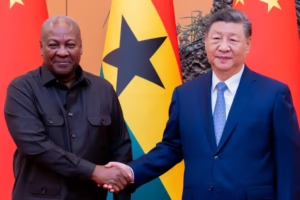
Ghana’s outreach to Beijing coincides with progress toward a zero-tariff trade framework between Accra and China, aimed at boosting exports and deepening manufacturing ties. President Mahama has signaled that agriculture and light industry will anchor a new phase of bilateral cooperation.
Officials argue that Ghana’s access to the more than 400 million consumers within the Economic Community of West African States gives the country an edge as a production base for regional exports.
For Chinese investors, the pitch centers on irrigation systems, agro-processing facilities, machinery assembly and large-scale plantation development. For Ghana, the objective is clear: conserve foreign exchange, reduce exposure to commodity import shocks and convert agricultural potential into industrial capacity.
As infrastructure gaps and youth unemployment remain pressing challenges across West Africa, Accra is betting that palm oil—once a symbol of trade dependence—can become a cornerstone of export-led growth.