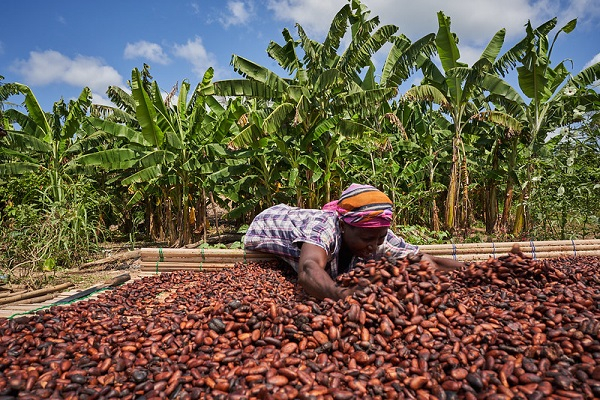








Ghana and Côte d’Ivoire have long coordinated in the cocoa sector as the world’s two largest producers, typically supplying around 60–65 % of global bean output. Their partnership — historically aimed at stabilising prices, coordinating exports, and protecting farmer incomes — faces one of its toughest tests in 2026 due to sharp shifts in global demand, price collapses, stockpiling, and structural stress across both sectors.
Here’s the latest update on how this alliance is evolving and what it means for farmers, markets, and investors.
1. Cocoa Market Crisis Tests Cooperation
In early 2026, a dramatic downturn in global cocoa demand has disrupted traditional marketing mechanisms. Prices that soared to record highs in 2024 have since plunged due to weak chocolate manufacturing demand and resultant oversupply. Both Ghana and Côte d’Ivoire tied up much of their forward sales at higher prices, leaving unsold stockpiles and unsettled contracts — a situation that has exposed vulnerabilities in coordinated pricing strategies.
📢 GET A DETAILED ARTICLES + JOBS
Join SamBoad's WhatsApp Channel and never miss a post or opportunity.
This simultaneous strain has forced both governments to reassess their pricing mechanisms and export policies in close coordination.
2. Unified Price Adjustments and Policy Shifts
In response to falling global prices, Ghana has already reduced its producer price for cocoa beans significantly — a move aimed at stimulating sales and reducing export stock buildup. Côte d’Ivoire, for its part, has signalled plans to adjust its own mid-crop price by end of February 2026 to remain competitive and encourage forward market activity.
These price decisions reflect ongoing coordination efforts to align producer prices with global market realities, a core objective of the joint alliance.
3. Stockpile Challenges Highlight the Need for Coordination
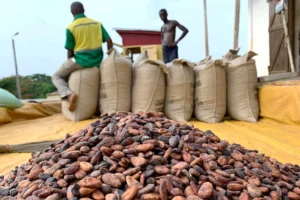
The alliance’s traditional approach has relied on forward sales and price setting. But in 2026, both countries face growing unsold inventories because traders have paused purchases while global prices sit below earlier contracted levels. In Côte d’Ivoire alone, unsold cocoa stockpiles could exceed 200,000 metric tons without price revisions.
Such stock build-ups underscore the limitations of forward marketing when global demand shifts rapidly — and reinforce calls within the alliance for more flexible pricing and joint market responses.
4. Liquidity Issues and Sector Financing Strain
Beyond price policy, the volume of cocoa deliveries and financing arrangements is placing stress on the broader sector. Ghana’s licensed cocoa buyers reportedly owe banks up to billions of cedis from deferred payments — a scenario linked to weak export demand and prior pricing structures. This liquidity challenge pressures cocoa finance across the value chain, affecting both exporter stability and alliance strategy.
Coordinated approaches to sector financing — including revisions to traditional syndicated loan models — have become part of the dialogue within the alliance.
5. Emerging Industry Collaboration Beyond Governments
In addition to bilateral cooperation, international firms and initiatives are entering the picture. New efforts, such as the TogetherCocoa Foundation — backed by major global chocolate manufacturers — aim to build resilience in the cocoa sector, including support for farmers in both Ghana and Côte d’Ivoire. These initiatives work alongside government strategies and signal a broader ecosystem approach to cocoa sustainability.
Such public–private collaborations complement the alliance by focusing on supply-chain resilience and farmer income support.
6. Shared Long-Term Challenges Reinforce the Alliance’s Relevance
Despite immediate market disruptions, analysts and industry voices continue to stress the importance of cooperation between Ghana and Côte d’Ivoire as the two dominant suppliers. Joint initiatives — from forward pricing coordination to shared research and advocacy — remain central to managing climatic risk, ensuring quality standards, and strengthening market leverage against global buyers.
The alliance’s ability to adapt to downturns and coordinate pricing, stock management, and sector financing will shape cocoa market dynamics in the coming years.
Conclusion From THSB
The Ghana–Côte d’Ivoire cocoa alliance stands at a critical juncture in 2026. What began as a unified approach to cocoa pricing and farmer support is now being tested by volatile global markets, stockpiling, reduced demand, and financial strain across the value chain.
Both countries are responding with coordinated price adjustments, policy shifts, and sector financing reforms — all while exploring broader collaboration with industry partners to strengthen resilience.
For investors and market watchers, the alliance’s response to this crisis offers insight into how major commodity exporters balance short-term shocks with long-term strategic cooperation.
FAQs
What is the Ghana–Côte d’Ivoire cocoa alliance?
It’s a long-standing cooperative arrangement between the two leading cocoa producers aimed at coordinating pricing, exports, and farmer income strategies.
Why is the alliance under pressure in 2026?
A sharp downturn in global demand, unsold cocoa stockpiles, and contractual price mismatches have challenged traditional forward sales and pricing mechanisms.
Are producer prices being adjusted?
Yes. Both countries have moved to adjust producer price frameworks to align with global market conditions.
Does the alliance involve private sector partners?
New collaborative efforts, such as the TogetherCocoa Foundation involving global chocolate manufacturers, are complementing government coordination.
Will the alliance affect farmers directly?
Yes. Pricing decisions and coordinated responses have direct implications for farmgate prices and farmer income stability.
Source: The High Street Business
Disclaimer: Some content on The High Street Business may be aggregated, summarized, or edited from third-party sources for informational purposes. Images and media are used under fair use or royalty-free licenses. The High Street Business is a subsidiary of SamBoad Publishing under SamBoad Business Group Ltd, registered in Ghana since 2014.
For concerns or inquiries, please visit our Privacy Policy or Contact Page.