



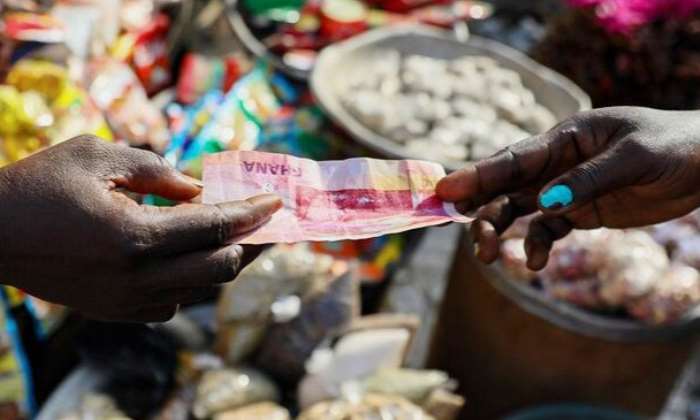
Climate Change Deepens Hardship for Women Farmers in Northern Ghana, but Some Defy the Odds

Innovation Trends Transforming Ghana’s Economy

Climate change is intensifying the challenges faced by women farmers in Nyasabga, a farming community in the Karaga District of Ghana’s Northern Region, where prolonged drought and declining soil fertility are threatening livelihoods and food security.

For many women, limited access to land, continuous tilling, and unpredictable rainfall have resulted in shrinking harvests and worsening poverty. Yet, amid these difficulties, a few farmers are demonstrating resilience by adopting climate-smart agricultural practices that are helping them survive in an increasingly hostile environment.
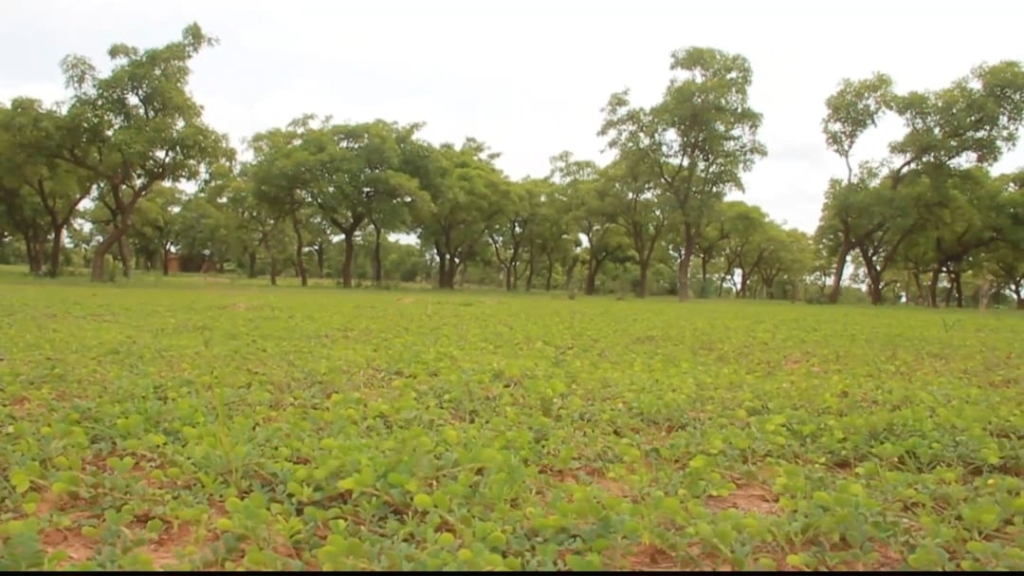
Nyasabga's women farmers bear the brunt of climate change and land degradation, others turn to smart agriculture

Drought and Declining Yields

Baba Fati, a smallholder farmer in Nyasabga, has cultivated the same piece of land for the past six years after it was allocated to her by her husband. She recalls that farming conditions were better in the early years, but repeated droughts and soil exhaustion have drastically reduced her yields.

📢 GET A DETAILED ARTICLES + JOBS

Join SamBoad's WhatsApp Channel and never miss a post or opportunity.

📲 Join the Channel Now

“I have been farming on this land to feed my children. At first, it was better, but last year was terrible. The drought was severe and the yields were very low. It looks like it’s happening again this year because we have had a dry spell for the past two weeks,” she said.

Fati fears that another poor harvest could worsen her already precarious situation. She appealed for support to enable her purchase fertiliser to improve soil productivity.

“I am appealing for support to buy fertiliser so I can apply it to my farm. Hopefully, when the rains finally come, I can make some yields,” she added.
OTHERS READING:  Making Agriculture Bankable — The Case for Cheaper Financing in Ghana’s Agro Sector
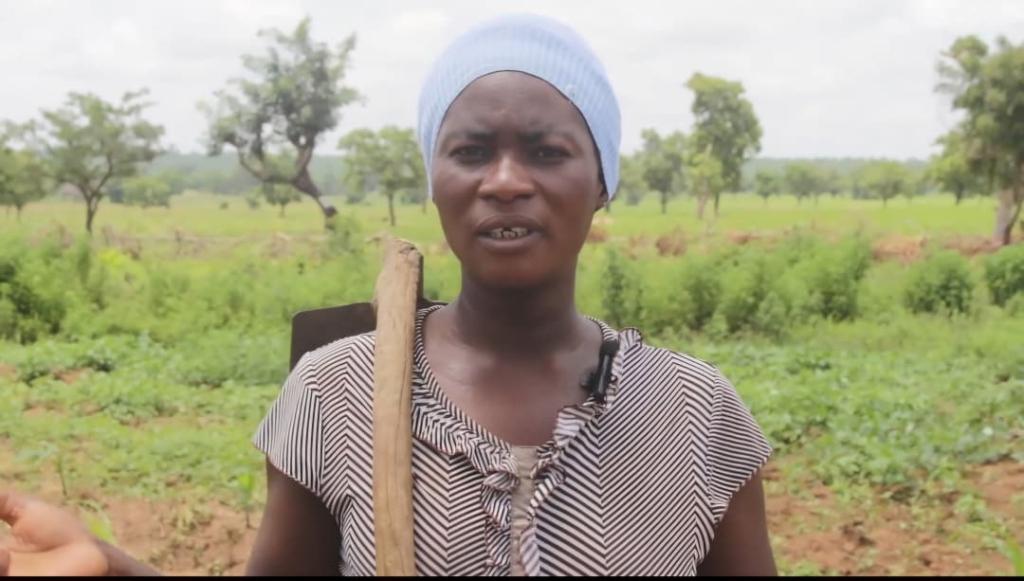
Nyasabga's women farmers bear the brunt of climate change and land degradation, others turn to smart agriculture
Baba Fati, A Smallhoder Farmer

Food Insecurity at Household Level

The impact of climate stress is visible in Fati’s household. At her home, her children were eating boiled corn for breakfast—without vegetables or protein.

“If you harvest and there is no yield, how do you pay your children’s school fees or give them nutritious meals? What you saw them eating is all I can afford,” she said.

Her experience reflects a broader reality in many rural farming households, where climate-induced crop failures directly translate into malnutrition, school dropouts, and deepening poverty.
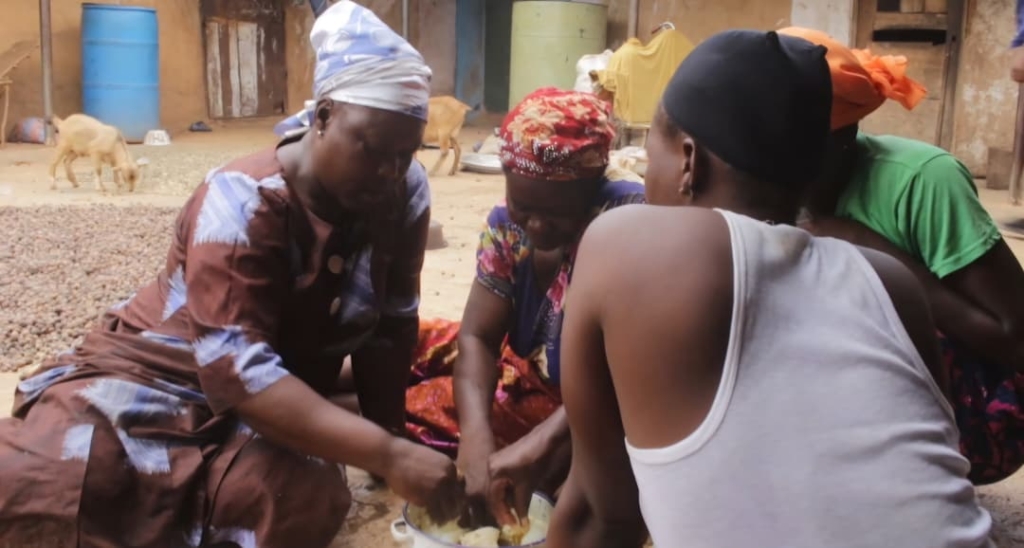
Nyasabga's women farmers bear the brunt of climate change and land degradation, others turn to smart agriculture

Defying the Odds with Climate-Smart Farming

While many women struggle, others in Nyasabga are adapting. Abukari Suweba is one such farmer who has embraced climate-smart agricultural practices to overcome land scarcity and declining soil fertility.

She explained that with support from SWIDA Ghana, traditional leaders allocated degraded land to women farmers, who were then trained to restore soil fertility using organic methods.

“They taught us how to use grass, farm waste, and cow dung to make the land fertile again. Now my corn, tomatoes, okro, ayoyo, and other crops are growing very well,” she said.

Suweba has also diversified into integrated farming by combining vegetable cultivation with fish farming.

“There is a fish pond, and we use the water from it to fertilise our vegetable farms. We now have all kinds of vegetables and trees growing on this land,” she added.
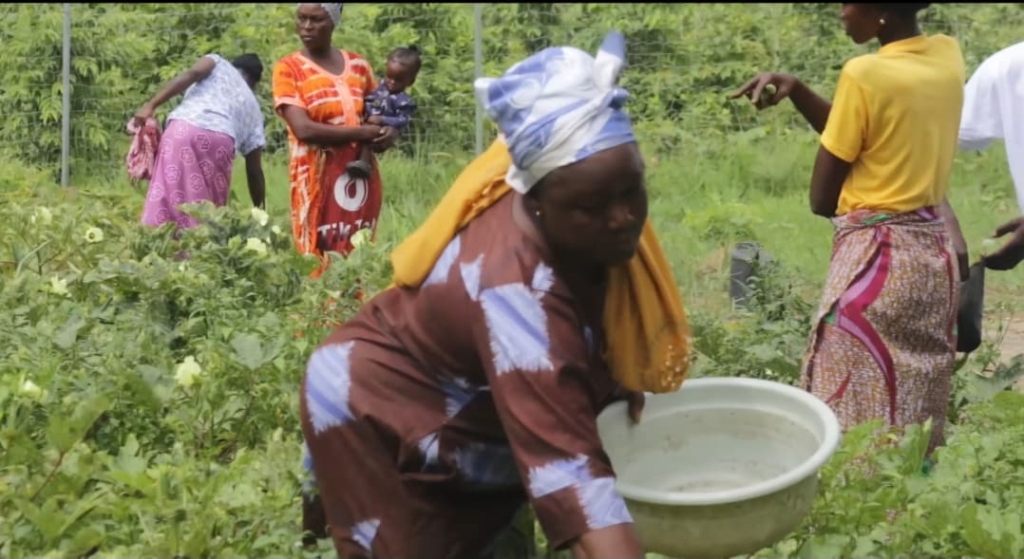
Nyasabga's women farmers bear the brunt of climate change and land degradation, others turn to smart agriculture
Abukari Suweiba adopts climate-smart agricultural practices

Nutrition and Livelihood Gains

The adoption of these practices has improved food availability and nutrition for her household.

“When you harvest the vegetables, add kanton, our local spice, and cook, it’s delicious and very healthy. You don’t need a hospital to tell you that you are malnourished,” she said.

OTHERS READING:  World Bank Pledges $30 Million to Boost Ghana’s Irrigation Systems and Agricultural Productivity

Her success demonstrates how climate-smart agriculture can improve food security, nutrition, and income when farmers are supported with knowledge and resources.
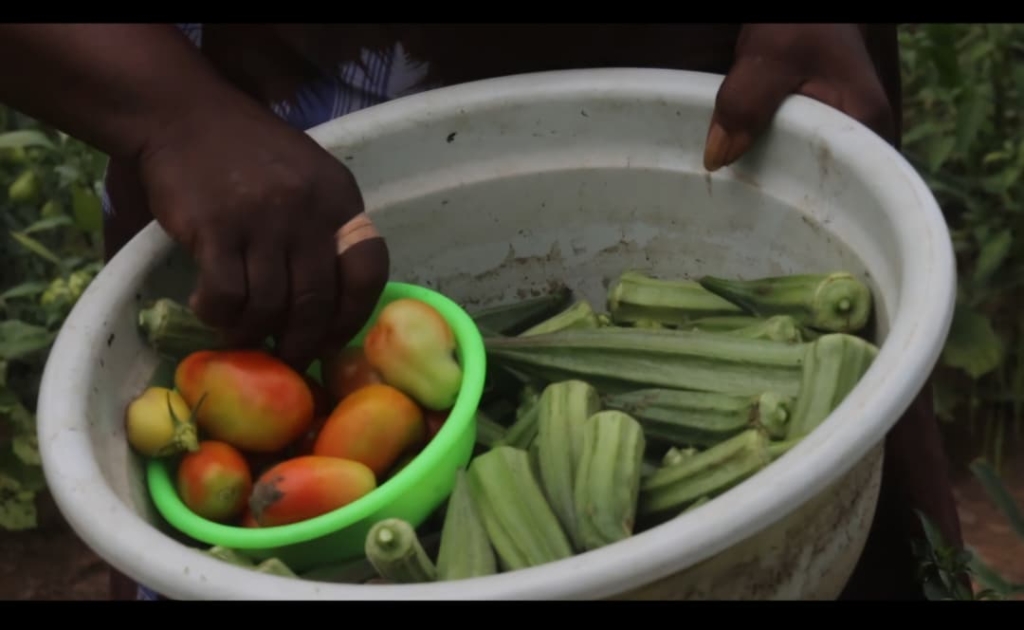
Nyasabga's women farmers bear the brunt of climate change and land degradation, others turn to smart agriculture

Climate Change and Policy Response

A lecturer at the Faculty of Agriculture and Natural Resources at Tamale Technical University, Mahama Wayo, explained that human-induced environmental degradation is driving climate change and worsening drought conditions.

“The more gases we release into the atmosphere, the more we damage the ozone layer. That results in heat and drought. Population growth, industrialisation, and vehicle emissions are all contributing factors,” he said.

Mr Wayo noted that Ghana’s climate-smart agriculture framework aligns with the National Climate Change Policy and promotes sustainable farming practices, climate information dissemination, and targeted support for vulnerable farmers.

“Climate-smart agriculture is one of the policies under Ghana’s climate change agenda. We encourage farmers to adopt these practices,” he said.

However, he acknowledged that the cost of adoption remains a major barrier.

“These practices can be expensive. That is why government support through subsidies, loans, and grants is necessary to help farmers adopt these technologies,” he recommended.
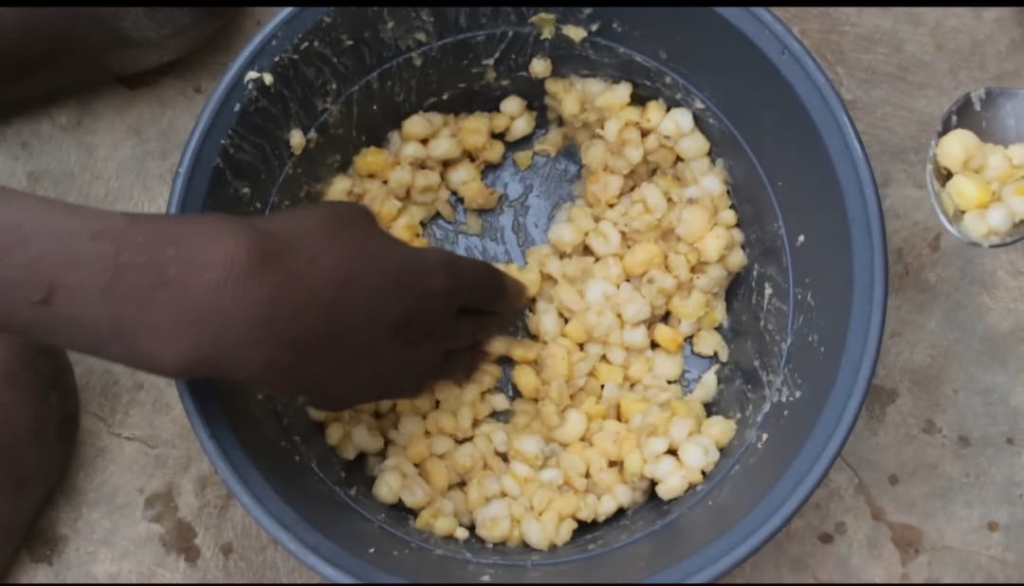
Nyasabga's women farmers bear the brunt of climate change and land degradation, others turn to smart agriculture

A Call for Targeted Support

The experiences of women farmers in Nyasabga highlight the unequal burden of climate change on vulnerable groups, particularly women with limited land rights and access to finance.

As climate pressures intensify, targeted investment in climate-smart agriculture, gender-responsive land policies, and farmer financing will be critical to safeguarding food security and rural livelihoods in Northern Ghana.

Nyasabga's women farmers bear the brunt of climate change and land degradation, others turn to smart agriculture
Mahama Wayo, Lecturer, Faculty of Agriculture and Natural Resources, Tamale Technical University

Disclaimer: Some content on The High Street Business may be aggregated, summarized, or edited from third-party sources for informational purposes. Images and media are used under fair use or royalty-free licenses. The High Street Business is a subsidiary of SamBoad Publishing under SamBoad Business Group Ltd, registered in Ghana since 2014.

OTHERS READING:  Gov’t of Ghana Launches 6GB for GHS10 Independence Day Data Promotion - ABN

For concerns or inquiries, please visit our Privacy Policy or Contact Page.

Leave a Reply

Your email address will not be published. Required fields are marked *

Climate Change Deepens Hardship for Women Farmers in Northern Ghana, but Some Defy the Odds

Why Employee Retention Saves More Money

Climate change is intensifying the challenges faced by women farmers in Nyasabga, a farming community in the Karaga District of Ghana’s Northern Region, where prolonged drought and declining soil fertility are threatening livelihoods and food security.

For many women, limited access to land, continuous tilling, and unpredictable rainfall have resulted in shrinking harvests and worsening poverty. Yet, amid these difficulties, a few farmers are demonstrating resilience by adopting climate-smart agricultural practices that are helping them survive in an increasingly hostile environment.

Nyasabga's women farmers bear the brunt of climate change and land degradation, others turn to smart agriculture

Drought and Declining Yields

Baba Fati, a smallholder farmer in Nyasabga, has cultivated the same piece of land for the past six years after it was allocated to her by her husband. She recalls that farming conditions were better in the early years, but repeated droughts and soil exhaustion have drastically reduced her yields.

📢 GET A DETAILED ARTICLES + JOBS

Join SamBoad's WhatsApp Channel and never miss a post or opportunity.

📲 Join the Channel Now

“I have been farming on this land to feed my children. At first, it was better, but last year was terrible. The drought was severe and the yields were very low. It looks like it’s happening again this year because we have had a dry spell for the past two weeks,” she said.

Fati fears that another poor harvest could worsen her already precarious situation. She appealed for support to enable her purchase fertiliser to improve soil productivity.

“I am appealing for support to buy fertiliser so I can apply it to my farm. Hopefully, when the rains finally come, I can make some yields,” she added.

OTHERS READING:  Gov’t of Ghana Launches 6GB for GHS10 Independence Day Data Promotion - ABN
Nyasabga's women farmers bear the brunt of climate change and land degradation, others turn to smart agriculture
Baba Fati, A Smallhoder Farmer

Food Insecurity at Household Level

The impact of climate stress is visible in Fati’s household. At her home, her children were eating boiled corn for breakfast—without vegetables or protein.

“If you harvest and there is no yield, how do you pay your children’s school fees or give them nutritious meals? What you saw them eating is all I can afford,” she said.

Her experience reflects a broader reality in many rural farming households, where climate-induced crop failures directly translate into malnutrition, school dropouts, and deepening poverty.

Nyasabga's women farmers bear the brunt of climate change and land degradation, others turn to smart agriculture

Defying the Odds with Climate-Smart Farming

While many women struggle, others in Nyasabga are adapting. Abukari Suweba is one such farmer who has embraced climate-smart agricultural practices to overcome land scarcity and declining soil fertility.

She explained that with support from SWIDA Ghana, traditional leaders allocated degraded land to women farmers, who were then trained to restore soil fertility using organic methods.

“They taught us how to use grass, farm waste, and cow dung to make the land fertile again. Now my corn, tomatoes, okro, ayoyo, and other crops are growing very well,” she said.

Suweba has also diversified into integrated farming by combining vegetable cultivation with fish farming.

“There is a fish pond, and we use the water from it to fertilise our vegetable farms. We now have all kinds of vegetables and trees growing on this land,” she added.

Nyasabga's women farmers bear the brunt of climate change and land degradation, others turn to smart agriculture
Abukari Suweiba adopts climate-smart agricultural practices

Nutrition and Livelihood Gains

The adoption of these practices has improved food availability and nutrition for her household.

“When you harvest the vegetables, add kanton, our local spice, and cook, it’s delicious and very healthy. You don’t need a hospital to tell you that you are malnourished,” she said.

OTHERS READING:  Making Agriculture Bankable — The Case for Cheaper Financing in Ghana’s Agro Sector

Her success demonstrates how climate-smart agriculture can improve food security, nutrition, and income when farmers are supported with knowledge and resources.

Nyasabga's women farmers bear the brunt of climate change and land degradation, others turn to smart agriculture

Climate Change and Policy Response

A lecturer at the Faculty of Agriculture and Natural Resources at Tamale Technical University, Mahama Wayo, explained that human-induced environmental degradation is driving climate change and worsening drought conditions.

“The more gases we release into the atmosphere, the more we damage the ozone layer. That results in heat and drought. Population growth, industrialisation, and vehicle emissions are all contributing factors,” he said.

Mr Wayo noted that Ghana’s climate-smart agriculture framework aligns with the National Climate Change Policy and promotes sustainable farming practices, climate information dissemination, and targeted support for vulnerable farmers.

“Climate-smart agriculture is one of the policies under Ghana’s climate change agenda. We encourage farmers to adopt these practices,” he said.

However, he acknowledged that the cost of adoption remains a major barrier.

“These practices can be expensive. That is why government support through subsidies, loans, and grants is necessary to help farmers adopt these technologies,” he recommended.

Nyasabga's women farmers bear the brunt of climate change and land degradation, others turn to smart agriculture

A Call for Targeted Support

The experiences of women farmers in Nyasabga highlight the unequal burden of climate change on vulnerable groups, particularly women with limited land rights and access to finance.

As climate pressures intensify, targeted investment in climate-smart agriculture, gender-responsive land policies, and farmer financing will be critical to safeguarding food security and rural livelihoods in Northern Ghana.

Nyasabga's women farmers bear the brunt of climate change and land degradation, others turn to smart agriculture
Mahama Wayo, Lecturer, Faculty of Agriculture and Natural Resources, Tamale Technical University

Disclaimer: Some content on The High Street Business may be aggregated, summarized, or edited from third-party sources for informational purposes. Images and media are used under fair use or royalty-free licenses. The High Street Business is a subsidiary of SamBoad Publishing under SamBoad Business Group Ltd, registered in Ghana since 2014.

OTHERS READING:  Climate Change Deepens Hardship for Women Farmers in Northern Ghana, but Some Defy the Odds

For concerns or inquiries, please visit our Privacy Policy or Contact Page.

Leave a Reply

Your email address will not be published. Required fields are marked *

error: Content is protected. Kindly credit The High Street Business when referencing.