






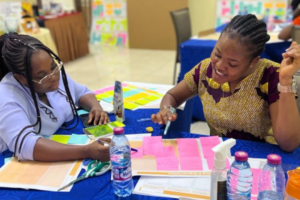



Creativity and innovation are often discussed as intellectual capabilities—skills to be trained, strategies to be implemented, or technologies to be adopted. Yet, in practice, creativity is deeply human. It is shaped by energy levels, mental clarity, emotional balance, and lived experience. For entrepreneurs and business leaders, innovation does not occur in isolation from daily life. It emerges from it.
At The High Street Business, we observe that the most innovative leaders are not only strategic thinkers; they are intentional about how they live. Lifestyle practices—often overlooked in business discussions—play a decisive role in shaping creative capacity. In Ghana’s fast-evolving business environment, where adaptation is essential, lifestyle choices become an invisible but powerful driver of innovation.
Creativity as a State, Not Just a Skill
Creativity thrives in certain conditions. It requires mental openness, curiosity, and the ability to connect ideas across contexts. These conditions are influenced by how individuals structure their lives.
📢 GET A DETAILED ARTICLES + JOBS
Join SamBoad's WhatsApp Channel and never miss a post or opportunity.
When leaders are exhausted, overwhelmed, or chronically stressed, creativity narrows. Thinking becomes rigid and reactive. Innovation gives way to routine.
Lifestyle practices shape the mental and emotional state in which ideas emerge.
The Role of Mental Space
Innovation requires space—space to think, reflect, and explore ideas without immediate pressure. Leaders who fill every moment with activity leave little room for insight.
Creating intentional pauses in daily life allows the mind to process information and generate novel connections. Many breakthrough ideas emerge not during intense effort, but during moments of mental ease.
Lifestyle practices that protect mental space directly support creative thinking.
Physical Wellbeing and Cognitive Flexibility
The connection between physical wellbeing and creativity is often underestimated. Physical vitality supports cognitive flexibility—the ability to think broadly and adaptively.
When the body is neglected, mental performance declines. Fatigue reduces imagination, patience, and openness to experimentation.
Leaders who prioritise physical wellbeing increase their capacity for sustained creative work, even under demanding conditions.
Consistent Rest and Creative Renewal
Rest is not a withdrawal from productivity; it is a prerequisite for innovation. Creative insight depends on a rested mind.
Chronic sleep deprivation narrows attention and reinforces habitual thinking. By contrast, adequate rest improves memory integration and problem-solving.
In high-pressure business environments, rest becomes a strategic asset rather than a luxury.
Exposure to Diverse Experiences
Creativity thrives on diversity of input. Exposure to different environments, cultures, and perspectives enriches the mental library from which ideas are drawn.
Entrepreneurs who engage beyond their immediate business circles often generate more innovative solutions. Conversations, reading, and observation across disciplines stimulate cross-pollination of ideas.
Lifestyle practices that encourage curiosity expand creative capacity.
Reflection and Learning as Daily Habits
Innovation is closely tied to learning. Leaders who reflect regularly extract insight from experience.
Reflection transforms activity into understanding. It helps identify patterns, question assumptions, and refine thinking.
Lifestyle practices that include reflection cultivate a learning-oriented mindset essential for innovation.
Emotional Balance and Risk-Taking
Innovation involves uncertainty and risk. Leaders must be willing to explore untested ideas and accept possible failure.
Emotional balance supports this willingness. When anxiety dominates, leaders default to familiar approaches.
Lifestyle practices that promote emotional regulation—calmness, perspective, and self-awareness—create psychological safety for experimentation.
Managing Information Overload
Modern leaders face constant information inflow. While access to information is valuable, overload overwhelms creative processing.
Intentional control over information consumption preserves cognitive bandwidth. Leaders who manage inputs think more clearly and creatively.
Innovation requires discernment, not saturation.
Time for Deep Thinking
Creative breakthroughs often require uninterrupted focus. Shallow multitasking fragments attention and inhibits depth.
Lifestyle practices that protect periods of deep thinking enable complex idea development.
In Ghana’s dynamic business environment, leaders who think deeply gain strategic clarity that others miss.
The Social Dimension of Creativity
Innovation is not purely individual. It is often sparked through dialogue and collaboration.
Leaders who cultivate meaningful social interactions expose themselves to new viewpoints and constructive challenge.
Lifestyle practices that support healthy relationships enhance creative ecosystems within and beyond organisations.
Routine as a Foundation for Creativity
Paradoxically, creativity benefits from routine. Predictable structures free mental energy for exploration.
When basic decisions and habits are automated, attention becomes available for higher-level thinking.
Routine provides stability from which innovation can emerge.
Detachment and Perspective
Continuous immersion in business problems can limit perspective. Temporary detachment refreshes creativity.
Stepping back allows leaders to see challenges from new angles. Distance clarifies priorities and reveals overlooked possibilities.
Lifestyle practices that include intentional detachment strengthen strategic innovation.
Innovation as a Long-Term Capacity
Creativity is not a one-time event; it is a capacity developed over time. Lifestyle practices shape this capacity gradually.
Small daily choices accumulate into creative advantage or depletion.
Sustainable innovation depends on sustainable living.
The Ghanaian Context and Creative Adaptation
In Ghana, innovation often emerges from constraint. Limited resources demand ingenuity.
Leaders who manage their energy, curiosity, and wellbeing are better positioned to turn constraints into opportunities.
Lifestyle practices that support resilience amplify this adaptive creativity.
Conclusion: Living as the Foundation of Innovation
Innovation does not begin in boardrooms or strategy documents. It begins in how leaders live.
Lifestyle practices shape energy, perspective, and openness—conditions essential for creativity. Entrepreneurs who neglect these foundations limit their innovative potential.
At The High Street Business, we emphasise that creativity is not only about ideas; it is about capacity. The way leaders structure their lives determines the quality of their thinking.
In a rapidly changing economy, innovation is not optional. Leaders who align lifestyle practices with creative intent build businesses that adapt, evolve, and endure.
Innovation, ultimately, is a reflection of how well leaders care for the conditions that allow ideas to emerge.
FAQs
Why do lifestyle practices affect creativity?
Because creativity depends on mental clarity, energy, and emotional balance.
Is innovation linked to wellbeing?
Yes. Wellbeing supports sustained creative thinking.
Can routine support creativity?
Yes. Routine frees mental energy for innovation.
How does rest influence innovation?
Rest improves cognitive flexibility and insight.
Why is creativity important for Ghanaian businesses?
Because adaptation and problem-solving are essential in dynamic markets.
Source: The High Street Business
Disclaimer: Some content on The High Street Business may be aggregated, summarized, or edited from third-party sources for informational purposes. Images and media are used under fair use or royalty-free licenses. The High Street Business is a subsidiary of SamBoad Publishing under SamBoad Business Group Ltd, registered in Ghana since 2014.
For concerns or inquiries, please visit our Privacy Policy or Contact Page.