




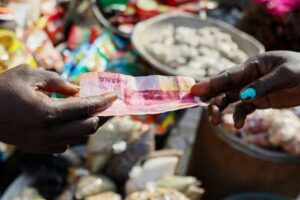


The Bank of Ghana (BoG) has cautioned that scheduled dividend payments in February and March 2026 could create downside risks for the Ghana cedi.
In its January 2026 Monetary Policy Report, the Central Bank noted that seasonal foreign exchange outflows linked to dividend repatriation may exert pressure on the local currency.
It also warned that a potential decline in global gold prices — triggered by strengthening global economic conditions or easing geopolitical tensions — could weaken the cedi, given Ghana’s heavy reliance on gold export earnings.
📢 GET A DETAILED ARTICLES + JOBS
Join SamBoad's WhatsApp Channel and never miss a post or opportunity.
Early 2026: Marginal Pressure After Strong 2025
The report indicated that the cedi experienced some marginal pressure in early 2026, following a strong performance in 2025.
Demand for foreign exchange — largely from the energy, commerce, and manufacturing sectors — contributed to the pressures. However, these were partly offset by:
-
BoG foreign exchange intermediation
-
Mining sector inflows
-
Remittance flows
-
Export proceeds from other corporates
Outlook: Stability Expected in Near Term
Despite the identified risks, the BoG expects the cedi to remain relatively stable in the near term, supported by:
-
Continued central bank forex interventions
-
Strong reserve accumulation
-
Proposed government infrastructure bonds in 2026
The Central Bank also highlighted external financing support, including the final tranche of Ghana’s programme with the International Monetary Fund (IMF), alongside inflows from other development partners.
Additionally, the BoG pointed to global factors that may favour the cedi, including weakness in the US dollar stemming from a dovish outlook by the Federal Reserve and concerns regarding the Fed’s independence.
2025 Performance: Sharp Turnaround
In 2025, the cedi recorded a remarkable appreciation in the interbank market:
-
40.67% against the US dollar
-
30.89% against the British pound
-
23.97% against the euro
This marks a sharp reversal from the same period in 2024, when the cedi depreciated by:
-
19.18% against the US dollar
-
17.76% against the British pound
-
13.72% against the euro
The Central Bank’s latest warning underscores the currency’s sensitivity to external flows, commodity prices, and seasonal forex demand pressures.
Source: Accra Business News
Disclaimer: Some content on The High Street Business may be aggregated, summarized, or edited from third-party sources for informational purposes. Images and media are used under fair use or royalty-free licenses. The High Street Business is a subsidiary of SamBoad Publishing under SamBoad Business Group Ltd, registered in Ghana since 2014.
For concerns or inquiries, please visit our Privacy Policy or Contact Page.

Samuel Kwame Boadu is a Ghanaian entrepreneur, writer, and digital consultant passionate about creating impactful stories and business solutions. He is the Founder & CEO of SamBoad Business Group Ltd, a dynamic company with subsidiaries in digital marketing, logistics, publishing, and risk management.